OpenClaw Launches on Mobile: A Troubled Rollout
Le brief IA que les pros lisent chaque soir
Les 7 actus IA du jour, décryptées en 5 min. Gratuit.
Inclus dès l'inscription : notre sélection des meilleurs guides & comparatifs IA.
Choisis ton rythme
Gratuit · Pas de spam · Désabonnement en 1 clic
OpenClaw Invades iOS and Android, But the Launch Stumbles
OpenClaw, the open-source artificial intelligence agent, has recently made its debut on mobile platforms iOS and Android. This launch, eagerly anticipated by many users, has not gone smoothly. The application promises a more personalized interaction, distinguishing itself from traditional chatbots with its unique approach. Rather than functioning entirely on mobile, the app acts as a remote control for an assistant hosted either on a personal server or in the cloud. The official launch took place on June 29, marking a significant milestone for OpenClaw, which has evolved from Clawdbot, an agent capable of performing various tasks for the user. Although financially backed by OpenAI, OpenClaw's main appeal lies in its ability to operate independently of large corporations, installing itself on a personal machine or a cloud server chosen by the user.
A Smartphone Transformed into a Remote Control for the Agent
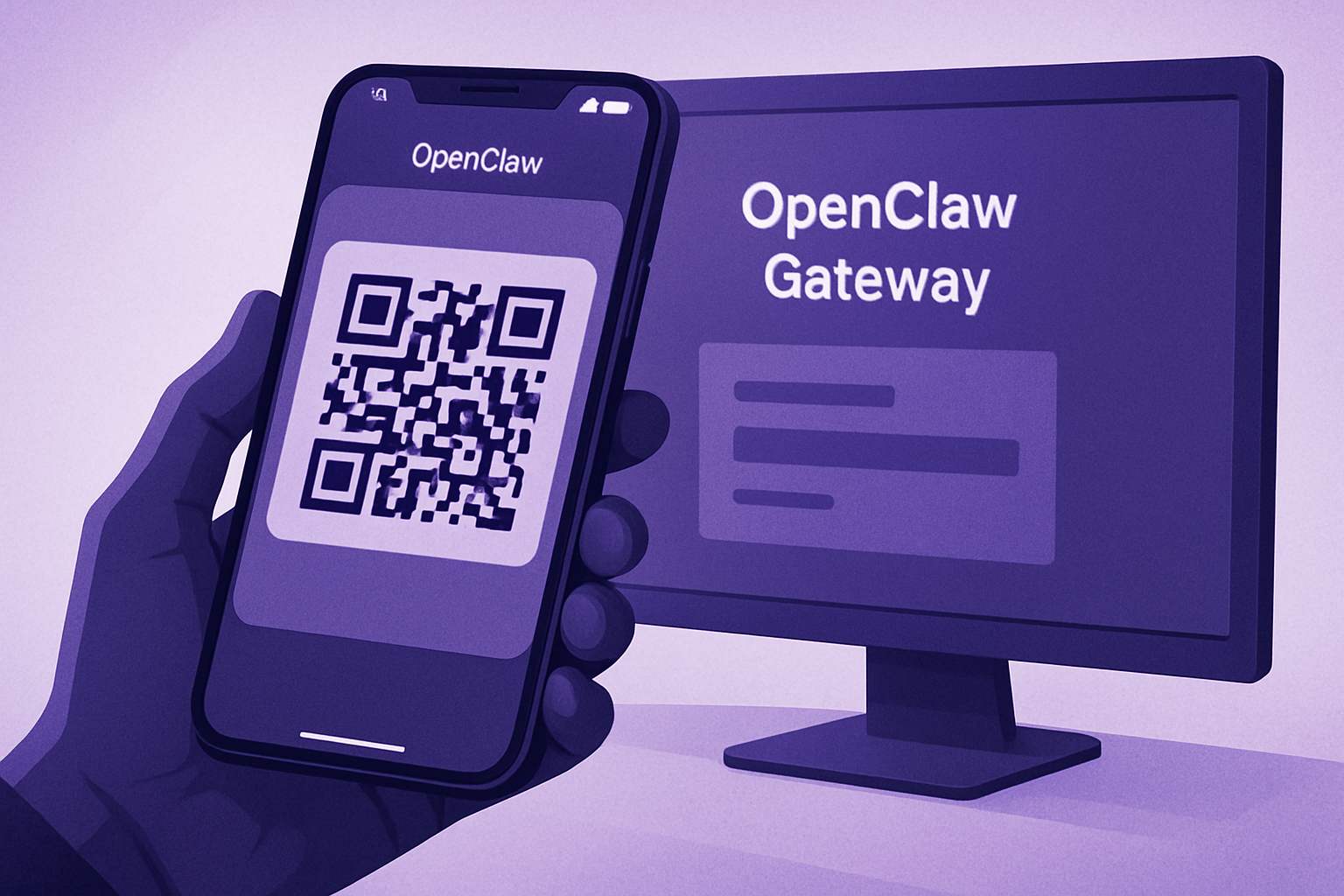
OpenClaw's mobile applications do not replace the core of the system. They connect to the OpenClaw Gateway, which must be installed on a computer running Mac, Linux, or Windows. In other words, the smartphone serves to control the agent but does not contain the main intelligence. To establish this connection, the user must first install the Gateway and then pair their mobile by scanning a QR code. While the process seems straightforward, initial user feedback indicates that simplicity is more theoretical than practical.
Once the connection is established, the smartphone becomes an interactive dashboard. The user can converse with the assistant, activate real-time voice mode, and approve suggested actions. Additionally, the app sends notifications when the agent requires a response or completes a task. With the user's consent, it can also access the camera, screen, location, photos, and calendar. OpenClaw emphasizes its "local-first" approach, highlighting that keys, configuration, and permissions remain under the user's control, thereby enhancing security and privacy.
Apple Softens Its Stance on AI Agents
The arrival of OpenClaw on iOS also reflects a shift at Apple. The company has long been reluctant to allow these agents, fearing overly intrusive access to devices. The acceptance of OpenClaw could indicate a slight easing of this policy. While this does not constitute a revolution, this change in direction at Apple is noteworthy.
Applications Still in Need of Refinement
However, the real test begins when users attempt to use these applications. On Android, initial reviews are far from encouraging. On the Play Store, the app only garners 2.2 stars. Users report frequent crashes, difficulties pairing the Gateway, and an interface that seems unfinished.
The iOS version, while slightly more polished, does not yet offer a smooth user experience. Both applications give the impression of having been launched hastily, without the necessary refinement. Despite these rocky beginnings, the OpenClaw project retains its appeal. An open-source AI agent, controllable from a mobile device, represents a rare and serious offering. Nevertheless, to turn this promise into a reliable and user-friendly tool, there is still work to be done.
OpenClaw has thus managed to strategically establish itself on mobile platforms iOS and Android. However, these chaotic beginnings serve as a reminder of a harsh reality in the realm of consumer technology: it is not enough to be present on mobile; it must also function correctly from day one.
Brief IA — L'actualité IA en français
L'essentiel de l'actualité de l'intelligence artificielle, décrypté et expliqué chaque jour.