OpenClaw: The Meteoric Rise of Peter Steinberger with OpenAI
Le brief IA que les pros lisent chaque soir
Les 7 actus IA du jour, décryptées en 5 min. Gratuit.
Inclus dès l'inscription : notre sélection des meilleurs guides & comparatifs IA.
Choisis ton rythme
Gratuit · Pas de spam · Désabonnement en 1 clic
From Idea to Virality: The Story of OpenClaw
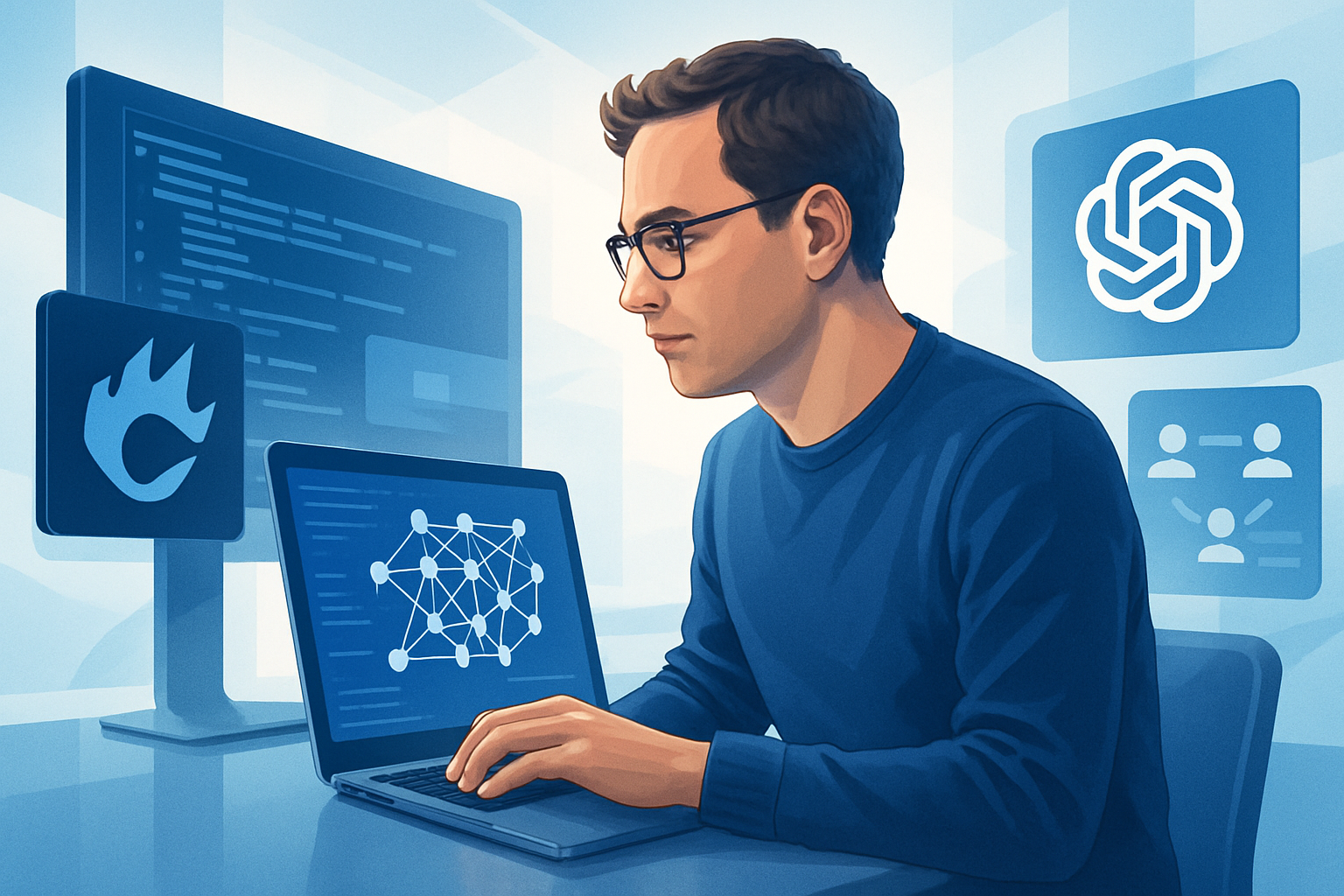
In just six months, Peter Steinberger has gone from a relatively unknown developer to a central figure in the development of next-generation agents at OpenAI. His project, OpenClaw, has experienced meteoric rise, becoming viral due to its ability to transform interaction with AI agents.
The Beginnings of OpenClaw
Peter Steinberger began exploring agentic engineering in April 2025. By the following month, he felt the need to interact with his agent remotely. He then created an initial version of OpenClaw, a terminal accessible via the web and mobile devices. However, the mobile experience was not optimal, leading him to put the project on hold, thinking that larger labs would eventually develop a similar solution. Yet, in November, faced with the absence of such initiatives, he decided to revive the project.
The first functional version of OpenClaw, based on Codex, was developed in an hour. However, this estimate does not account for the additional time needed to integrate image support, which took several hours. The tool proved useful enough for Steinberger to continue improving it until he offered a satisfactory user experience. The context was favorable: programming models had reached an exceptional level of performance, facilitating problem-solving, a key skill for AI agents. Thanks to OpenClaw, Steinberger was able to access this capability directly via WhatsApp.
The Success of OpenClaw
Before OpenClaw, AI agents were primarily confined to terminals, an unwelcoming environment for many users. OpenClaw changed the game by making the experience more intuitive and natural. This shift created a "wow" effect among users, who saw their tasks successfully completed, often against all odds.
Thibault Sottiaux, a collaborator of Steinberger, describes him as a visionary capable of pushing boundaries where others hesitate. The success of OpenClaw also relies on good timing, as models had become sufficiently performant to realize a project once deemed unfeasible. The open-source development allowed Steinberger to share his progress in real-time on Discord, integrating community ideas into the main agent.
Understanding Agentic Loops
Peter Steinberger explains that the agentic loop is fundamentally simple, comparable to a "hello world" for an agent. However, making this loop truly effective is a complex challenge. An example of this complexity is computer use, where the agent takes control of the mouse and keyboard to accomplish tasks, a useful but difficult feature to implement.
OpenAI's Strategic Choice
When the OpenClaw project gained traction, Steinberger did not consider creating a company around it. After running his own company for several years, he did not want to repeat the experience, especially since it could undermine the open-source spirit of the project. Joining a lab like OpenAI allowed him to place OpenClaw under the aegis of a nonprofit foundation while continuing its development.
Steinberger now divides his time between OpenClaw and more ambitious projects at OpenAI. OpenClaw has become an enterprise-ready tool, usable standalone or integrated into solutions like Codex or Copilot.
OpenClaw and Businesses
Thibault Sottiaux emphasizes that the team supports businesses in adopting OpenClaw, which works effectively on OpenAI models. Initial concepts such as memory or heartbeats have been natively integrated into Codex, enriching the generalist agent deployed at OpenAI and soon in ChatGPT. The relationship between Codex and OpenClaw is symbiotic, with each project inspiring and improving the other.
Towards Personal Agents
The future, according to Thibault Sottiaux, is that of personal AGI, a deeply individualized artificial intelligence that understands the user's routines, preferences, and goals. This vision transforms the way we interact with applications, making the experience more natural through multimodality and advanced image generation models.
Team Objectives
The team is not looking to run agents continuously but to maximize the value created. The central question is one of return on investment: accomplishing high-quality tasks at a lower cost. Recent models, such as GPT-5 and its iterations, excel in long-duration tasks, allowing agents to work for days or even weeks while remaining economically viable.
The Intelligence of Agents
Peter Steinberger emphasizes the importance of a good model coupled with effective action capabilities. Codex is optimized for GPT models, and development occurs in close collaboration, with each component understanding the specifics of the other.
Thibault Sottiaux adds that high-performing models require fewer constraints. Harnesses, once complex, have simplified as models have gained generality. This simplification is the result of close collaboration between model engineers and developers, making the Codex project truly magical.
The Future of Codex and OpenClaw
Peter Steinberger and Thibault Sottiaux do not see the future as a merger of projects but rather as an integration of the best ideas from OpenClaw into Codex, and vice versa. The goal is to make these capabilities accessible to everyone via ChatGPT, offering an enriched and intuitive user experience.
Brief IA — L'actualité IA en français
L'essentiel de l'actualité de l'intelligence artificielle, décrypté et expliqué chaque jour.