RAMageddon: AI Drives Up Prices of Computers and Smartphones
Le brief IA que les pros lisent chaque soir
Les 7 actus IA du jour, décryptées en 5 min. Gratuit.
Inclus dès l'inscription : notre sélection des meilleurs guides & comparatifs IA.
Choisis ton rythme
Gratuit · Pas de spam · Désabonnement en 1 clic
RAMageddon: A Global Memory Crisis
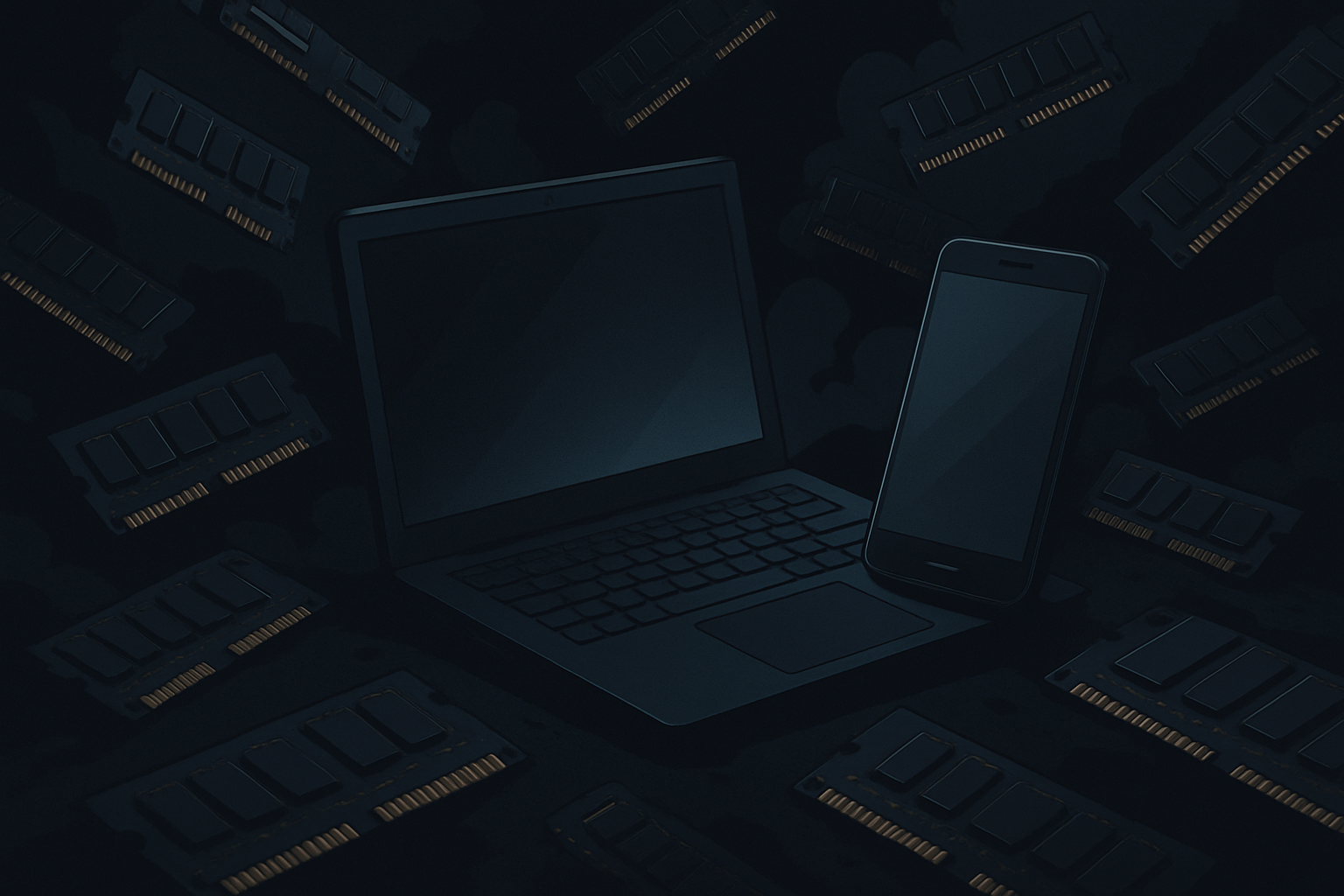
The term RAMageddon has been coined to describe the global memory shortage currently affecting the consumer electronics sector. This situation is primarily driven by the increasing demand from data centers powered by AI. As a result, prices for laptops, phones, graphics cards, and other devices are experiencing a significant rise.
Causes of the Shortage
AI data centers require massive amounts of memory, particularly a premium type known as high bandwidth memory (HBM). Major tech companies, attracted by higher profit margins, are focusing on this sector, thereby diverting supply from consumer technologies to servers. This reallocation of resources has created pressure on the availability of memory for consumer devices.
Understanding Different Types of Memory
- RAM: It allows your device to manage multiple tasks simultaneously, ensuring smooth operation.
- DRAM: Used in computers, smartphones, servers, and graphics cards, it is essential for data processing.
- NAND: This type of memory is used for storage in smartphones, USB drives, and SSDs.
- HBM: A faster and more expensive memory used in AI chips and high-performance data centers, it is crucial for applications requiring significant computing power.
Consequences for Consumers
This memory shortage does not only affect PC manufacturers and tech enthusiasts. It also has a direct impact on consumers, who are seeing the prices of phones and laptops rise. Graphics cards, also affected, can cost several hundred dollars more than expected, making these products less accessible.
The Impact of AI Data Centers
The memory chip market is dominated by a few large companies, including Samsung, SK Hynix, and Micron. Before the rise of AI, these companies supplied significant quantities of DRAM and NAND for PCs, phones, gaming consoles, and servers. However, AI has disrupted this balance. Jitesh Ubrani, research director at IDC, explains that "memory is available, but it's a matter of allocation." Manufacturers are now prioritizing HBM memory and server-grade products, at the expense of low-margin chips intended for consumer devices.
Effects on Laptops
The memory crisis has intensified over the years, and it was in 2026 that price volatility began to hit consumers harder. According to Counterpoint Research, DRAM prices increased by 80 to 90% in the first quarter of this year compared to the previous quarter. This situation has led some server manufacturers to ship systems with empty or partially populated memory slots, allowing customers to add more memory later.
Low-Cost Laptops at Risk
RAMageddon could have a particularly severe impact on budget buyers. According to Gartner, memory is expected to account for 23% of the cost of building a PC in 2026, up from 16% in 2025. This means that low-cost options, such as Chromebooks, are becoming increasingly rare. Chromebooks that once cost $200, $300, or $400 are being produced less frequently due to rising memory costs.
Tips Before Buying
In light of this situation, manufacturers may choose to reduce memory or storage, delay new models, or combine these strategies to maintain prices. Therefore, it is crucial for consumers to check the amount of memory in a device before purchasing to ensure it meets their needs.
AI Laptops Complicate the Situation
As companies strive to add AI features to laptops, they are introducing a new class of AI laptops. However, these features require more memory to function properly, which could slow adoption as buyers may hesitate to upgrade their devices.
Should You Buy Now or Wait?
If your laptop or phone is functioning well, there is no need to panic. However, if you plan to upgrade this year, waiting may not save you money. Gartner refers to this as "memflation," or memory price inflation, and estimates that DRAM prices will increase by 125% in 2026. Jitesh Ubrani advises keeping your device as long as possible or considering alternatives like purchasing a used or refurbished device. Forecasts indicate that relief from high memory prices may not arrive until late 2027 or even 2028.
Brief IA — L'actualité IA en français
L'essentiel de l'actualité de l'intelligence artificielle, décrypté et expliqué chaque jour.