SAP bets on AI and usage-based pricing after the SaaSpocalypse
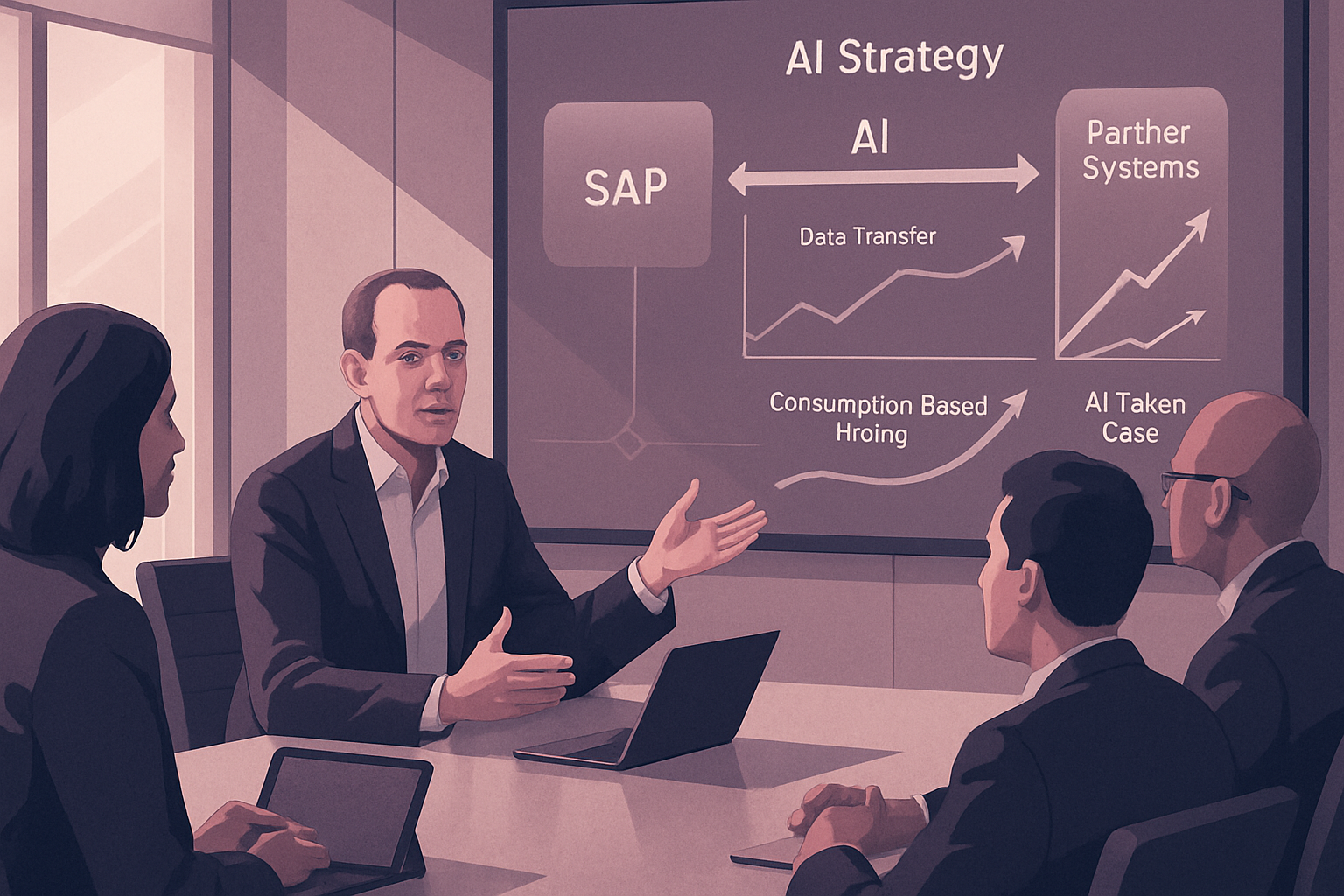
SAP accelerates its shift towards AI, adjusts its pricing models, and increases acquisitions in data. Jan Gilg is betting on industry consolidation, consumption-based pricing, and SAP's data strengths against Palantir. Customers are still waiting for tangible benefits, while SAP's stock has seen a decline followed by a rebound since the summer.
Signed Acquisitions and Anticipated Consolidation by Jan Gilg
SAP has acquired Prior Labs, Reltio, and Dremio this year to strengthen its capabilities in AI and data. Jan Gilg expects a wave of acquisitions in the industry with the emergence of new startups and AI-focused talent. He claims that valuations have significantly dropped, creating an opportunity and interest to explore new segments. According to him, SAP could pursue further acquisitions, provided they are relevant to its business, while dismissing companies that could easily be replaced by AI. His analysis suggests that customers will be less inclined to switch from existing software if migrating to an AI-developed solution proves lengthy and costly. Jan Gilg anticipates sector consolidation, particularly among vendors offering only a single product. He cites niches like legal contract management as areas likely to be heavily disrupted.
Consumption-Based Pricing and AI Budgets Under Scrutiny
SAP is evolving from a subscription model to consumption-based pricing for certain services, where customers pay according to their usage. This shift follows market trends, as intensive AI usage can lead to increased costs. Jan Gilg describes a consumption-based billing model for AI agents, based on the desired outcome, which is presented as transparent and easier to justify, a model adopted by many players. However, SAP still maintains a significant subscription business, and large clients use a hybrid model combining subscription and pay-per-use. Token spending, which represents how companies pay for AI, is already rising sharply according to Jan Gilg. He estimates that budgets will not necessarily increase and that scrutiny over expenditures will be stricter.
Against Palantir, SAP Advances Its Models, Ontology, and Data
SAP has developed Tabular AI, its first foundational model, to make predictions from enterprise data. The publisher is investing in ontology capabilities aimed at auditing systems and working with AI agents to assist in decision-making, an area where the concept is central at Palantir, placing SAP in direct competition with it. At the same time, SAP collaborates with Palantir to transfer data between systems. The company claims to have an advantage from data sourced from over 10,000 clients, utilized to build capabilities deemed more useful. Jan Gilg expects users to interact with SAP products in natural language and via voice in the future, citing Anthropic, OpenAI, and Palantir among the major players in the upcoming competition. SAP is already using AI to strengthen its competitive edge against these rivals.
Le brief IA que les pros lisent chaque soir
Les 7 actus IA du jour, décryptées en 5 min. Gratuit.
Inclus dès l'inscription : notre sélection des meilleurs guides & comparatifs IA.
Choisissez votre rythme
Gratuit · Pas de spam · Désabonnement en 1 clic
Internal Transformation and Unmet Customer Expectations
SAP is deploying AI internally to improve its software production and in functions like finance and human resources. Employees have access to an internal chatbot and tools to generate code, while sales teams rely on AI to prepare client briefs or analyze markets. Jan Gilg states that the company is pivoting towards AI from a position of strength, while discussing an evolution for SAP. He explains to clients the benefits of AI and the associated offerings, while noting that many expenditures have yet to yield the expected business results, benefits, or productivity gains. He does not see companies replacing software packages with in-house developments, especially for critical uses, citing auditability, governance, and maintenance. He does not observe replacements of SAP software but notes increased competition for budgets, particularly around tokens, and argues that reliance on SAP data helps justify its value. He asserts that SAP is difficult to replace with a simple coding tool, even though AI should accelerate software development.
After the SaaSpocalypse, Decline Then Rebound for SAP Stock
SAP's stock fell by about 20% over the past year before rebounding last month. Upon the announcement of results at the end of July, investors welcomed the growth in cloud activity and advancements in commercial AI, and the stock has since gained about 40%. This trajectory occurs in a context where many publishers have suffered on the stock market due to competition from AI tools, a phenomenon termed the SaaSpocalypse. Jan Gilg asserts that the pendulum will swing back and considers the sell-off excessive, while mentioning winners and losers and expressing belief that SAP will be on the right side. He indicates that SAP is reinventing itself with AI, investing in data, and adjusting its pricing, a dynamic he summarizes by stating that AI is now on everyone's agenda. He anticipates a recovery driven by AI and describes an evolution of the business model that includes more consumption-based pricing, estimating that AI will help the company grow.
Brief IA — L'actualité IA en français
L'essentiel de l'actualité de l'intelligence artificielle, décrypté et expliqué chaque jour.