Apple and Siri AI: Towards an Autonomous Assistant like OpenAI?
Le brief IA que les pros lisent chaque soir
Les 7 actus IA du jour, décryptées en 5 min. Gratuit.
Inclus dès l'inscription : notre sélection des meilleurs guides & comparatifs IA.
Choisis ton rythme
Gratuit · Pas de spam · Désabonnement en 1 clic
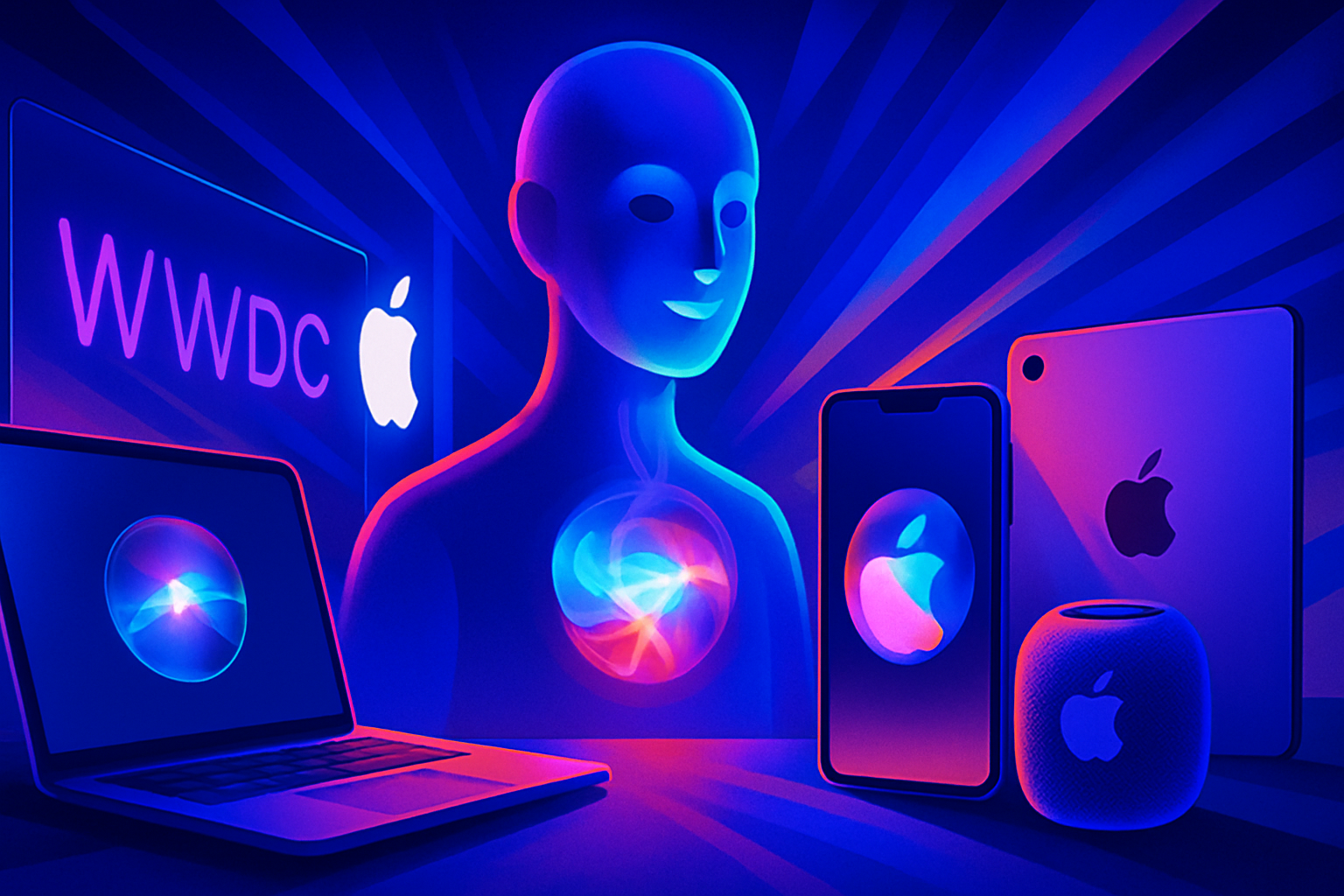
At WWDC 2026, Apple unveiled a completely reimagined Siri AI, built on a modern architecture and a large language model, supported by Google's Gemini technology. This launch marks Apple's return to the artificial intelligence competition, but for some experts, it is just the beginning of a deeper transformation. Mark Gurman, a renowned journalist at Bloomberg, anticipates that Apple could develop an agentic system capable of operating autonomously, similar to the systems developed by OpenAI.
Siri AI: An Architecture Designed for Scalability
According to Mike Rockwell, head of Siri engineering at Apple, who spoke the day after the keynote, the new architecture of Siri AI is designed to be scalable. Rockwell described what a true AI agent could be: a system that operates in a loop, processes incoming information, makes decisions, and acts accordingly. This vision contrasts with the current Siri AI, which remains primarily focused on one-off queries.
Craig Federighi, senior vice president of software engineering at Apple, approached this topic cautiously. He acknowledged the potential of autonomous agents but emphasized that this area remains experimental. For Apple, the priority is to define an optimal user experience before venturing into fully autonomous systems.
The Challenges of Agentic Systems
Apple still needs to close the gap with competitors like OpenClaw, as well as similar systems developed by Google and Anthropic. These agentic systems can take control of a computer or smartphone autonomously, chain actions across multiple applications, navigate the web, and accomplish complex tasks without human intervention at every step. While Siri AI has been modernized, it remains, for now, an assistant based on one-off queries.
The transition to a fully agentic logic would represent a significant technological and philosophical leap for Apple. The company has always emphasized user control and privacy, which could complicate the adoption of more autonomous systems. Nevertheless, Mark Gurman predicts that Apple will eventually cross this threshold. Rockwell's statements and Federighi's cautious attitude hint at the possibility of future advancements. In the nuanced language of Cupertino, these subtleties often indicate significant developments on the horizon.
Brief IA — L'actualité IA en français
L'essentiel de l'actualité de l'intelligence artificielle, décrypté et expliqué chaque jour.