Snapbar: From the COVID Crisis to Bold AI Innovation
Le brief IA que les pros lisent chaque soir
Les 7 actus IA du jour, décryptées en 5 min. Gratuit.
Inclus dès l'inscription : notre sélection des meilleurs guides & comparatifs IA.
Choisis ton rythme
Gratuit · Pas de spam · Désabonnement en 1 clic
Snapbar: A Radical Transformation Driven by AI
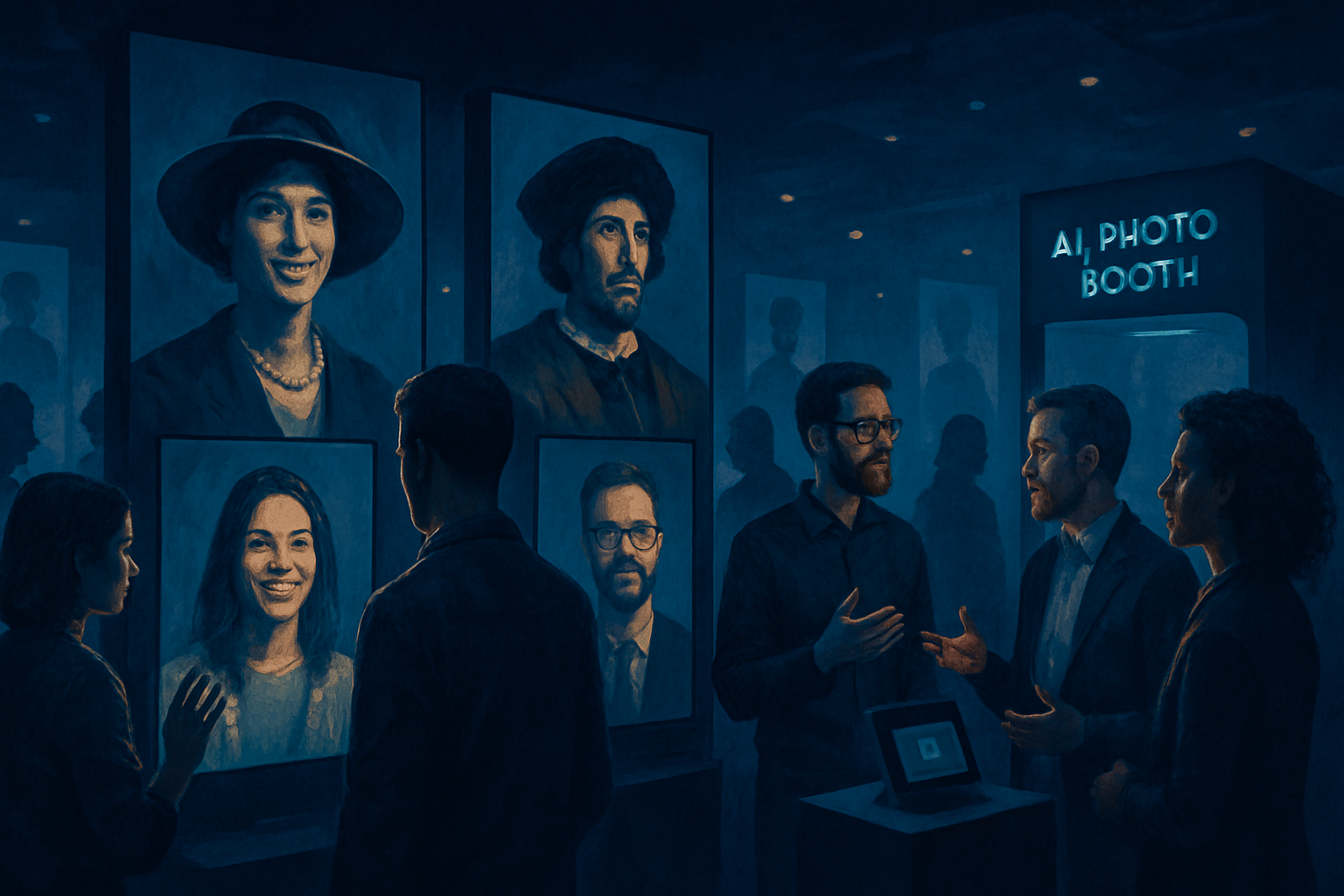
In a captivating episode of Just Now Possible, Teresa Torres had the opportunity to speak with the key figures of Snapbar: Sam Eitzen, Joe Eitzen, and Patrick Ellis. This trio orchestrated one of the most surprising transformations of the era of generative artificial intelligence. Originally, Snapbar was a modest photo booth business for weddings. However, the company quickly evolved to become a major player in the events sector nationwide. The COVID-19 pandemic abruptly interrupted their operations, pushing them to reinvent their model. What emerged from this crisis is a company that seems straight out of the world of AI-focused startups, to the point that Teresa Torres believed it was a new company.
From Physical to Virtual: A Necessary Pivot
Faced with the sudden halt of their activities due to the pandemic, Snapbar made a strategic pivot in 2020. They abandoned physical photo booths to develop a multi-platform virtual product, relying on WebRTC technology. This change was not just a necessity but a complete reinvention of their offering. This shift to virtual was the first step towards a deeper transformation, motivated by a continuous decline in traditional business.
The Integration of AI: Stable Diffusion and Beyond
Snapbar integrated Stable Diffusion 1.5 as their first generative artificial intelligence model. To achieve superior quality results, the team utilized custom LoRA adjustments on H100/H200 GPUs. These technologies enabled Snapbar to produce generative images and videos of a quality that few competitors could match. This technological advancement positioned Snapbar as a leader in the use of AI for content creation.
Enhanced Creative Control and Security
The evolution from negative prompts to long prompts based on reasoning models has provided brands with increased control over the generated content. This has ensured not only quality but also the safety of the creations, ensuring that the images align with the brands' intentions and values.
An Innovative Preprocessing Pipeline
Snapbar developed a meta-prompting preprocessing pipeline. This system ensures that user likenesses, including subtle details like disabilities, are faithfully represented in the generated images. This attention to detail reflects Snapbar's commitment to delivering inclusive and accurate results.
Immersive Experiences for Brands
By designing an experiential marketing platform, Snapbar allows brands to create "worlds" during conferences and live events. This innovation integrates fans into creative brand universes, transforming events into immersive and memorable experiences.
Co-Creation with the Audience
Snapbar introduced participatory user inputs via Mad Lib style prompts. This feature allows users to actively contribute to content creation, transforming each photo experience into a moment of co-creation between brands and their audience.
An Agile Team Thanks to AI
The use of Claude Code and Codex has enabled Snapbar to rapidly develop and deploy new features. As a small autonomous team, they established an agent orchestration framework based on four pillars: context, tools, verification, and workflow.
Vibe Coding: Customer Personalization
Snapbar implemented a "vibe coding" system using the Claude Agent SDK. This innovation allows brands to configure and create their own personalized experiences within the Snapbar platform, offering an unprecedented level of customization.
Brief IA — L'actualité IA en français
L'essentiel de l'actualité de l'intelligence artificielle, décrypté et expliqué chaque jour.