EU: Seven AI Gigafactories, France Invests 100 Million
Le brief IA que les pros lisent chaque soir
Les 7 actus IA du jour, décryptées en 5 min. Gratuit.
Inclus dès l'inscription : notre sélection des meilleurs guides & comparatifs IA.
Choisis ton rythme
Gratuit · Pas de spam · Désabonnement en 1 clic
EU: Seven AI Gigafactories, France Invests 100 Million
The European Union is launching a call for projects to build up to seven AI gigafactories, with over 30 billion euros at stake. France has confirmed its candidacy and is committing 100 million euros to strengthen its digital sovereignty.
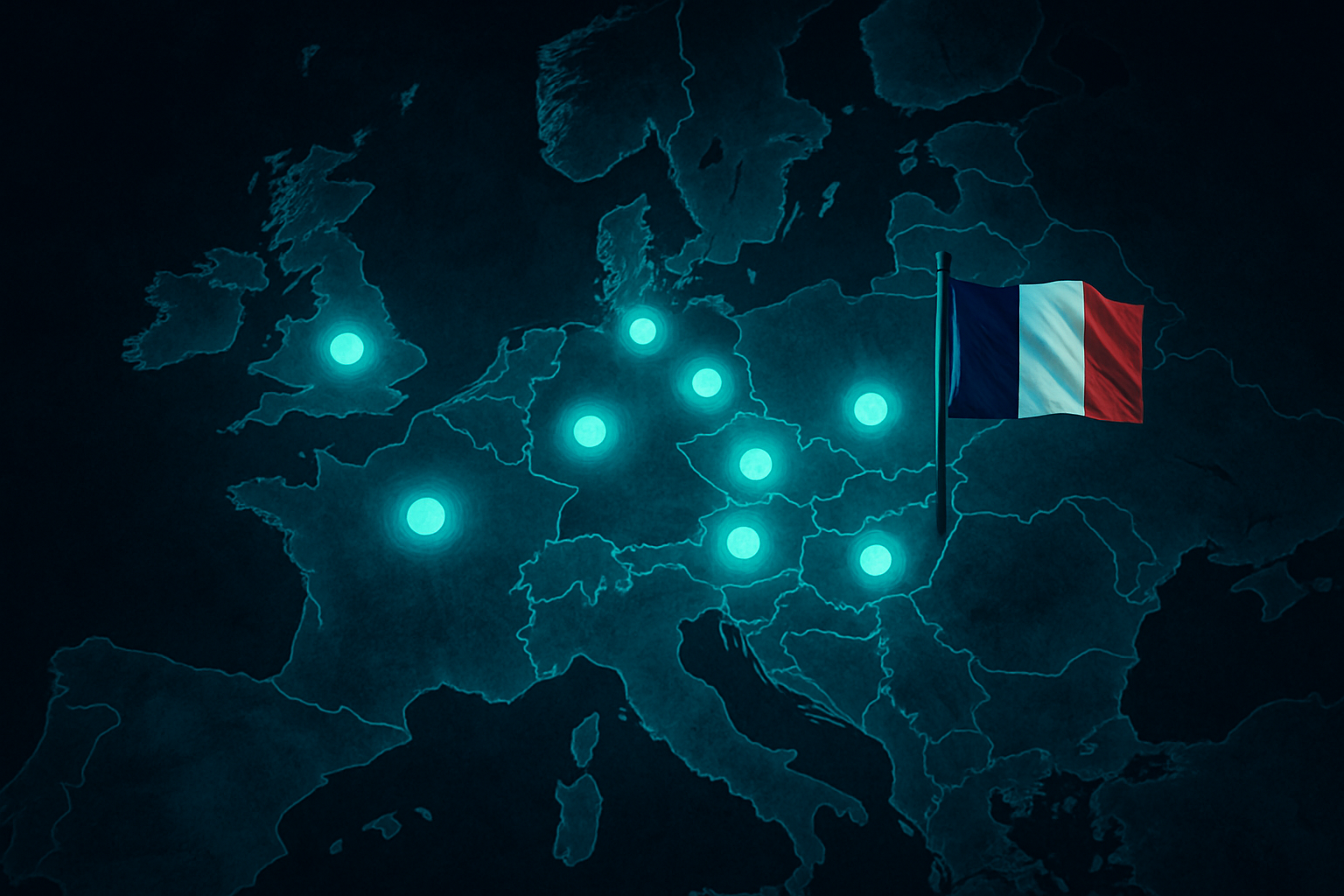
Brussels is opening the race for AI gigafactories with 30 billion euros. In the global race for artificial intelligence, the European Union aims to establish its own computing capabilities. On July 30, a call for projects was launched to construct up to seven AI gigafactories, mega-factories designed to concentrate the computing power necessary to train the most advanced artificial intelligence models. France has confirmed its intention to host one of these factories, committing to purchase 100 million euros of computing capacity from the future French winner.
An AI Gigafactory in Europe
An AI Gigafactory, which the European Union wishes to establish on the Old Continent, resembles an industrial giant, but in a digital version. It includes:
- Aisles and racks of cutting-edge AI processors
- Layers of software and cloud
- Data centers designed to limit energy costs
The Commission aims to provide all of Europe, including startups, growing businesses, SMEs, academia, and public authorities, with direct access to infrastructures capable of training, refining, and running the most advanced AI models. These seven factories will complement an existing network of 19 AI factories and can be spread across several countries thanks to distributed computing architectures.
The Executive Vice-President of the Commission, Henna Virkkunen, considers this initiative a "strategic necessity" for a Europe that does not want to miss the AI train.
Ambitious Funding
Regarding funding, the European Union is putting up to 10 billion euros in public money, intended to leverage at least 20 billion euros in private investments. There will be two successive phases:
-
For the first batch:
- Four projects can receive up to 100 million euros in the initial phase, followed by 400 million in the second phase.
-
For the second batch:
- Three projects aim for up to 200 million euros initially, then an additional 800 million, totaling up to one billion euros in cumulative aid per site for the most ambitious proposals.
Candidates from the first batch will need to match the power of the most efficient AI factory in Europe, then triple it in the second phase. Those from the second batch will aim for double right away, before quadrupling.
Technological Dependence and Partnerships
On the issue of hardware, it is challenging to completely free oneself from the United States. The Commission has signed letters of intent with American companies such as AMD, NVIDIA, and Qualcomm to ensure smooth access to the most powerful chips. A portion of these purchases could be directed towards European startups and scale-ups.
France's Reaction
France reacted quickly and officially announced its candidacy to host one of these gigafactories, with a commitment to purchase 100 million euros of computing capacity, intended to cover the future needs of administrations, research, and the healthcare sector by 2027.
This response is part of the "Our AI" plan, which aims to accelerate the deployment of artificial intelligence in the country. This plan complements existing initiatives, such as the public supercomputer Jean Zay and the AI Factories led by GENCI.
The government has begun promoting France as a destination for these infrastructures, highlighting:
- A largely decarbonized electricity supply
- A dynamic innovation ecosystem
- A commitment to offering a "third way" between data security, interoperability, and environmental excellence
Tight Timeline
Applications must be submitted by November 12, 2026. The joint undertaking EuroHPC will oversee the evaluation of the proposals. Eighteen member states, including France, are committed to jointly purchasing a portion of the computing capacity from the selected future gigafactories.
Decisions on allocations are expected in early 2027, before the signing of final contracts and the launch of construction. Once selected, the gigafactories must be operational within a maximum of eighteen months.
Paris has also announced its intention to explore partnerships with other European countries to strengthen its bid. The battle for computing power is just beginning.
Brief IA — L'actualité IA en français
L'essentiel de l'actualité de l'intelligence artificielle, décrypté et expliqué chaque jour.