Stanford: ChatGPT and the Rise of Academic Cheating
Le brief IA que les pros lisent chaque soir
Les 7 actus IA du jour, décryptées en 5 min. Gratuit.
Inclus dès l'inscription : notre sélection des meilleurs guides & comparatifs IA.
Choisis ton rythme
Gratuit · Pas de spam · Désabonnement en 1 clic
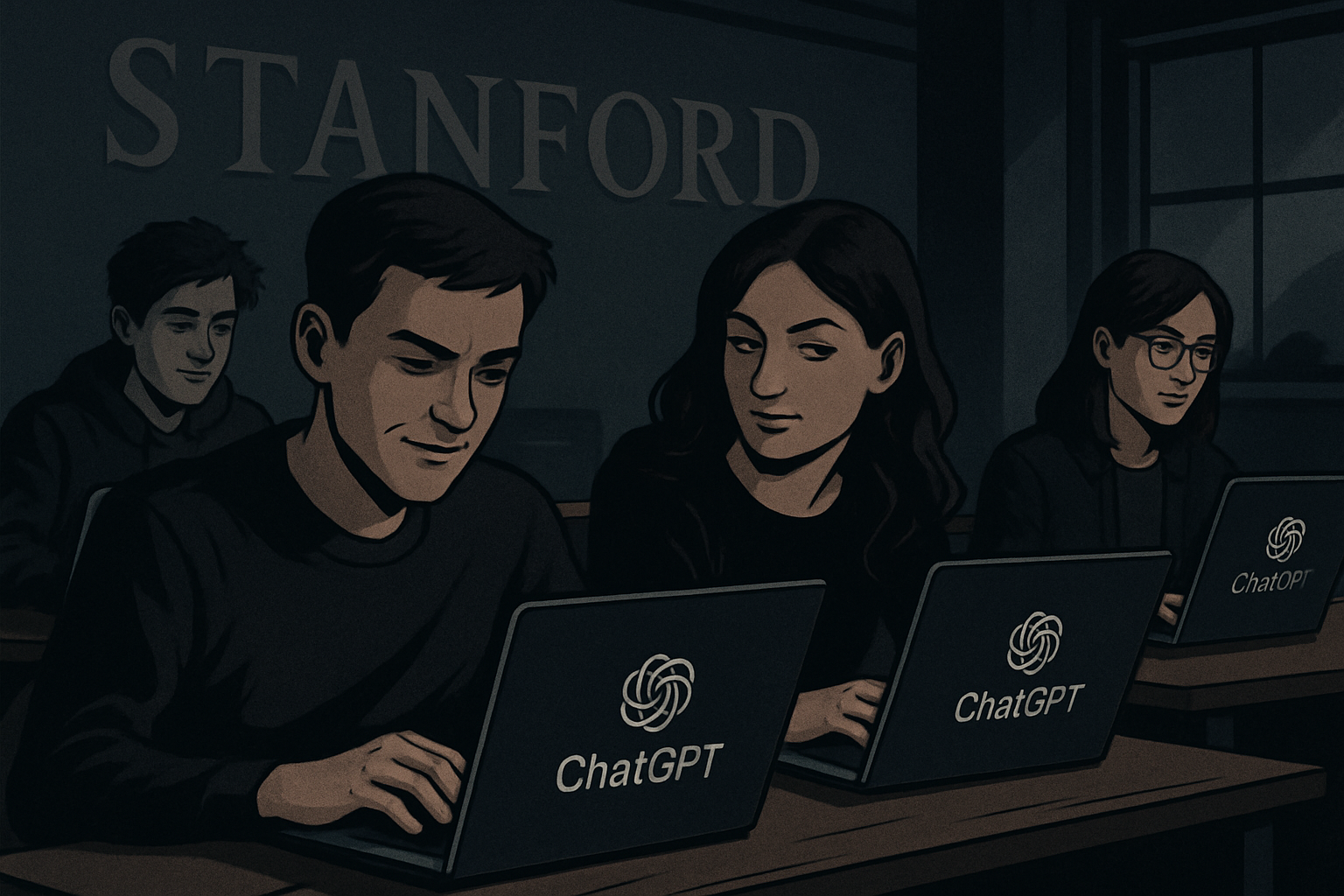
Theo Baker, a student at Stanford University, is sounding the alarm about the impact of ChatGPT on academic integrity. According to him, this artificial intelligence tool has exacerbated an already existing culture of cheating, turning dishonesty into the norm on campus.
In response to this troubling situation, Stanford reintroduced in-person, proctored, handwritten exams in the spring of 2026, a practice that had been abandoned for over a century. This decision aims to counter the rise of plagiarism and cheating, facilitated by tools like ChatGPT. The initial ban on in-person exams was intended to signal trust in the honor of students. Now, most exams are once again handwritten in what are called Blue Books.
Baker, who will graduate in June 2026, is part of the first class that has studied with ChatGPT since its launch in 2022. In an essay for the New York Times, he describes how AI has pushed Stanford's culture of academic integrity beyond the point of no return.
A Culture of "Just a Little Cheating"
Even before Baker's arrival, Stanford was already associated with notorious scandals involving figures like Elizabeth Holmes, Do Kwon, and the founders of Juul. ChatGPT has made cheating more accessible and lucrative, according to Baker. A classmate summed up the campus atmosphere with "just a little cheating," a phrase Baker uses to characterize his cohort.
This culture manifests in behaviors such as misappropriating dorm funds or faking illnesses to obtain UberEats credits. A survey conducted during their junior year revealed that 49% of computer science students preferred to cheat rather than risk failing.
A striking example is a plagiarism scandal where students claimed to have made a breakthrough in AI with Llama3-V, when in fact it was a stolen model, MiniCPM-Llama3-V2.5.
Distorted Incentives
Baker attributes this culture of cheating to distorted incentives. Stanford computer science graduates are no longer guaranteed entry-level jobs, as they now have to compete with language models. Meanwhile, colossal sums are being invested in AI startups, such as Perplexity, which reached a valuation of one billion dollars in April 2024 and 20 billion dollars in 2025.
Faced with an uncertain job market and peers who are rapidly getting rich, education becomes secondary for many students. ChatGPT, nicknamed "Chat" by students, has become a daily tool, even for personal decisions, which could erode cognitive resilience.
According to Baker, universities were not prepared for the impact of AI, caught between a traditional educational model and a future where human intelligence is no longer unique.
Brief IA — L'actualité IA en français
L'essentiel de l'actualité de l'intelligence artificielle, décrypté et expliqué chaque jour.