Anthropic Reveals Jobs Truly Threatened by AI
Le brief IA que les pros lisent chaque soir
Les 7 actus IA du jour, décryptées en 5 min. Gratuit.
Inclus dès l'inscription : notre sélection des meilleurs guides & comparatifs IA.
Choisis ton rythme
Gratuit · Pas de spam · Désabonnement en 1 clic
Anthropic recently published a study that challenges preconceived notions about the impact of artificial intelligence (AI) on the job market. By cross-referencing the theoretical capabilities of AI with its actual use, the company has shed light on a reality that is more complex than often imagined. This innovative approach allows for a better understanding of how AI truly influences various professional sectors.
Common intuition suggests that AI primarily threatens repetitive and low-skilled tasks. However, Anthropic's study reveals a much more nuanced picture. By analyzing the theoretical capabilities of Claude, their AI model, and comparing them to real usage data, researchers were able to map out the professional risk landscape that contradicts traditional models. This analysis stands out due to its empirical grounding, as Anthropic is one of the few companies in the sector with access to millions of real interactions, giving this study a depth that purely academic research cannot achieve.
Skilled Jobs on the Frontline
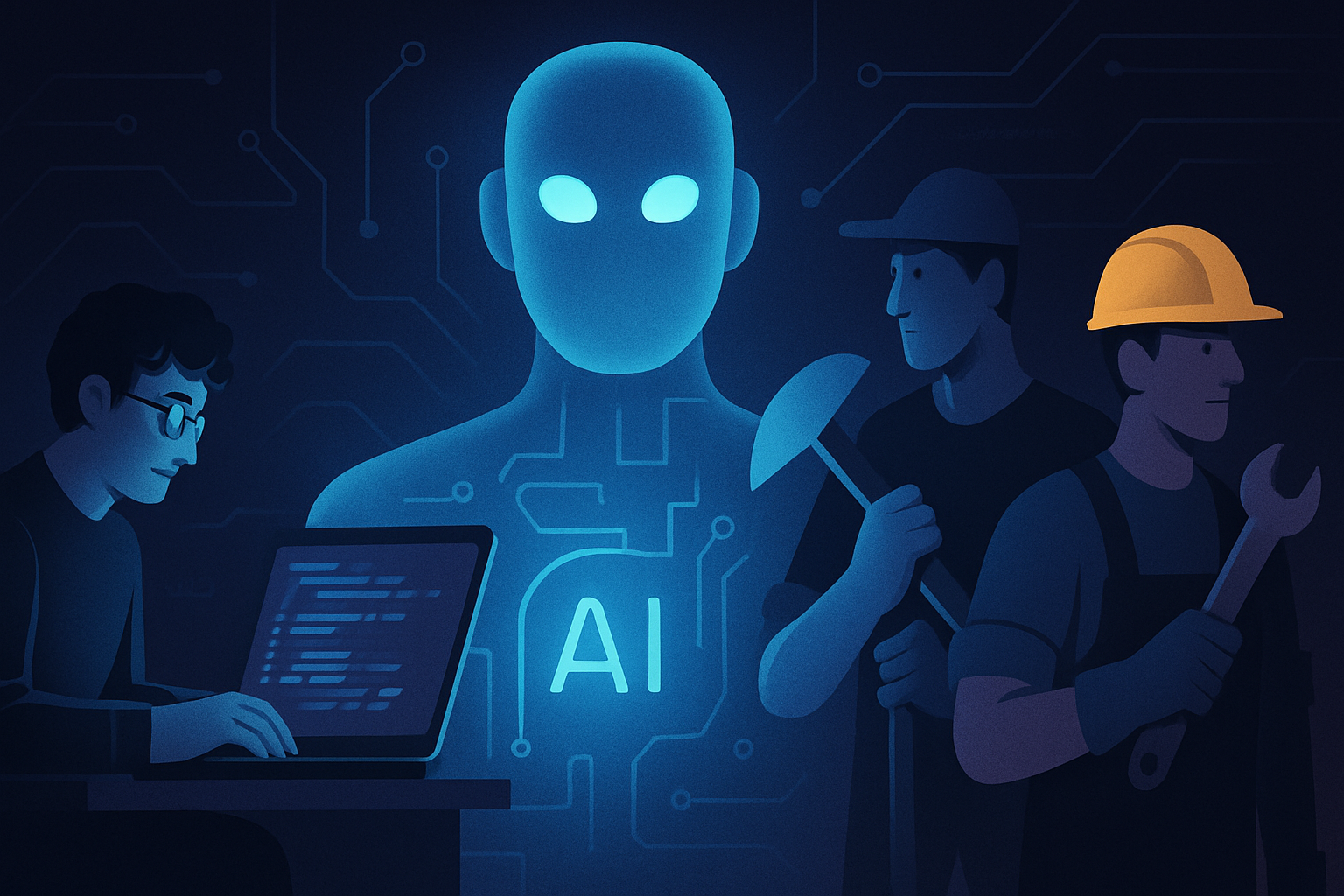
The method employed by Anthropic involves not just considering what an AI model can theoretically do, but observing what users actually ask it to do. This distinction is crucial, as a model may technically be able to write code, analyze contracts, or produce financial reports, but if these capabilities are not utilized in practice, the risk to these professions remains theoretical. The usage data from Claude shows that skilled jobs, such as developers, are among the most solicited by AI. This places programming in a high vulnerability zone. Similarly, the sales and management sectors are seeing AI integrated into their daily processes, thereby altering the nature of human work. This phenomenon is not a distant threat but a current reality, with AI already absorbing low-value tasks and reconfiguring expectations for human workers.
Manual Jobs: A Refuge from AI
In contrast, manual jobs such as cooks, mechanics, and bartenders appear to be better protected. These professions, rooted in the physical world, escape the influence of AI, which cannot perform them remotely. Anthropic's study aligns with the views of the CEO of Palantir, who suggested turning to manual jobs to evade AI, but for structural rather than salary-related reasons. What this study highlights is that the relevant criterion is no longer "repetitive vs. creative," nor even "skilled vs. unskilled." It is "digital vs. physical." Hopefully, this physical/digital boundary will still hold in five years when robotics begins to bridge the gap.
Brief IA — L'actualité IA en français
L'essentiel de l'actualité de l'intelligence artificielle, décrypté et expliqué chaque jour.