Washington Supports OpenAI on Training with Copyrighted Works
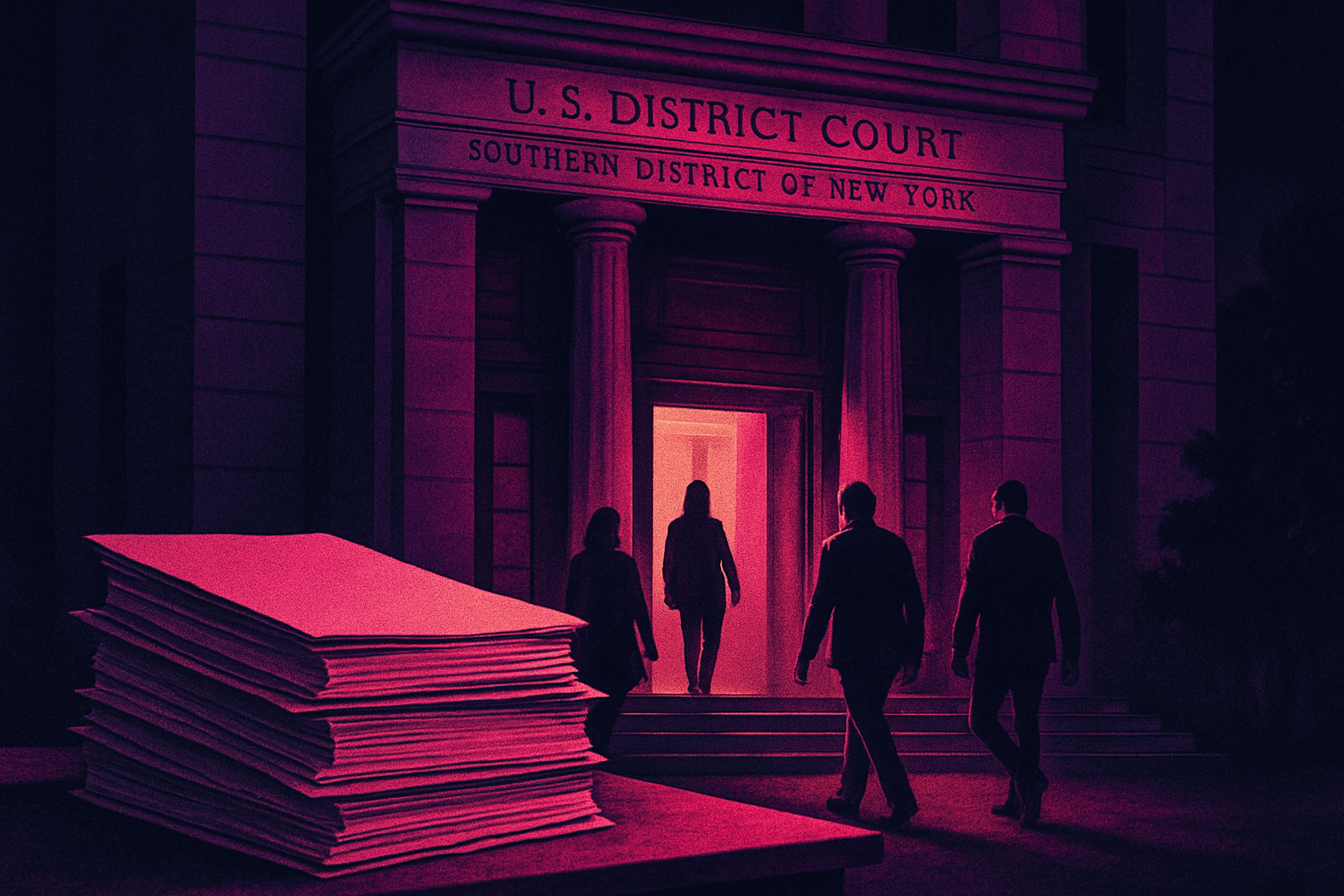
A 20-page brief submitted by the Trump administration supports the use of copyrighted works to train AI models, citing fair use and American leadership. The NYT vs OpenAI litigation continues in federal court in New York, where the influence of this filing remains uncertain.
A filing that has no judicial weight in the New York court
The document submitted by the Trump administration does not have the force of a judgment, and its authors do not have jurisdiction over the case. The dispute between The New York Times and OpenAI is being examined by the U.S. District Court for the Southern District of New York. Although this brief does not set a precedent, it could still influence the judge's assessment.
Recent precedents: Anthropic's condemnation without sanctioning training
Last year, Judge William Alsup ordered Anthropic to pay $1.5 billion to a group of writers for copyright infringement. This ruling did not concern the training of AI models but rather the use of illegal underground libraries to obtain the books used. Judge Alsup compared the training of LLMs to a human reading a book in order to produce a different work. So far, cases involving AI training and copyright infringement have generally favored AI companies.
Le brief IA que les pros lisent chaque soir
Les 7 actus IA du jour, décryptées en 5 min. Gratuit.
Inclus dès l'inscription : notre sélection des meilleurs guides & comparatifs IA.
Choisissez votre rythme
Gratuit · Pas de spam · Désabonnement en 1 clic
The federal argument: fair use and the competitiveness of American AI
The brief asserts that the United States has a strong interest in developing a robust and competitive AI industry, citing an executive order signed last year by Donald Trump to maintain global leadership in artificial intelligence. Restricting the development of LLMs due to a misunderstanding of fair use would hinder creative and scientific progress while obstructing American prosperity and economic mobility.
The heart of the dispute: protected works, massive training, and fair use
The New York Times is suing OpenAI for the use of copyrighted content in the training of its models. The LLMs that power chatbots like ChatGPT, Claude, or Gemini are trained on vast databases of published works, including books, articles, and other protected media, integrated without permission by AI companies, according to their critics. Many publishers, including The New York Times, believe this practice is illegal. The legal debate centers on the fair use exception, which allows for the use of protected works without permission in certain cases, and the potentially transformative nature of these uses. In this context, the Trump administration submitted a 20-page brief in support of OpenAI.
Brief IA — L'actualité IA en français
L'essentiel de l'actualité de l'intelligence artificielle, décrypté et expliqué chaque jour.