Windows 11 tests a RAM reserve for local GPU and AI
Le brief IA que les pros lisent chaque soir
Les 7 actus IA du jour, décryptées en 5 min. Gratuit.
Inclus dès l'inscription : notre sélection des meilleurs guides & comparatifs IA.
Choisis ton rythme
Gratuit · Pas de spam · Désabonnement en 1 clic
A hidden setting in Windows 11 could allow users to allocate a portion of unified memory for graphics and AI computations. This feature, spotted in an experimental and unofficial build, primarily targets PCs rich in shared memory, without promising additional VRAM for dedicated graphics cards.
An Unofficial Setting and a Fragmented Ecosystem
Microsoft has not yet made the IntelligentCarveout feature public. It remains hidden in an experimental version of Windows 11, and its appearance, support, or rollout may change. Until now, reserving memory for an integrated GPU was done through the BIOS or manufacturer-specific utilities. AMD, for instance, allows management of Variable Graphics Memory through its Adrenalin driver, with the option to allocate up to 96 GB of RAM to the graphics component on certain Ryzen AI Max processors. In contrast, macOS lacks an equivalent setting, and on Linux, tools depend on hardware and drivers.
What the Setting Would Change in Windows 11
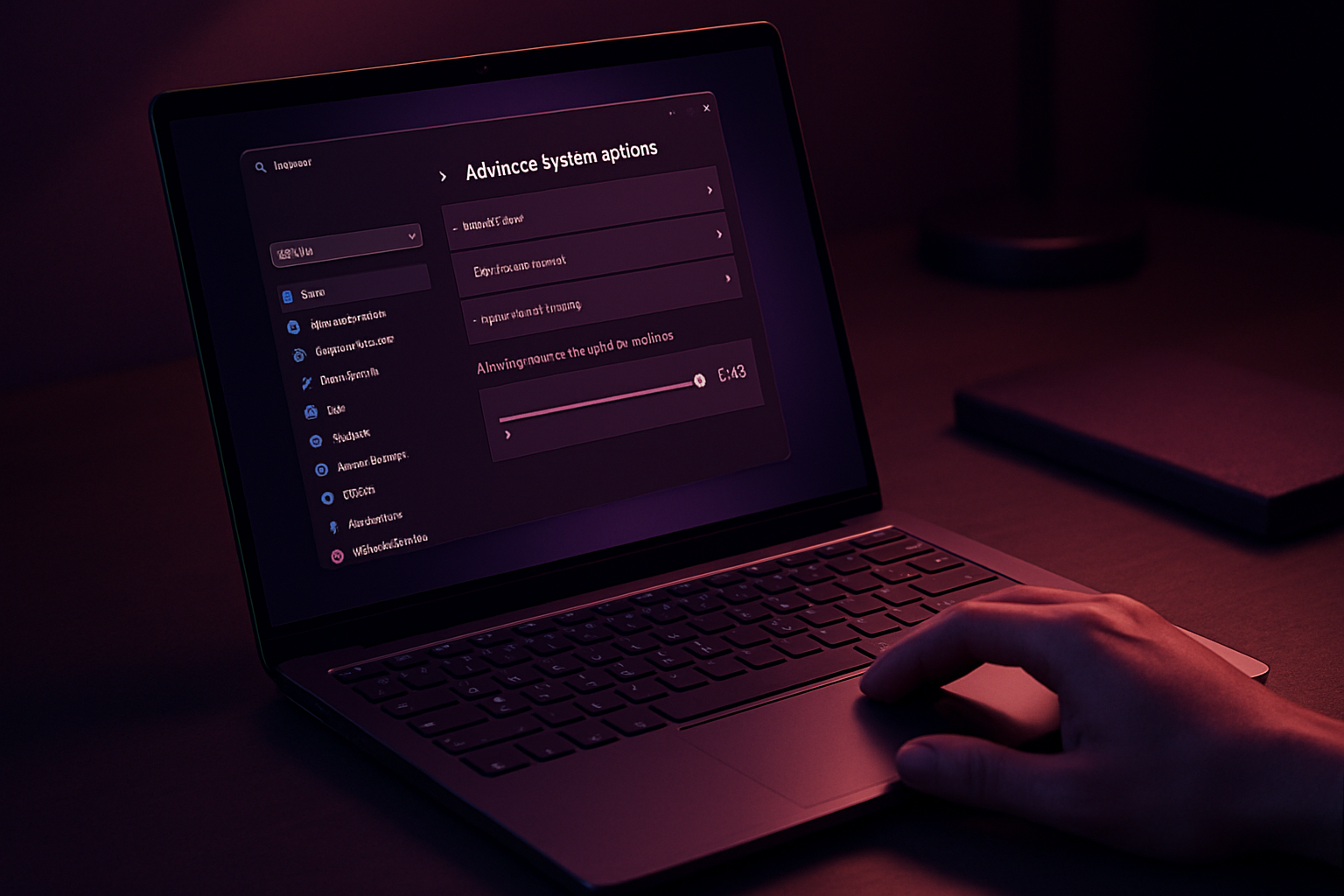
The principle would be to allow users to arbitrate the distribution of RAM between accelerators and traditional applications on configurations with unified memory shared by the CPU, GPU, and NPU. It would become possible to reserve a portion of memory for gaming loads or local AI models, or conversely, to leave it for office tasks and the browser. The setting would appear in Settings, System, Advanced Options, with predefined profiles, a custom mode, and an option to disable it.
A Dedicated Reserve, Distinct from Shared Memory Displayed
The shared GPU memory visible in the Task Manager mainly corresponds to a capacity that the GPU can dynamically borrow. The new mechanism would set aside a portion of RAM dedicated to graphics or AI computations, which would be unavailable for other applications. However, it would not create any additional VRAM for dedicated graphics cards.
Who Would Benefit from the Setting and Within What Limits
Primarily, computers equipped with a large amount of unified memory, such as PCs with an AMD Ryzen AI Max processor or the upcoming NVIDIA RTX Spark platforms, announced to support up to 128 GB, would benefit from this. Greater flexibility could be provided to developers running large language models locally, creators, or certain gamers using an integrated GPU. Conversely, on configurations with only 16 GB, an excessive allocation could limit other uses.
Discovered in an Experimental Build, Code Name and Uncertainties
Microsoft is testing this unified memory management panel for Windows 11, but its availability is not guaranteed. The feature was spotted by Windows Latest in the experimental build 29648.1000, under the internal name IntelligentCarveout. Its presence in a testing branch and the lack of a formal announcement leave its final form and timeline uncertain.
Brief IA — L'actualité IA en français
L'essentiel de l'actualité de l'intelligence artificielle, décrypté et expliqué chaque jour.