35% of Recent Pages Show Signs of AI Authorship, According to Pew
Le brief IA que les pros lisent chaque soir
Les 7 actus IA du jour, décryptées en 5 min. Gratuit.
Inclus dès l'inscription : notre sélection des meilleurs guides & comparatifs IA.
Choisis ton rythme
Gratuit · Pas de spam · Désabonnement en 1 clic
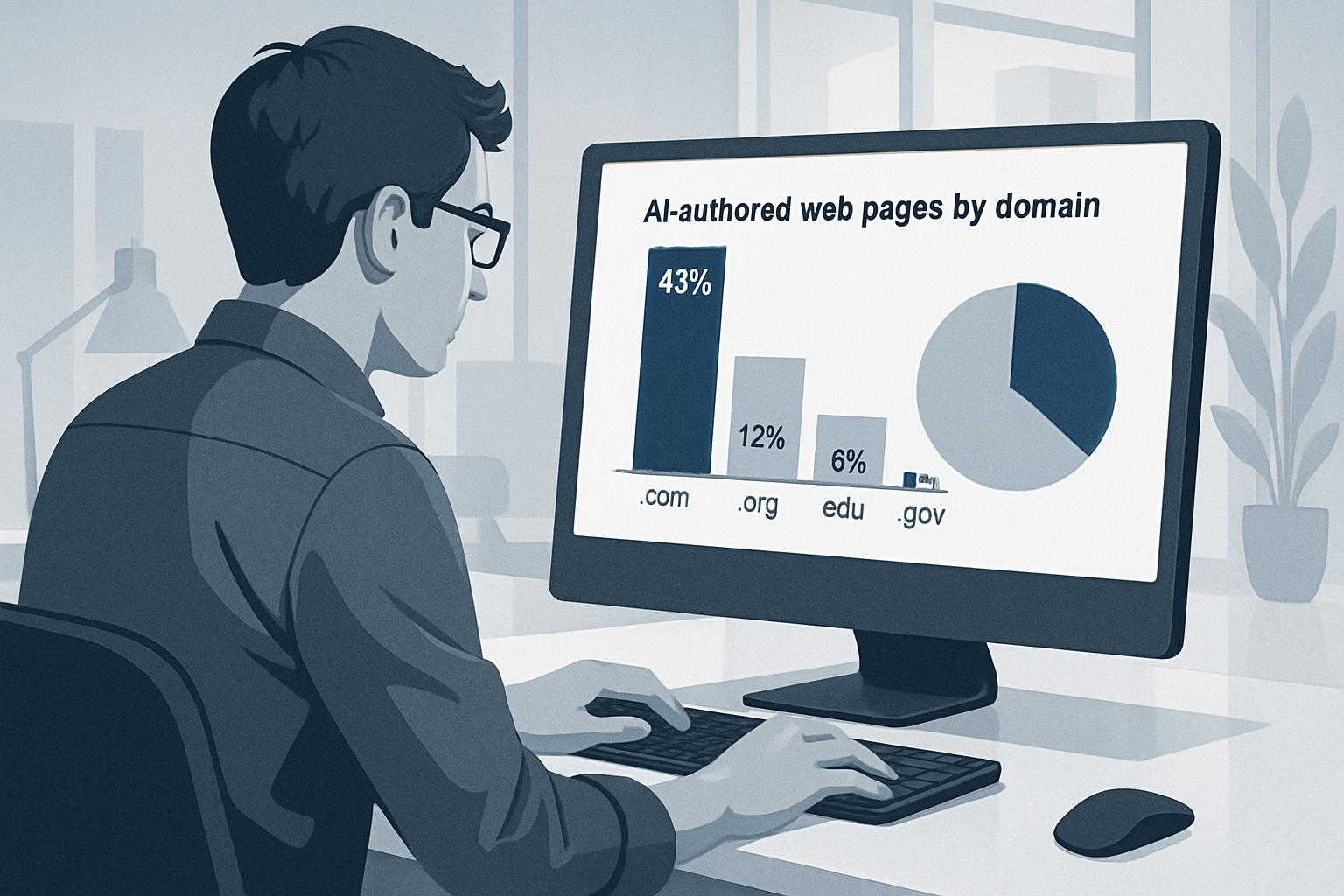
According to Pew Research, 35% of pages published after the release of ChatGPT show signs of AI authorship. The footprint varies significantly by domain, with far more signals on .com than on .edu or .gov. This estimate is based on Common Crawl and a detection tool from Open Pangram.
.com far more exposed than .edu/.gov, and acknowledged detection limits
Pew Research notes marked discrepancies across domains: .com URLs exhibit about ten times more signs of AI authorship than .edu or .gov, both measured at around 1%. The .org domains are at 4.6%. The organization further clarifies that the tool used, Pangram, like other detectors, may misclassify pages as being written by AI. Meanwhile, other supposed markers of AI authorship have been increasing over the years, including the use of hyphens, the Oxford comma, and phrases like "it's not X, it's Y."
After removing old pages, 35% of recent pages show AI signals
To estimate the current situation, Pew Research excluded pages published before the release of ChatGPT and focused on post-release publications. Within this scope, signs of AI authorship appear in 35% of the pages. The organization emphasizes that random samples inevitably include older content published before the existence of automatic writing tools, which could not have been written by AI. This trend is evident in a random sample of 10,000 pages collected in July 2026, of which about 10% showed clear signs of AI authorship. According to Pew, more than a third of pages published after the arrival of ChatGPT exhibit signs of AI origin.
Scope and context: 500,000 Common Crawl pages, Open Pangram, and bot traffic
Nearly 500,000 English pages from the Common Crawl archive, covering five years and starting a few years before the release of ChatGPT in November 2022, were analyzed. The detection of content likely written or heavily edited by AI was conducted using Open Pangram's technology, and Pew's work focuses on the content actually crawled, not on the identity of the visitors. Published on a Thursday, the report comes as Cloudflare reported that bot traffic has surpassed human traffic, earlier than the company had anticipated. Pew also indicates that its findings align with other studies that describe a significant portion of new pages as being written or substantially edited by AI systems.
Brief IA — L'actualité IA en français
L'essentiel de l'actualité de l'intelligence artificielle, décrypté et expliqué chaque jour.