A $50 Kit Competes with Muse Charm, at the Cost of Much Code
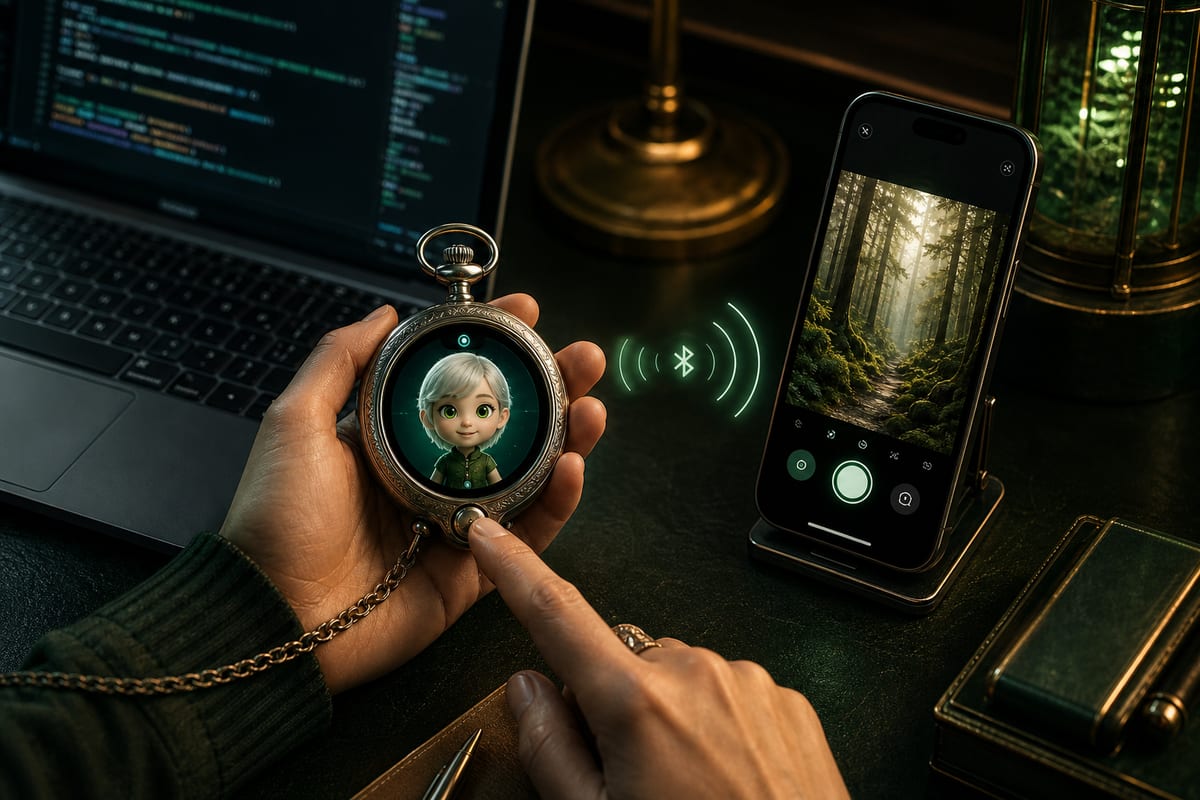
A $50 Waveshare microcomputer can already communicate with Muse, display avatars, and control a smartphone camera. With extensive reprogramming sessions, it even surpasses the official demos. However, the latency of Meta's servers, the lack of ready-to-use functions, and security concerns limit its appeal without significant software investment.
Latency, Network Caution, and Unclear Utility
Response times vary depending on Meta's servers, which can be either fast or slow. As a precaution, the device was connected to the guest Wi-Fi. The utility of a Muse Charm for individuals who know how to code and are willing to accept certain risks remains uncertain, especially since the silver pendant has nearly been dropped several times. Without additional coding, it offers no more Muse functions than a phone, and possibly less. The appeal of dedicated hardware mainly lies in the possibility of fully reprogramming it. It remains to be seen whether the commercial Muse Charm will be as freely programmable: the answer will come upon its shipment. Distrust towards Meta and the Muse agent has led to isolating the device from the main network.
What the $50 Kit Has Allowed to Add
After reprogramming, a history page allows users to review responses, and a British voice from ElevenLabs reads them aloud. A button triggers remote photo-taking with a good-quality live preview, and the front camera preview is no longer mirrored. A lower-quality Bluetooth preview stream allows users to bypass home Wi-Fi to capture photos from various angles. Avatars inspired by Meta Connect animate a mini Tamagotchi-style game, featuring food, play, sleep, bath, and four levels of hunger, boredom, and dirtiness; treats dirty the avatars, and excessive play tires them out. A fix limits audio sending to one second to avoid empty clips. A three-hand pocket watch dial was programmed in 15 minutes, and video clips of Mark Zuckerberg presenting the Muse Charm can be played on the device. The ElevenLabs voice used was deemed the least depressing among those in the free version.
Le brief IA que les pros lisent chaque soir
Les 7 actus IA du jour, décryptées en 5 min. Gratuit.
Inclus dès l'inscription : notre sélection des meilleurs guides & comparatifs IA.
Choisissez votre rythme
Gratuit · Pas de spam · Désabonnement en 1 clic
Initial Limitations of Muse Integrations
Initially, the sent audio was interpreted as dictation to be transcribed rather than commands. Even after correction, the system remained slow and silent, displaying only a few words on the screen, with the rest requiring consultation of the mobile app. On the content side, only a single Jolly avatar was offered, and there was no automatic discovery of smart home devices, unlike devices such as Amazon Echo or Google Home. The example app provided by Meta engineers to stream video from the phone lacked a remote trigger, limiting its usefulness for photography.
Hardware and Setup: A Meta-Approved Kit
The project is based on a Waveshare ESP32-S3 1.75C pendant, featuring a 1.75-inch touchscreen, purchased for $50 and shipped from China. This AI development kit with voice activation resembles the Muse Charm and is part of the hardware suggested by Meta to create "Muse gadgets" connected to its cloud via open-source code and tokens. The setup involved plugging it into a PC, using Meta's code repository, and pairing it with the Muse mobile app. The device lacks cameras and 5G, but it communicates with Muse, displays avatars, can serve as a pocket watch, a remote camera viewfinder, and, with enough coding, control a smart home.
Skills and Code Quality: Modesty and Uncertainties
The person behind the project states they have no programming experience and does not evaluate the quality of the obtained code. The entire setup cost $50. In response, Meta is preparing a Muse Charm designed to carry an AI assistant in a pendant, in a Tamagotchi spirit, featuring avatars including Jolly. The comparison thus remains open between a low-cost yet demanding kit and the upcoming commercial device.
Brief IA — L'actualité IA en français
L'essentiel de l'actualité de l'intelligence artificielle, décrypté et expliqué chaque jour.