A Study Reveals AI Directing Users to Fraudulent Sites
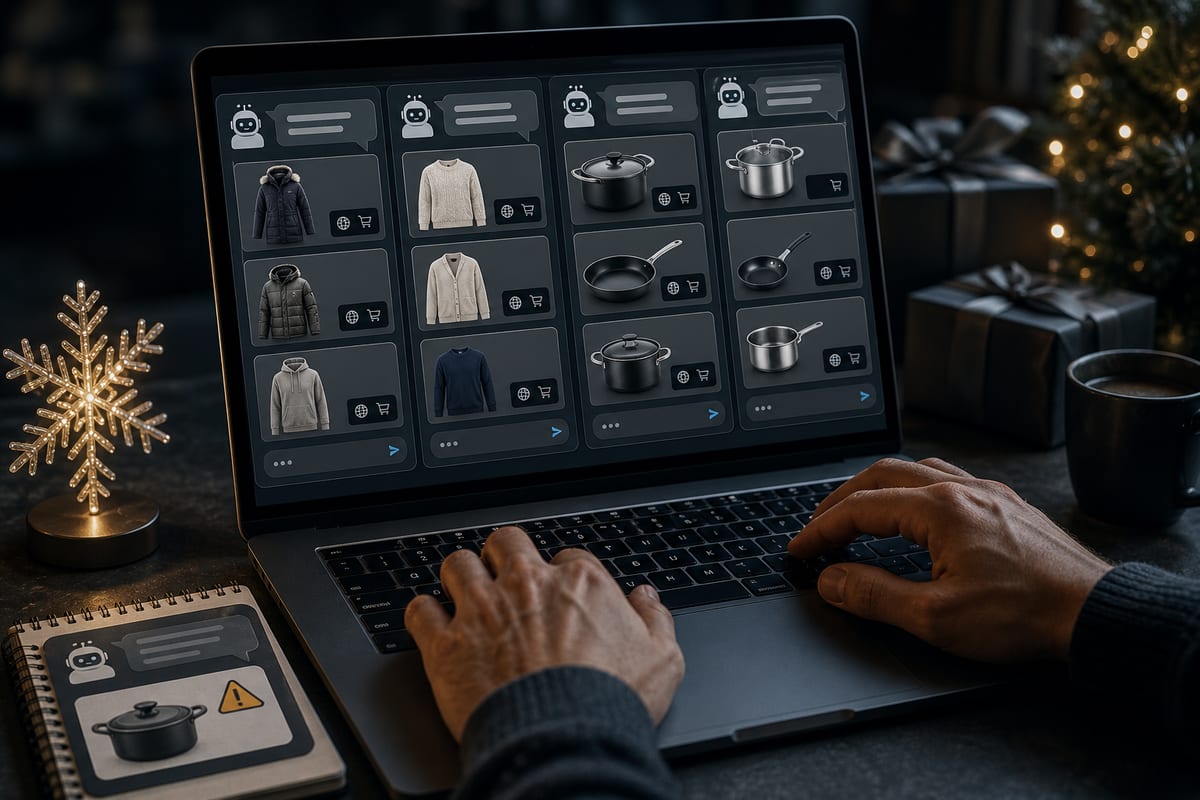
Podqi has identified recommendations for fraudulent sites by AI assistants used to prepare purchases. Perplexity, ChatGPT, and Gemini are all involved, to varying degrees, while queries about smaller brands seem more exposed. Companies say they are strengthening their safeguards.
Deceptive Responses as the Holidays Approach, Especially for Small Brands
As the end-of-year shopping season approaches, the reliability of AI chatbot recommendations is becoming increasingly important, as consumers seek available items and good prices. Podqi believes that the presence of fraudulent sites in responses could quickly become a risk for buyers, in addition to posing a problem for brands and retailers. Certain queries, particularly those regarding non-existent regional sites, more frequently trigger links to risky sites. Smaller brands are more affected, with queries about large companies containing fraudulent sites about half as often. One cited example involves Perplexity, which presented an incorrect page as the official site of Stüssy, describing it as a reliable starting point for authentic items. Trevor West, CEO and co-founder of Podqi, recommends verifying the source before entering personal or banking information, even if the response comes from a chatbot.
Perplexity, ChatGPT, and Gemini Are Not Immune to Risk, with Marked Disparities
Out of the 6,795 responses analyzed, all tested AIs cited sites considered risky, meaning fraudulent platforms imitating retailers or selling counterfeits. Perplexity has the highest rate, with 15% of responses containing such links. ChatGPT reaches 8%, while Gemini drops to 4%. ChatGPT also issued warnings to users most frequently, doing so in 24% of cases.
Le brief IA que les pros lisent chaque soir
Les 7 actus IA du jour, décryptées en 5 min. Gratuit.
Inclus dès l'inscription : notre sélection des meilleurs guides & comparatifs IA.
Choisissez votre rythme
Gratuit · Pas de spam · Désabonnement en 1 clic
A Protocol Focused on 151 Brands and Two Testing Sessions in September
Podqi conducted two testing periods in September, posing purchasing questions to chatbots regarding 151 brands. The queries focused on the best sites to buy a brand, online retailers, the existence of regional sites, or international shipping. Selected brands included fashion labels such as Lululemon, Birkenstock, Stüssy, Madhappy, as well as Le Creuset for home goods. Podqi designed its own questions and relied on a tool to record the responses generated by the AIs. In 15% of exchanges, the evaluated assistants, namely ChatGPT, Gemini, and Perplexity, suggested fraudulent sites. Podqi is a company specializing in intellectual property protection.
Google, OpenAI, and Perplexity Defend Their Practices and Promise Improvements
On the corporate side, Google claims to take information quality seriously, praises Gemini's results among the evaluated products, and states it continues testing and improving its models. OpenAI explains that its goal is for ChatGPT to connect users to reliable places for shopping and says it continues to strengthen its protections to limit the appearance of potentially misleading sites. Perplexity defends its accuracy, claiming to be the most reliable AI on credible research benchmarks for four years, while acknowledging it does not aim for 100% accuracy. Furthermore, these systems are promoted for shopping uses such as research, comparison, and discovery of products or retailers.
Brief IA — L'actualité IA en français
L'essentiel de l'actualité de l'intelligence artificielle, décrypté et expliqué chaque jour.