Accenture: Trust in AI for Procurement Grows
Le brief IA que les pros lisent chaque soir
Les 7 actus IA du jour, décryptées en 5 min. Gratuit.
Inclus dès l'inscription : notre sélection des meilleurs guides & comparatifs IA.
Choisis ton rythme
Gratuit · Pas de spam · Désabonnement en 1 clic
Growing Trust in AI Agents
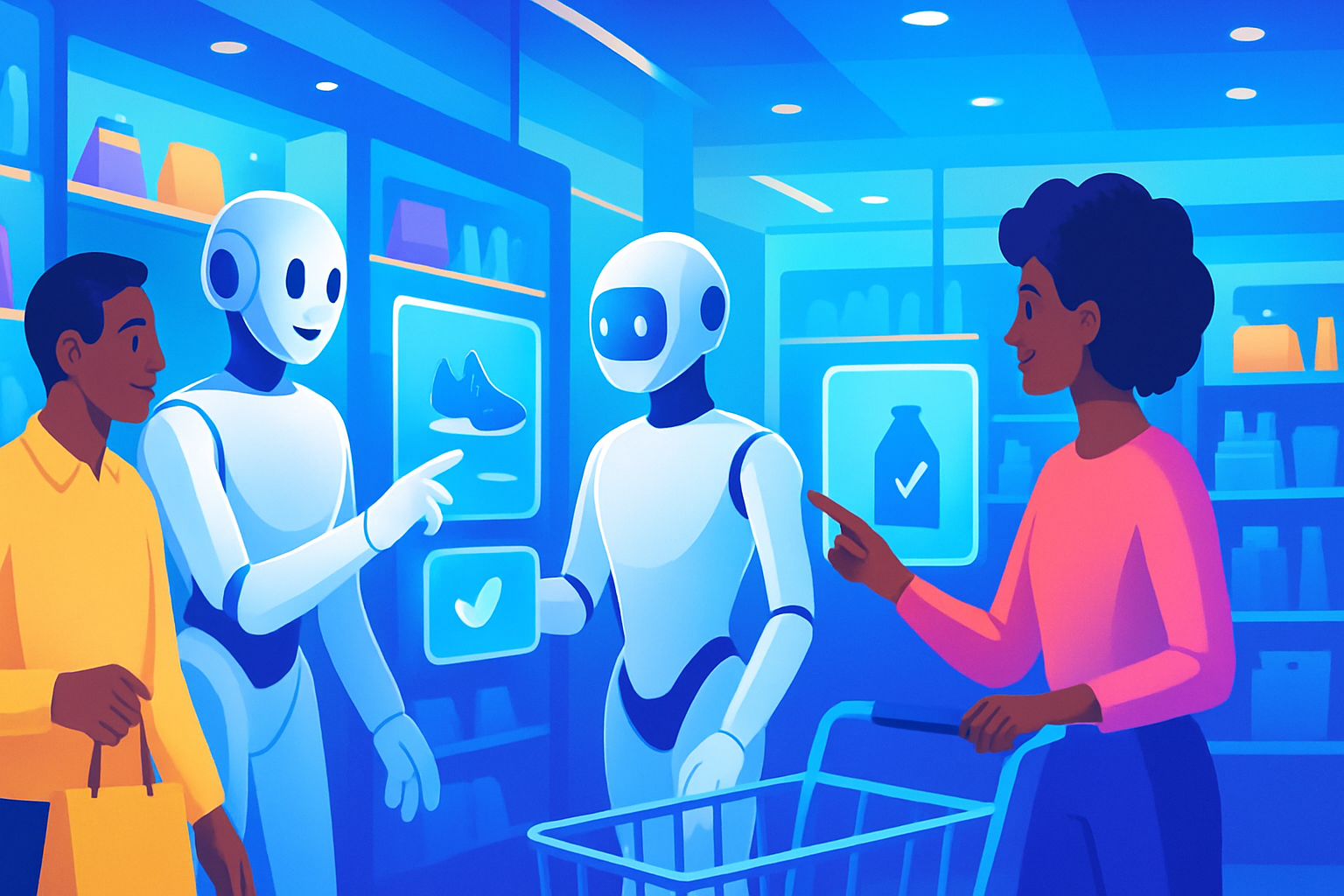
According to new research from Accenture, consumers are showing increasing trust in AI-based shopping agents. The study, titled Consumer Pulse Research 2026, is based on a survey conducted with 25,590 consumers across 16 countries. The results indicate that 74% of respondents would trust a personal AI agent more than their best friend to make a purchase on their behalf.
Accenture's report describes this trend as a shift beyond the use of simple chatbots or search tools. In this context, an AI agent is defined as software capable of acting on behalf of a consumer within defined limits. It can perform tasks such as making purchases, negotiating, resolving complaints, managing subscriptions, and, in some cases, finalizing purchases.
Consumers Ready to Delegate
The survey reveals that 74% of consumers would be willing to let an AI agent handle routine tasks. These tasks include negotiating prices, resolving complaints, renewing subscriptions, and restocking products. Accenture clarifies that this level of delegation does not mean consumers are ready to relinquish every decision. On the contrary, the results suggest that consumers are more open to delegating parts of purchases that seem repetitive, time-consuming, or low-risk.
The report also found that 32% of consumers would ask an AI agent to make a purchasing decision on their behalf within defined limits, such as budget and brand preferences. In this scenario, the AI agent would choose the best available option, but the consumer would review and approve the purchase before payment. This type of delegation is classified as delegated decision-making, distinct from task execution and autonomous purchasing.
Autonomy Still Has Limits
A smaller group of consumers is open to AI agents finalizing purchases without final approval. The report revealed that 9% of respondents would allow an agent to initiate and complete purchases within defined limits. The payment phase showed a lower openness to autonomous decisions by agents. Accenture indicated that only 12% of consumers are willing to let agents make purchasing decisions autonomously at this stage.
The report identified several conditions that influence consumers' willingness to delegate more control, including data protections, configurable permissions, and instant cancellation options. Trust is also affected by clear recourse, platform reputation, and perceived neutrality.
Consumers feel more comfortable with the autonomy of AI agents in parts of the journey where effort is high and emotional stakes are lower. The report highlighted negotiation and post-purchase support as areas where consumers show greater openness.
What This Means for Brands
The report indicates that AI-assisted shopping requires brands and retailers to make product information clear and machine-readable. If consumers are using agents to compare options, prices, availability, policies, and claims must also be easy for agents to evaluate.
AI agents can compare brands using structured attributes and verified claims. They can also assess value for money and delivery track records. The report noted that this affects how brands appear on digital channels, including search engines, marketplaces, and social platforms.
The report found that 56% of all consumers would tell their AI agent which brands to consider. Among loyal consumers, 37% stated they would allow an agent to switch brands if it found a better option. The report linked brand switching to factors such as fit, price, availability, and service performance.
Accenture also found that consumers are interested in agents capable of working with multiple suppliers. The report indicated that 61% want an agent that can shop from multiple grocery retailers on their behalf, while 71% want an agent capable of planning and booking a complete trip across airlines, hotels, and activities.
Brands and retailers must ensure that data on products, prices, availability, policies, and claims are readable by the systems that agents use to evaluate options.
Conclusion
The report also revealed that 71% of consumers expect generative AI to influence at least half of their spending decisions over the next 12 months. Additionally, 63% of consumers want agents to shop for their "ideal self," for example, by helping them make healthier choices or stick to a budget. Among active generative AI users, 26% reported having purchased a more expensive item because AI had boosted their confidence in the decision.
Stores remain important, with 87% of consumers believing that AI will affect the role of stores. 31% stated that stores will become more important for creating enjoyable moments. The results show a lower openness to complete automation than to the delegation of routine tasks, with a more selective pattern, as consumers delegate routine or low-risk tasks while retaining control over purchases involving personal preferences, risks, or emotional value.
Brief IA — L'actualité IA en français
L'essentiel de l'actualité de l'intelligence artificielle, décrypté et expliqué chaque jour.