Acti Integrates AI into Mobile Keyboard for iOS and Android
Le brief IA que les pros lisent chaque soir
Les 7 actus IA du jour, décryptées en 5 min. Gratuit.
Inclus dès l'inscription : notre sélection des meilleurs guides & comparatifs IA.
Choisis ton rythme
Gratuit · Pas de spam · Désabonnement en 1 clic
Acti Integrates AI into Mobile Keyboard for iOS and Android
A new startup aims to integrate AI into the software you use the most: your smartphone's keyboard.
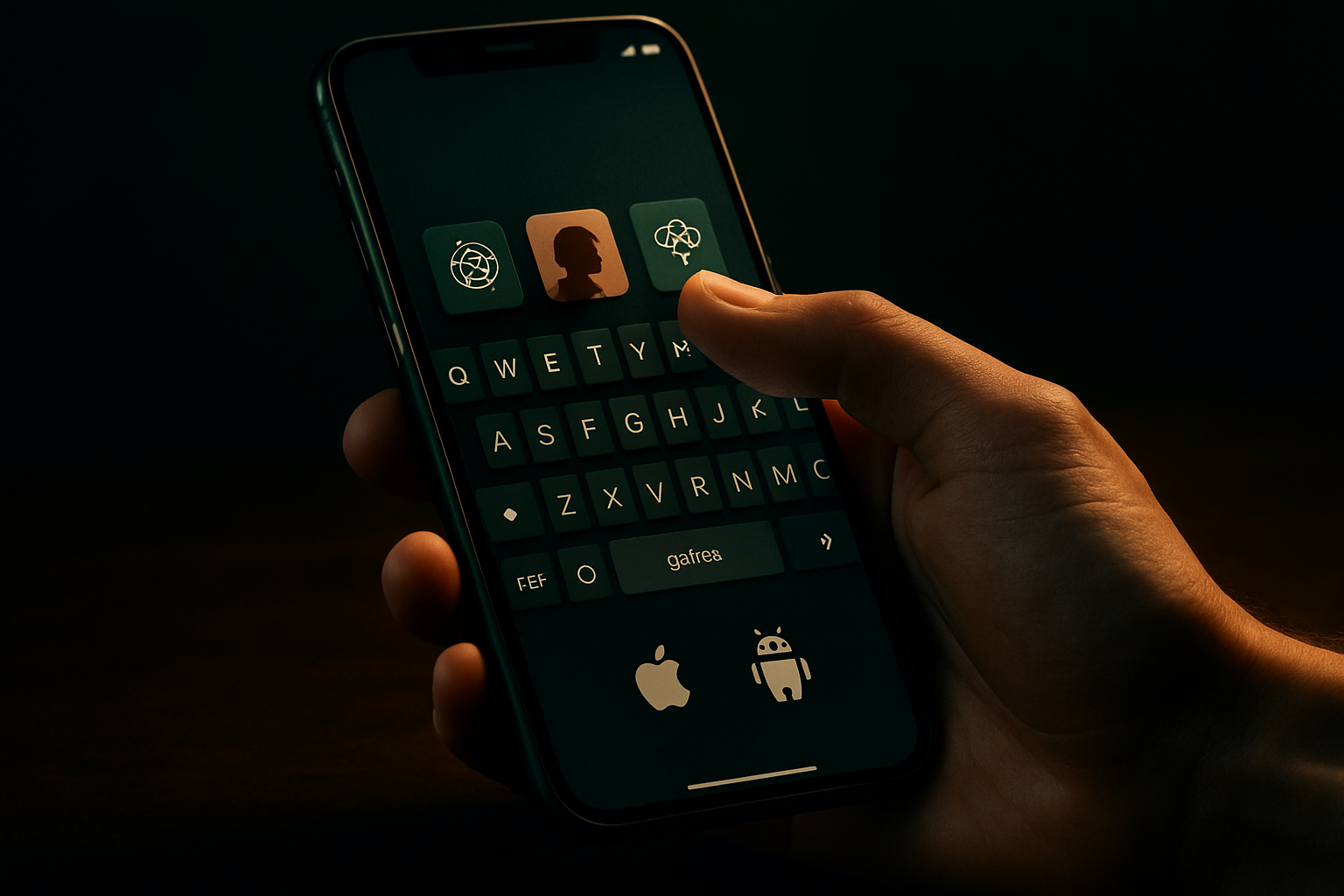
On Tuesday, Acti, based in Singapore (short for "action"), launched an agentic keyboard for iOS and Android that not only suggests your next word but can also perform actions on your behalf, integrating AI tools directly into the applications you already use, including email, messaging, social media, and more.
According to Young Wang, founder and CEO of Acti, this addresses a familiar problem for anyone juggling multiple applications; users constantly have to switch from one app to another just to get help from an AI.
“Today's AI agents are fundamentally limited because user context remains fragmented across separate applications,” Wang told TechCrunch in an email interview (due to time zone differences). Acti “sits above all these applications, which is why we can build a layer of context that truly belongs to the user rather than the platform,” he added. “This is the foundation upon which the entire era of AI agents will be built.”
The launch reflects a different idea about how consumers will ultimately adopt AI. Rather than asking users to open various AI chatbots, Acti demonstrates how AI can be integrated into the interfaces we already use.
For example, if a friend wanted to know where to eat nearby, Acti could suggest a local recommendation. Or if someone mentioned an action in your conversation, Acti could be used to share live pricing right there in the chat. Today, you would need to switch to a search engine or another AI app to get that kind of information, then return to the app where the conversation took place, which is time-consuming.
Under the hood, Acti is powered by Google's Gemini models, which Wang says were chosen for their balance of intelligence, speed, reliability, multilingual performance, and cost-effectiveness. Gemini is also well-suited for one of Acti's key features, called Skills, which function like custom shortcuts: users can program a single key on their keyboard to automatically trigger a multi-step task — for example, translating a message or instantly sharing a meeting link.
It is important to note that Acti is built around a local-first model, meaning that users' personal context remains on their device by default for privacy reasons. The company claims that the app does not access or store private messages, conversations, or personal context unless the user explicitly invokes a feature requiring external processing.
Wang says he was encouraged to work on a new keyboard for the AI era after spending a decade at Baidu, developing its Facemoji Keyboard to over 300 million daily active users.
“When LLMs arrived, I realized that something fundamental had changed,” Wang said. “Text was no longer just something people typed; it had become a vector of intention. And in many everyday contexts, this intention can now be directly translated into action.”
“This made me believe it was time to reinvent one of the most basic and universal products that people use every day: the keyboard. For me, the opportunity to rebuild such a fundamental surface for the AI era is deeply exciting,” he added.
Acti's business model is still in development, but the company plans to generate revenue through subscriptions offering users more advanced AI models, higher daily usage limits, and other premium features.
The app comes with some built-in Skills, such as “T,” which allows you to translate a message into another language by holding down a key on your keyboard. Another Skill, “C,” will send a meeting link.
Users do not need to know how to code to create a Skill, the company emphasizes. Instead, you can simply describe what you want in plain language, and Acti builds it. Before the launch, early access testers created over 1,000 Skills in less than two weeks.
These Skills can be either private for your own use or shared publicly on a Skills marketplace, where you can find those that others have already created, such as Skills for accessing real-time data on the World Cup or Polymarket links, among others. In the future, this Skill Hub could also offer additional monetization opportunities.
The company also exclusively shared with TechCrunch that it has just closed a $5.3 million seed funding round, led by BITKRAFT Ventures.
“We supported Acti because this team has a real chance to own the next phase of human-machine interaction,” said Jonathan Huang, partner at BITKRAFT Ventures, regarding the firm's investment.
The Acti team also includes CTO Mike Sun, who was the founding technical lead of Yike Album, Baidu's cloud photo platform, which reached over 10 million daily active users. Also at Acti is Junbo Yang, CSO, who joined the company after working at HashKey Capital, where Yang led dozens of investments in the consumer sector.
Brief IA — L'actualité IA en français
L'essentiel de l'actualité de l'intelligence artificielle, décrypté et expliqué chaque jour.