Agentic GraphRAG: Six Models for Contextual Graphs
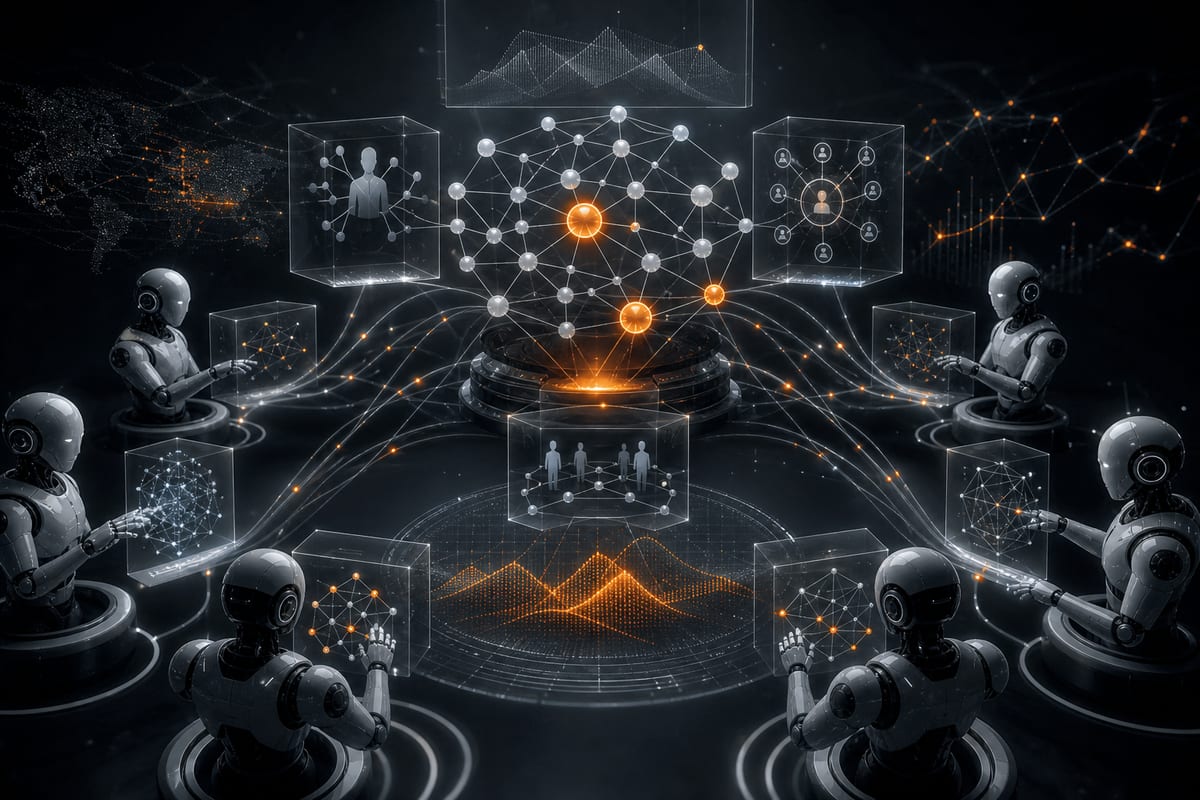
Six Agentic GraphRAG models describe how agents transform a static graph into contextual memory. Decisions, preferences, incidents, real-time data, prediction, and multi-agent coordination make up this set designed to adapt systems to user context.
Predict, Coordinate, and Update in Real-Time
Predictive analysis relies on data stored in graphs to anticipate future user behaviors and adjust decisions accordingly. Another model encourages cooperation among agents, simplifying exchanges and group decision-making. With the integration of real-time data, agents update contextual graphs as soon as new information becomes available. Together, these models enhance system responsiveness.
Le brief IA que les pros lisent chaque soir
Les 7 actus IA du jour, décryptées en 5 min. Gratuit.
Inclus dès l'inscription : notre sélection des meilleurs guides & comparatifs IA.
Choisissez votre rythme
Gratuit · Pas de spam · Désabonnement en 1 clic
Personalize through Preferences and Decisions
User preference graphs allow for the storage and analysis of individual choices to provide personalized recommendations. Decision-based contextual graphs record the decisions made by users and link them to specific events. This approach aims to tailor systems to user needs.
Track Incidents and Shift from Static to Contextual
The model dedicated to incident history logs past events and their impact on future decisions. More generally, autonomous agents convert static knowledge graphs into dynamic contextual graphs, which can record decisions, preferences, and incident histories using Cypher. In total, six models are employed to leverage the capabilities offered by contextual graphs.
Brief IA — L'actualité IA en français
L'essentiel de l'actualité de l'intelligence artificielle, décrypté et expliqué chaque jour.