AI Agents: Three Reasons Why Costs Are Soaring
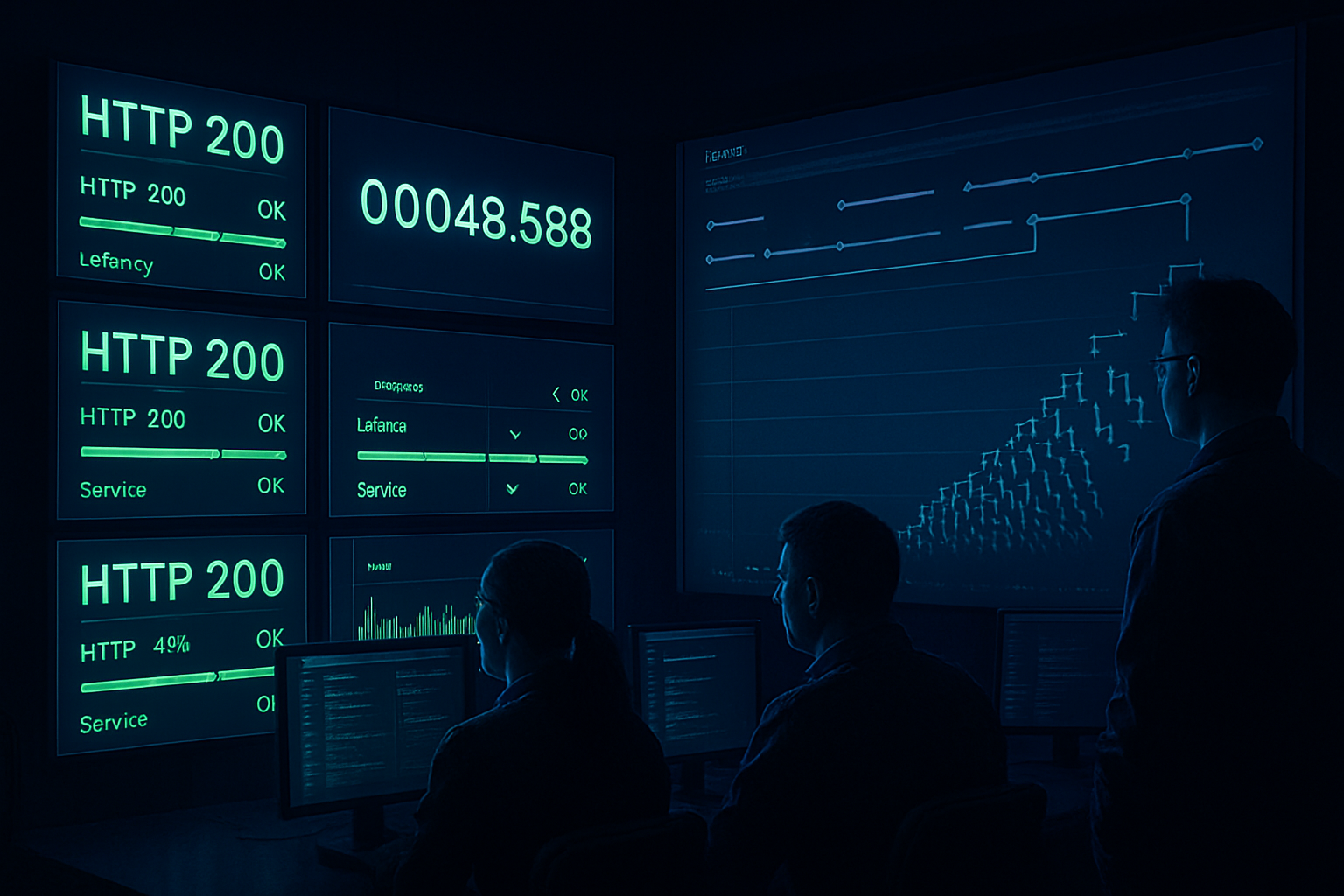
Some AI agent loops occur without a single 500 error, featuring green metrics and a hefty bill at the end. Production data and an academic study describe costly behaviors that escape traditional counters. Three patterns dominate these deviations, and a few goal-centered metrics are sufficient to identify them.
Multiplying Costs and Documented Frequency
According to Anthropic, agents in production use nearly four times more tokens than a chat session, and multi-agent systems consume about fifteen times more. Recursion highlights the rapid increase in costs: with a depth of five and a branching factor of four, a single request can lead to over a thousand leaf calls. This curve is the most unfavorable as it multiplies operations, but a strict limit on depth can put an end to it. On the frequency side, a team from UC Berkeley built MAST, a taxonomy derived from over 1,600 traces covering seven frameworks: two of the fourteen failure modes concern repetition and the inability to stop, and this repetition is among the most common failures.
Monitor the Goal Rather Than the Request
The scope of monitoring must shift from the request to the pursued goal. Counting reasoning steps, tool calls, tokens consumed per session, and the repetition of the same action signals deviations that request-based tracking does not see. A single goal can trigger hundreds of model calls, each of which can succeed while the session does not progress, and each element reporting its success renders the whole invisible. A rate limit per call does not see that a goal has triggered nine hundred, and a health check validates a service that can loop indefinitely, while money circulates faster than in traditional systems. Four metrics derived from standard traces are essential, including the token consumption rate per session, measured as a total over the session duration or by completed steps.
Le brief IA que les pros lisent chaque soir
Les 7 actus IA du jour, décryptées en 5 min. Gratuit.
Inclus dès l'inscription : notre sélection des meilleurs guides & comparatifs IA.
Choisis ton rythme
Gratuit · Pas de spam · Désabonnement en 1 clic
Signatures of Loops, Deviations, and Recursions
Three patterns concentrate most uncontrolled spending and leave each a recognizable signature. Loops appear in traces as sibling calls to the same tool with nearly identical arguments, each correct but without adding information; their detection involves comparison, for example by hashing the tool name and its normalized arguments, then counting consecutive repetitions: three may be a new attempt, ten constitute a loop, and this case is not rare. Deviation corresponds to a gradual drift from the task without manifest error: it produces plausible, well-formed, and billable work, but not requested; it is tracked by integrating the initial goal and each output, then observing the semantic distance over the session, with an upward curve indicating the drift. Recursion occurs when an agent generates cascading sub-agents, for example by dividing a goal into four, then again into four, decisions that are locally reasonable but accumulate without a depth ceiling.
Why Classic Metrics Miss the Mark
Historical telemetry focuses on availability, latency, and error rate, in a model where a request leads to a response and where cost is measured against rented servers. Agents break these assumptions: a goal enters, an unknown number of steps exits, with state maintenance, tool calls, and an internal decision on effort before stopping, for a behavior that only exists at execution. In this class of failures, everything works but the lack of progress is the relevant indicator, and it gets lost under all successful calls.
A Typical Case: Everything is Green Except the Bill
One observed scenario involves an agent that spends in a weekend the equivalent of a month's budget while everything appears nominal: each request returns 200, latency remains within the SLO, CPU is stable, and monitoring graphs are green. Nothing moves, except the bill, which rises from a few dollars a day to several hundred dollars in two nights. The trace reveals thousands of calls to the same tool with almost identical arguments, all correct, without the agent ever deciding it has finished.
Brief IA — L'actualité IA en français
L'essentiel de l'actualité de l'intelligence artificielle, décrypté et expliqué chaque jour.