AI Agency: Bites Challenges DoorDash's Fees and Data Retention
Le brief IA que les pros lisent chaque soir
Les 7 actus IA du jour, décryptées en 5 min. Gratuit.
Inclus dès l'inscription : notre sélection des meilleurs guides & comparatifs IA.
Choisis ton rythme
Gratuit · Pas de spam · Désabonnement en 1 clic
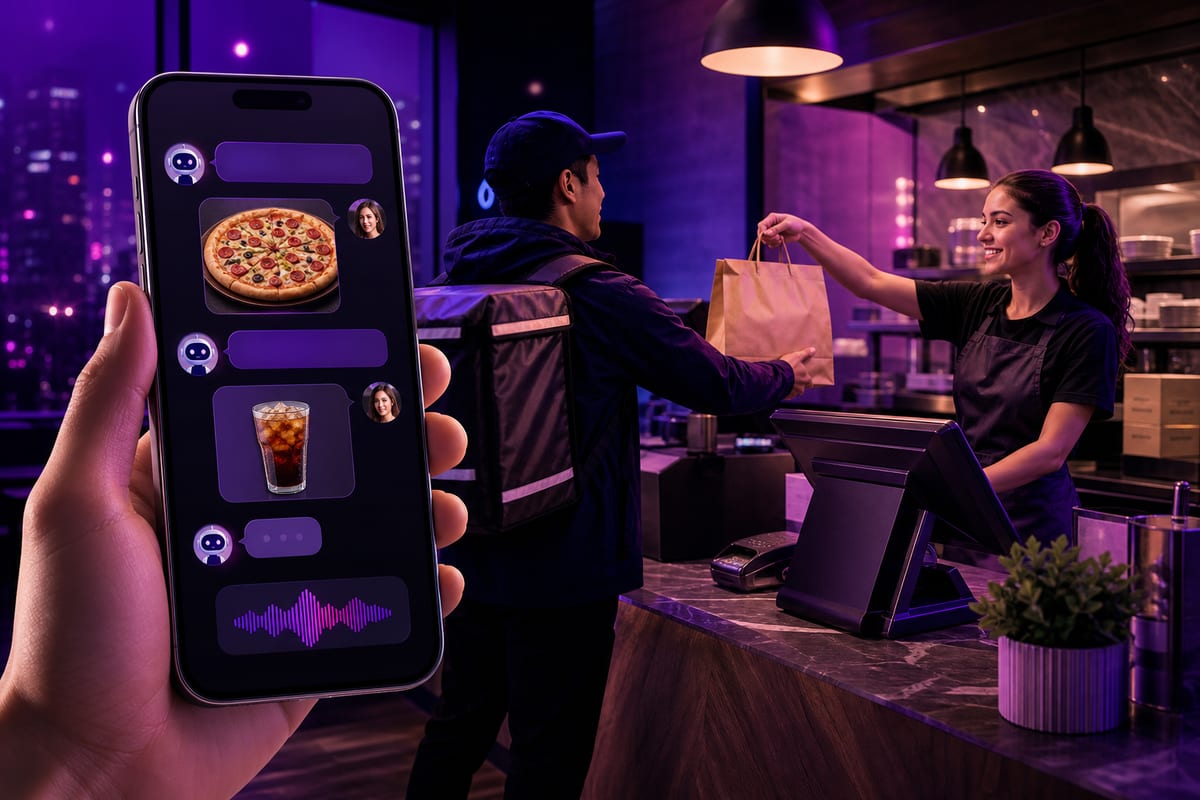
Ordering through conversational agents is making its way into meal delivery. Bites, a small "native AI" startup, promotes a model with a $1 fee per order and direct access to customers, while DoorDash, the industry giant, tests its own agent scenarios and warns listed partners without an agreement on Bites. Amid pricing, advertising, and data, the market balance is shifting.
Disrupted Discovery and Advertising at Stake
In September, DoorDash announced it was working on orders directly in iMessage via prompts, indicating that "agentification" has become a priority. It is still unclear what restaurant discovery will look like in a future dominated by agents. The rise of language models threatens the ability of apps to offer similar products, deals, or trials, and to monetize through advertising. Amazon generated $19.8 billion in advertising revenue in the second quarter of this year, highlighting the stakes of access to commercial flows. In this context, Amazon pursued Perplexity in 2025 to block navigation and purchasing agents on its site, blocked Meta's Muse AI agent from making purchases, and removed product details from order emails. These details are described as potentially valuable for Google's agent-based shopping features. Meanwhile, DoorDash's advertising business reached $1 billion in 2024. If an agent orders for a customer who already knows what they want, the value of a paid promotion within an app is called into question, even as discovery remains a central asset of platforms.
Fees: 15–30% at DoorDash vs. $1 at Bites
Fees for restaurants range from 15% to 30% per delivery order at DoorDash, with the widespread belief that a higher commission increases visibility. Bites offers a fixed $1 fee per order and simplified charges, claiming this keeps item prices lower; this fee is generally paid by customers, with some restaurants absorbing it. Matt Maloney, co-founder of Bites and Grubhub, describes the pricing structure of major platforms as outdated and recalls past massive investments to build infrastructure and attract restaurants, customers, and delivery drivers. According to him, the price increases on apps to offset commissions and fees are a legacy of that period and are no longer justified, as the convenience of delivery no longer needs to be demonstrated. Bites claims to partner with POS systems like Toast and Square to inject menus into language models and direct orders straight to restaurants; registration would then be a one-click process for the restaurateur. A test order of a pizza and a drink via ChatGPT with the Bites plugin cost $56.73, including tip and fees, compared to $70.29 for the same order on DoorDash, where the pizza was $11 more expensive and service fees were higher.
Restaurateurs Seek Margin and Customer Access
Jay Jayaraman, an early user of Bites with 13 listed establishments, describes a shift in his sales channels. He claims to have moved from about 80% of orders via DoorDash to 65% via Bites and 25% via DoorDash, with higher margins on Bites. He states he receives no customer data from DoorDash, while Bites orders provide him with the necessary contact information to reconnect with his clientele. Bites says it primarily targets customers who already know where to order, without seeking to become a discovery platform or resorting to sponsored ads, promising better prices for these uses.
DoorDash Alerts Partners About Bites
In August, DoorDash sent a message to many restaurants in the San Francisco Bay Area, warning them of a possible listing on Bites without consent. The company reported that several partners claimed to have been added to the third-party platform without their knowledge and emphasized the potential lack of agreement on terms, pricing structures, or service standards, as well as a lack of control over the accuracy of menus and hours. DoorDash also warned that these practices could be illegal in certain states and provided the procedure to request removal from Bites. On Bites' side, Bala Subramaniam confirmed that 14 partners received such a letter; he mentioned requests for listing from previously unlisted establishments and acknowledged withdrawals of restaurants that were previously added during demonstrations. Some restaurants reported receiving the email even though they were not listed. Spokesperson Lisa Singh mentioned concerns expressed by partners and clarified that no action was required for restaurants already registered. DoorDash did not respond to questions regarding its fees, data sharing, and the impact of AI on its model.
Bites, Small Team and "Native AI" Bet
Bites operates in pre-seed stage in the San Francisco Bay Area with a team of about ten people and around 300 registered restaurants. The company has an app but claims a "native AI" positioning, with orders placed directly in ChatGPT and transmitted to restaurants. Founder and CEO Bala Subramaniam, a former Instacart employee, is betting on integrations with POS systems like Toast and Square, followed by a simplified registration process for restaurateurs. Bites argues that intermediary platforms inflate prices through their commissions and asserts that its fee structure allows for lower item prices.
Customer Data: Retention by Platforms and Failed Attempt in New York
Delivery platforms, including DoorDash, retain most customer data and only share limited information, such as first names, initials of last names, and order contents. The apps keep this information even though it could be used for discounts, notifications, loyalty programs, or support in case of delivery issues. A New York law aimed at requiring platforms to share this data upon request was struck down by a judge. The surge in delivery during the pandemic allowed many restaurants to survive, but grievances about commissions, ad purchases, and distance from customers are common. As tech companies promise agents to order on behalf of customers, the assumption of a customer relationship mediated by language models underscores the stakes of data and confirms the emergence of a confrontation between historical players and new entrants.
Brief IA — L'actualité IA en français
L'essentiel de l'actualité de l'intelligence artificielle, décrypté et expliqué chaque jour.