AI Agents: About 450% Increase in Network Traffic
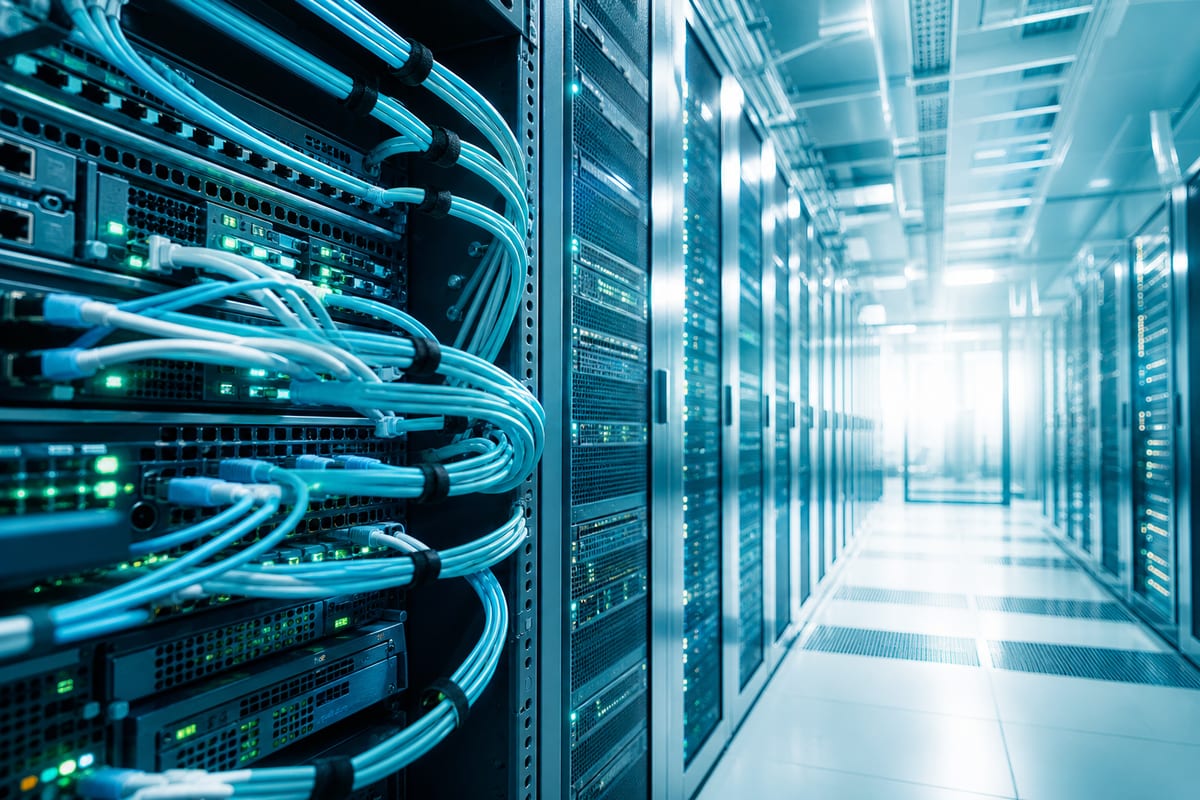
Tasks assigned to AI agents generate approximately 450% more network traffic compared to the same tasks performed by humans. The shift of inference to real-time applications increases businesses' needs for local or user-proximate infrastructure.
National Obligations Constrain Multinationals
Regulators around the world are adopting laws that require data and AI processing to be kept within national borders. These obligations clash with the current organization of multinational companies. Data sovereignty, like AI sovereignty, is likely to pose new infrastructure challenges for them.
To comply with these requirements, affected companies would need to have facilities in each region that are compatible with sovereignty obligations. This adaptation would require significant investments and make their operations more complex.
Inference Requires User-Proximate Connections
Training and inference do not impose the same constraints on networks. The former relies on architectures connecting servers in data centers, particularly the large centralized installations of hyperscale cloud, where models learn from vast datasets. Inference, on the other hand, generally demands real-time processing and connections close to users, with minimal latency. These requirements can make remote hosting in these large cloud centers impractical and uneconomical.
When latency varies, models can experience failures, processing queues can lengthen, graphics processing units (GPUs) can become overloaded, and data flows can encounter bottlenecks. Therefore, large companies may need to host their inference capabilities on-site or at a short distance. This shift would counter years of consolidation favoring the cloud and would necessitate a reevaluation of data centers, their connections, and their physical equipment.
Le brief IA que les pros lisent chaque soir
Les 7 actus IA du jour, décryptées en 5 min. Gratuit.
Inclus dès l'inscription : notre sélection des meilleurs guides & comparatifs IA.
Choisissez votre rythme
Gratuit · Pas de spam · Désabonnement en 1 clic
Rather than systematically prioritizing the cloud, companies may need to direct processing according to their specific needs. Such an evolution could require a profound revision of their network architecture.
Legacy Networks Encounter Physical Limits
Companies are accelerating their AI deployments, which is quickly becoming the main source of demand on their already pressured networks. The increase in traffic related to agents, combined with the return of inference to on-premises, reveals the bandwidth limitations of legacy infrastructures. The gap is widening between networks capable of supporting these uses and those that are not. According to a recent study, barely half of companies believe their network can meet the bandwidth and latency requirements of AI.
A long-term modernization effort, with a holistic approach rather than a one-off project, could facilitate adaptation to disruptions. Rigorous governance of architecture, reusable design models, and retention of internal skills could prevent the need to systematically rebuild infrastructure. This adaptability is particularly relevant for mergers and acquisitions, supplier changes, or technological evolutions.
Network as a Service (NaaS), along with AI-assisted observability, are other avenues for improving efficiency and simplifying operations. These tools could make the provisioning of network resources faster and more flexible while reducing costs.
Brief IA — L'actualité IA en français
L'essentiel de l'actualité de l'intelligence artificielle, décrypté et expliqué chaque jour.