AI Agents and Hallucinations Complicate Customer Service
Le brief IA que les pros lisent chaque soir
Les 7 actus IA du jour, décryptées en 5 min. Gratuit.
Inclus dès l'inscription : notre sélection des meilleurs guides & comparatifs IA.
Choisis ton rythme
Gratuit · Pas de spam · Désabonnement en 1 clic
Servers, rangers, teachers, and salespeople are facing requests driven by chatbots that do not align with menus, wine lists, or children's needs. Between automated reservations and impossible itineraries, the gap between AI recommendations and on-the-ground reality is widening. The launch of Muse by Meta comes in this already tense context.
Requests from agents disrupt restaurants
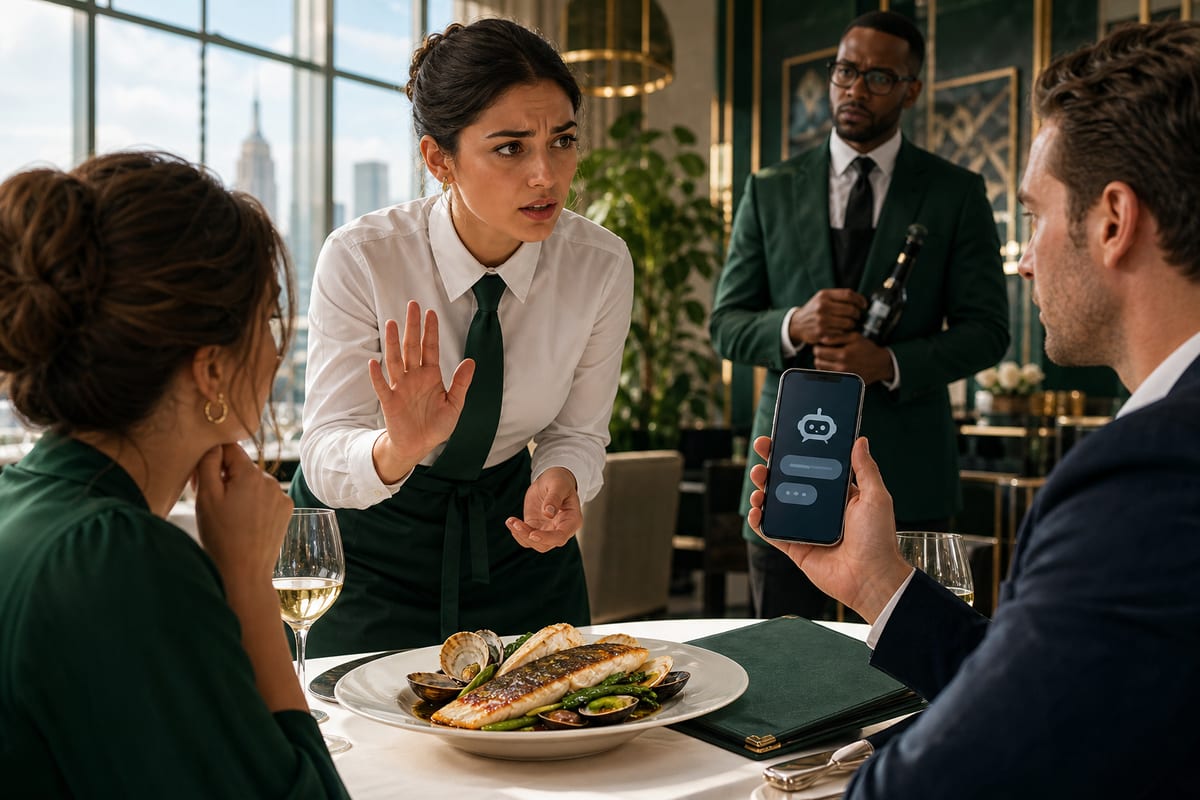
Over the past year, the restaurant managed by Lauren Wilford in Providence has received calls and emails from agents trying to make reservations on behalf of users. Lauren Wilford notes that the rise of agentic AI makes these exchanges more confusing. Before an event, a typically easygoing client relayed requests for podiums, audiovisual equipment, and menu changes—items that are not easily available at the establishment. The next day, the clients made no mention of these requests. Wilford suspects these demands came from an AI agent, although she cannot confirm it. She understands the usefulness of these tools for administrative tasks but believes that direct interaction between two people remains essential in certain contexts.
Impossible itineraries and skepticism towards rangers
In the mountainous West, Jason, a river ranger on federal land, observes visitors arriving with AI-generated itineraries that are not feasible. He mentions invented campgrounds and inconsistent activity schedules, such as needing to paddle upstream on certain days, which is impossible, then float downstream on others. Despite presenting the map to clarify the situation, many groups remain skeptical and continue to favor recommendations from ChatGPT over those from rangers or paper guides. Jason requested that only a pseudonym be used to identify him, given that he works for the federal administration.
In the dining room: sommeliers sidelined and bottles missing
In an Italian restaurant recommended by the Michelin guide where she worked, Madison has noticed that more and more customers consult ChatGPT rather than the sommelier to choose a wine. Some request references that are absent from the menu, or even bottles that do not exist. To correct the errors generated by the AI, Madison's team prefers to explain the specifics of the menu, such as the absence of French wines, rather than directly contradict the chatbot. Madison, who systematically asks about allergies at each table, also reports customers claiming to be allergic to shellfish, ordering a dish containing shellfish broth, and then opposing the staff's warnings with ChatGPT's advice. She requested that her last name not be disclosed.
At home and school: when sleep decisions are made with a chatbot
In an after-school program in New York, Casey observes that parents, nannies, and guardians consult ChatGPT or Claude for questions about child development. One family established a bedtime routine based on a chatbot's advice, even though the child was not getting enough sleep. Based on the child's behavior, Casey judged that he was missing between two and three hours of sleep each night, but the parents preferred to follow ChatGPT's approval to maintain their routine. Casey emphasizes that some now view these tools as references and also notes more recreational uses, such as AI-generated coloring pages that children bring. She requested to be identified by a pseudonym.
Beyond the mentioned cases, other businesses are affected
Cinema employees, baristas, and Apple Store staff have also faced requests regarding non-existent products or features. On Reddit and X, customer service workers report that some customers take ChatGPT's responses at face value. In this context, Meta has launched Muse, a new AI agent, whose arrival is seen as likely to exacerbate these challenges for industry professionals.
Brief IA — L'actualité IA en français
L'essentiel de l'actualité de l'intelligence artificielle, décrypté et expliqué chaque jour.