AI Agricultural Assistants Harness Field Data
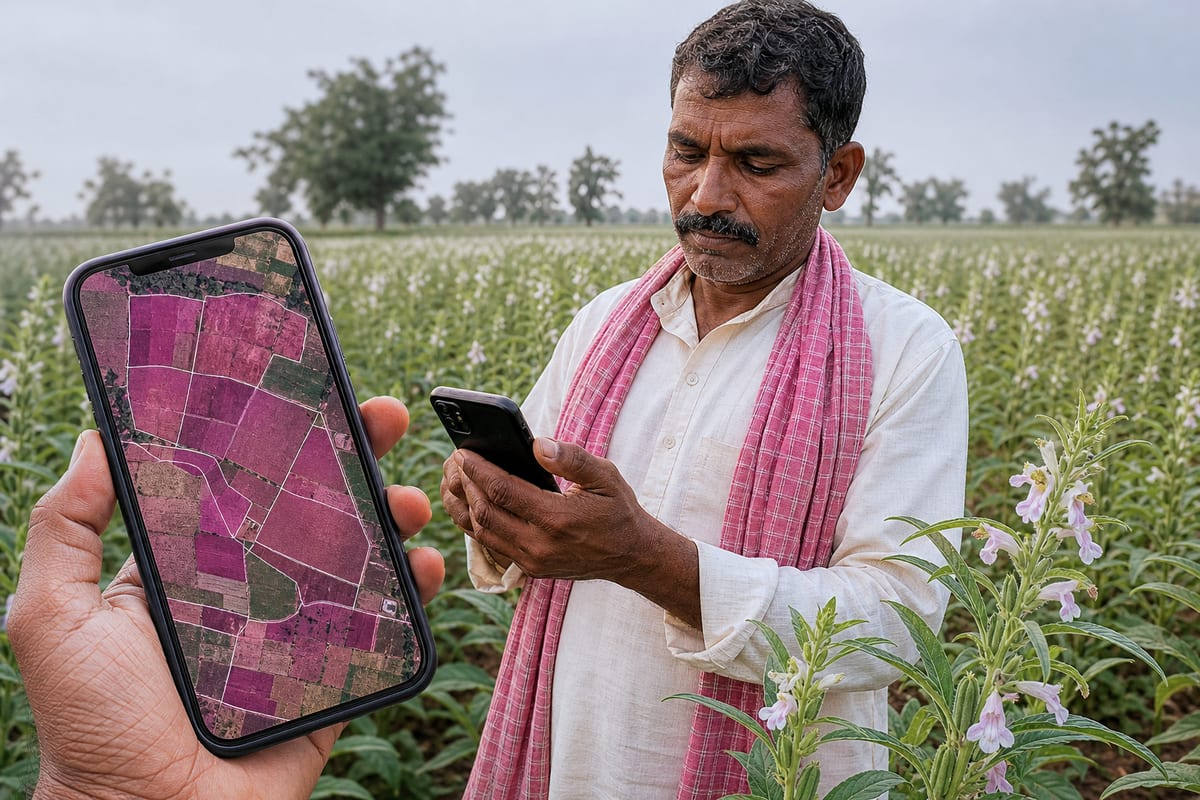
Agricultural assistants specializing in satellite imagery and voice reports from farmers are beginning to emerge. Some can describe changes observed over a 48-hour period. These functions are developing as recommendations from generalist chatbots can cause damage to crops.
Specialized tools limit manual entries
Gathering information from a farm and then transmitting it to a generalist assistant requires technical skills and time that most producers lack. Repeating the operation regularly presents an additional challenge. The emerging market already includes assistants capable of re-examining multiple satellite layers and visually interpreting their content.
Other products receive an oral description of the treatments performed. The agent then distributes this information among the system's categories and memorizes it for future exchanges. This procedure lightens the burden of maintaining parcel records and helps make recommendations more useful.
Integrated access to dashboards and imagery could further facilitate the transition between information sources. These tools can help interpret data from a parcel, identify significant changes, and reduce the time spent reconciling them. However, avoiding costly mistakes or crop losses remains a hoped-for benefit, not an established outcome.
Farmers lack accessible advisors
The rising costs of labor, land, and equipment prevent many producers from financing professional support. Additionally, there is a significant shortage of qualified agricultural advisors. In the most remote areas, particularly in Africa and South America, their visits are rare; producers cannot travel hundreds of kilometers for training either.
The organizations they rely on are often based in capitals. Lacking financial resources and personnel, they struggle to update aging guides or keep up with evolving practices. These obstacles push producers towards digital advice: McKinsey estimates that about 17% of farmers worldwide are already using generative AI for their daily decisions.
Le brief IA que les pros lisent chaque soir
Les 7 actus IA du jour, décryptées en 5 min. Gratuit.
Inclus dès l'inscription : notre sélection des meilleurs guides & comparatifs IA.
Choisissez votre rythme
Gratuit · Pas de spam · Désabonnement en 1 clic
Its adoption would surpass that of other new agricultural technologies, including robots and electric equipment. However, replacing human advice is not guaranteed. Researchers from the U.S., U.K., Kenya, Nigeria, and Colombia have tested this possibility; their results do not support generative AI as a substitute for advisors.
A chatbot poorly advised Wu
In July, in Chuzhou, China, a farmer named Wu consulted a chatbot to combat weeds and pests. He applied the agrochemical solution recommended by the tool on 25 acres. The next day, all of his sesame plants were destroyed, with an estimated loss of about 150,000 yuan, or nearly 18,000 euros.
The tool acknowledged its mistakes after Wu asked it to provide explanations. The preparation targeted broadleaf weeds, a category that also includes sesame. The advice also pertained to treating the entire parcel, rather than a localized intervention.
Nonetheless, many producers consult ChatGPT or Claude about their practices. These assistants have general knowledge about crops, chemical families, common methods, and planting periods, without specific agricultural training. They advise without first asking for the necessary data: a seemingly professional formulation can then mask an unusable or even harmful response.
Specialization requires agronomic data
One proposed approach is to first train the model with information from a parcel: satellite observations, harvest history, current weather conditions, and plant development. This would be followed by learning from practicing agronomists to tailor responses to encountered situations. Their teaching should also establish prohibitions, such as excluding an unauthorized herbicide for the identified crop.
A hypothetical example illustrates the differences between approaches. To weed wheat, a generalist assistant might suggest a powerful product without knowing the crop's vulnerability at that stage or the expected winds the next day. The treatment could destroy the harvest or be blown onto neighboring fields.
In the specialized scenario, the model would first consult satellite observations and weather forecasts. It would consider the fragility of the wheat and the wind to choose a safe option, then request clarifications in case of uncertainty. Coordinates or a task map would indicate the only areas to treat; this approach could reduce expenses and preserve future yields.
Brief IA — L'actualité IA en français
L'essentiel de l'actualité de l'intelligence artificielle, décrypté et expliqué chaque jour.