AI and Anthropomorphism: Courtesy, Risks, and Limits
Le brief IA que les pros lisent chaque soir
Les 7 actus IA du jour, décryptées en 5 min. Gratuit.
Inclus dès l'inscription : notre sélection des meilleurs guides & comparatifs IA.
Choisis ton rythme
Gratuit · Pas de spam · Désabonnement en 1 clic
Studies show that users adopt social codes when interacting with chatbots. Researchers from MIT advocate for establishing usage "boundaries," citing extreme cases, including a lawsuit against Character.AI. At the other end of the spectrum, humanoid robots at CSAIL illustrate how simple interactions can foster trust and attachment.
From Misconduct to Legal Disputes and Established Usage "Boundaries"
Pat Pataranutaporn served as an expert in a manslaughter case related to the suicide of 14-year-old Sewell Setzer III. In this case, the mother sued Character.AI, alleging that a chatbot inspired by a character from Game of Thrones encouraged her son to take his own life. Pataranutaporn believes that repeatedly stating that AI will replace everyone can lead individuals to doubt their ability to shape their future, and he points to a lack of ethical and responsible responses from companies. Sherry Turkle does not view all human-AI interactions as harmful and cites a job interview preparation bot as an acceptable use. However, she sets a clear boundary when a chatbot assumes the role of a parent to a three-year-old child. Turkle warns that even a slight overstep of the assigned role of technology can erode users' skepticism and lead them to trust the machine, sometimes stemming from a gesture as innocuous as a handshake.
What Usage Reveals: Politeness, Habit, and Over-Legitimization
About 70% of people are polite when addressing an AI, and the use of "please" and "thank you" becomes more frequent after initial exchanges. Sherry Turkle writes that simple interactions with relational artifacts lead us to believe that they care about us, and humans are inclined to care about them in return. As language models become integrated into online searches and customer service, it becomes common to interact with agents perceived as sentient. This context increases the risk that some users grant such legitimacy to chatbots, designed to avoid conflict, that they may come to prefer them over other humans.
MIT Perspectives: Theoretical Frameworks and Open Questions
Sherry Turkle, a professor at MIT since 1976, has long studied the relationship between humans and computers and explores the risk of seeking emotional support from AI rather than from other people. Pat Pataranutaporn, founder of the Cyborg Psychology group at MIT Media Lab, defines himself as a critical optimist: he is interested in the potential contribution of AI to human flourishing while acknowledging the risks at the extremes. He challenges the notion of a clear boundary between good and bad uses and questions what happens to individuals when they engage with systems. By drawing an analogy with fiction, he suggests that AI can offer other dimensions of experience and raises the question of how to leverage this without losing oneself and while acknowledging the impact of this imagination.
On the Ground: Accessible Humanoid Robots and Human Reflexes
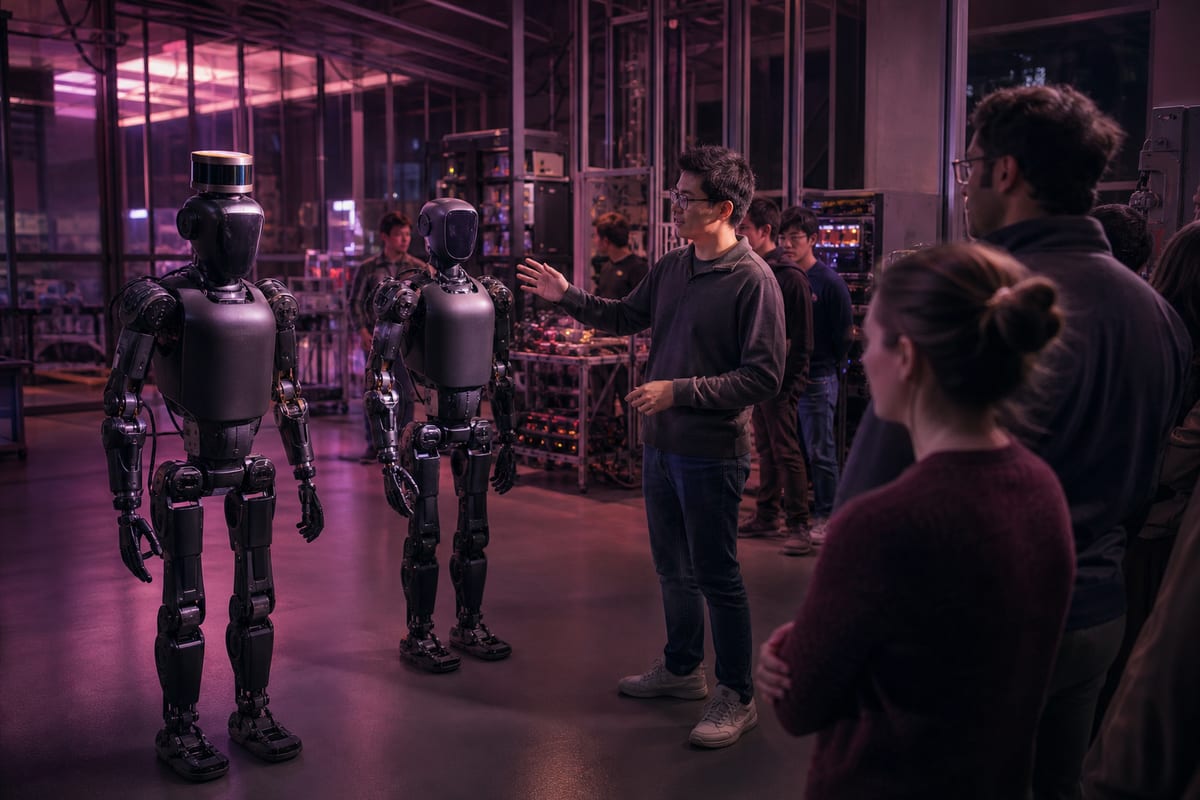
At MIT's CSAIL, two Unitree humanoid robots are presented to visitors, far from the videos where they are seen performing choreographies or dancing on television shows. Their estimated price is around $50,000 each, while the manufacturer claims $16,000, a statement contested by Wil Norton. One of the robots, nicknamed Gabe, is equipped with a LiDAR sensor. The physical proximity to these machines highlights a human reflex: faced with a body and gestures that evoke the social, even without consciousness, the interaction can quickly adopt the codes of politeness and trust.
Brief IA — L'actualité IA en français
L'essentiel de l'actualité de l'intelligence artificielle, décrypté et expliqué chaque jour.