AI-Assisted Purchases: Automated Search, Controlled Payment
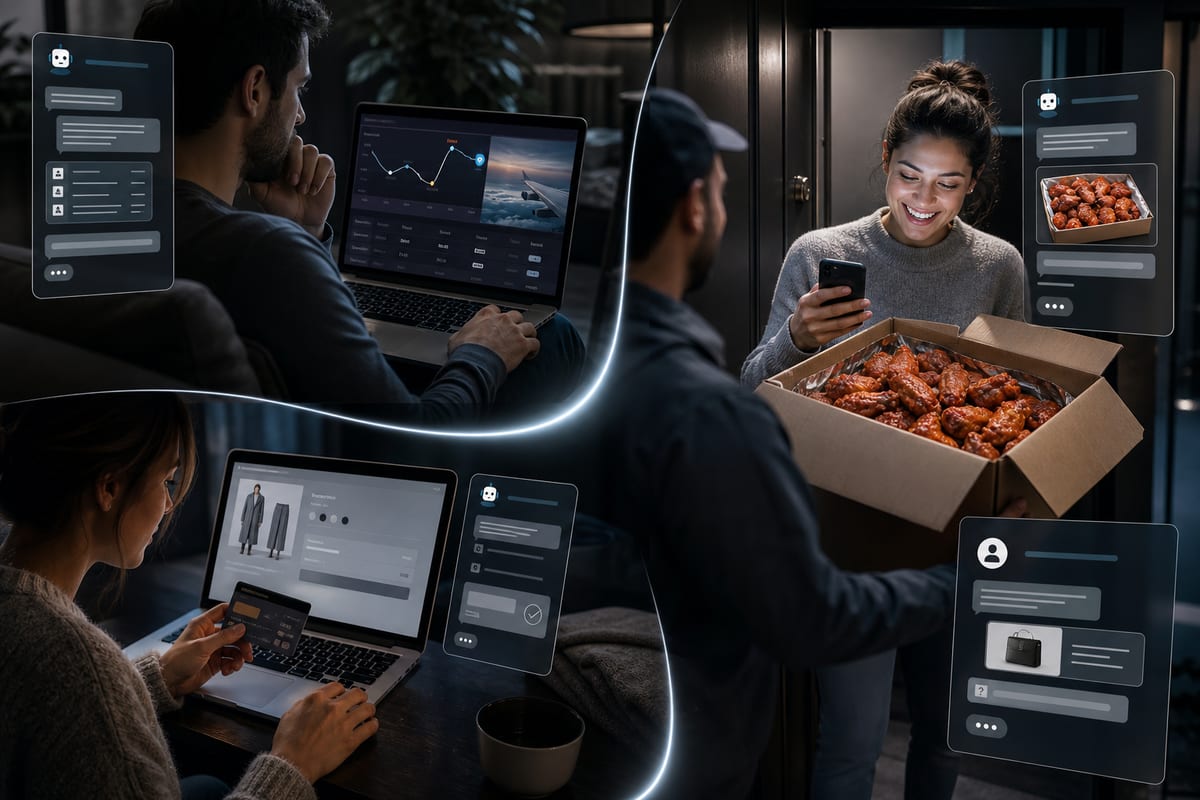
Individuals are already entrusting agents like Instinct or Muse with price tracking and some orders. Payment, however, often remains under human supervision. Testimonials from Houston, Minneapolis, and an Adobe executive reveal that prior authorizations, single-use cards, and the absence of connected payment methods serve as safeguards. As the holidays approach, the dominant anticipated use is delegated searching and a final purchase validated by a human.
For the Holidays, Agents on the Hunt, Humans on the Final Click
Vipin Porwal, founder and CEO of Smarty, predicts that many shoppers will use agents to select gifts as the holidays draw near. He believes that many will prefer to make the final purchase themselves, out of caution about sharing their payment information with an agent. According to him, the most common scenario will be for the agent to search and compare prices, followed by the consumer validating the transaction. Loni Stark, Vice President of Strategy and Products at Adobe, considers that shopping remains a leisure activity, balancing in-store visits and mobile browsing. She thinks that AI agents will complement these practices without completely replacing them. Stark adds that consumers will delegate the task of monitoring prices to agents to avoid the anxiety of missing a good deal.
Safeguards Before Payment: Authorization and Single-Use Cards
Several users choose to add an authorization step before payment, rather than directly sharing their banking data with an AI agent. Technical limitations, such as the inability to solve certain Captchas during payment, also push users to take control of the transaction. Amando Komoda, in Minneapolis, explains that he gives his consent before each purchase made by the agent and uses a single-use credit card to avoid any unauthorized charges. He specifies that he would not entrust his best card to an agent. Users also report errors, such as ordering unsuitable items, which encourages cautious use of these tools.
Le brief IA que les pros lisent chaque soir
Les 7 actus IA du jour, décryptées en 5 min. Gratuit.
Inclus dès l'inscription : notre sélection des meilleurs guides & comparatifs IA.
Choisis ton rythme
Gratuit · Pas de spam · Désabonnement en 1 clic
Automated Search and Tracking: Flights, Rare Stock, and Discount Codes
Shoppers are using Instinct and Muse to automate price monitoring and some online orders. Three users mention saving time and discovering deals they wouldn’t have found on their own, while emphasizing the need to keep an eye on these agents referred to as "personal shoppers." Austin Welch, who works in finance in Houston, entrusted Instinct with a list of ten flights to monitor over six months to be alerted to the best fare. The agent also helped him obtain a referral code for a United Airlines credit card, with a bonus of miles greater than what he had found himself. Amando Komoda uses it to receive alerts on the availability of rare products, like a Raspberry Pi chip.
When the Agent Gets It Wrong: 20 Pounds of Chicken Wings at Home
Austin Welch also uses Instinct to order groceries and finds this feature very useful. However, the agent once shipped 20 pounds of chicken wings when no quantity had been specified, while Welch expected a small package. He assumes the agent deduced the quantity from previous larger orders. After this delivery, Welch recounts eating chicken wings for five or six days at every meal. These situations illustrate the ordering errors reported by some users.
Customized Agents Without Connected Payment, Then Controlled Purchase
Loni Stark created her own agent, Molty, with OpenClaw in February, to explore products without linking a payment method. She then used Museli, a customized version of Muse, to purchase a pair of ballet shoes from the Nordstrom website. The agent managed the entire process and sought her authorization before proceeding with the payment. After the purchase, the agent attempted to obtain reward points from Nordstrom's support, but the absence of a loyalty number prevented the points from being awarded.
Brief IA — L'actualité IA en français
L'essentiel de l'actualité de l'intelligence artificielle, décrypté et expliqué chaque jour.