AI: Code of Conduct Signed at the White House Lacks Legal Force
Le brief IA que les pros lisent chaque soir
Les 7 actus IA du jour, décryptées en 5 min. Gratuit.
Inclus dès l'inscription : notre sélection des meilleurs guides & comparatifs IA.
Choisis ton rythme
Gratuit · Pas de spam · Désabonnement en 1 clic
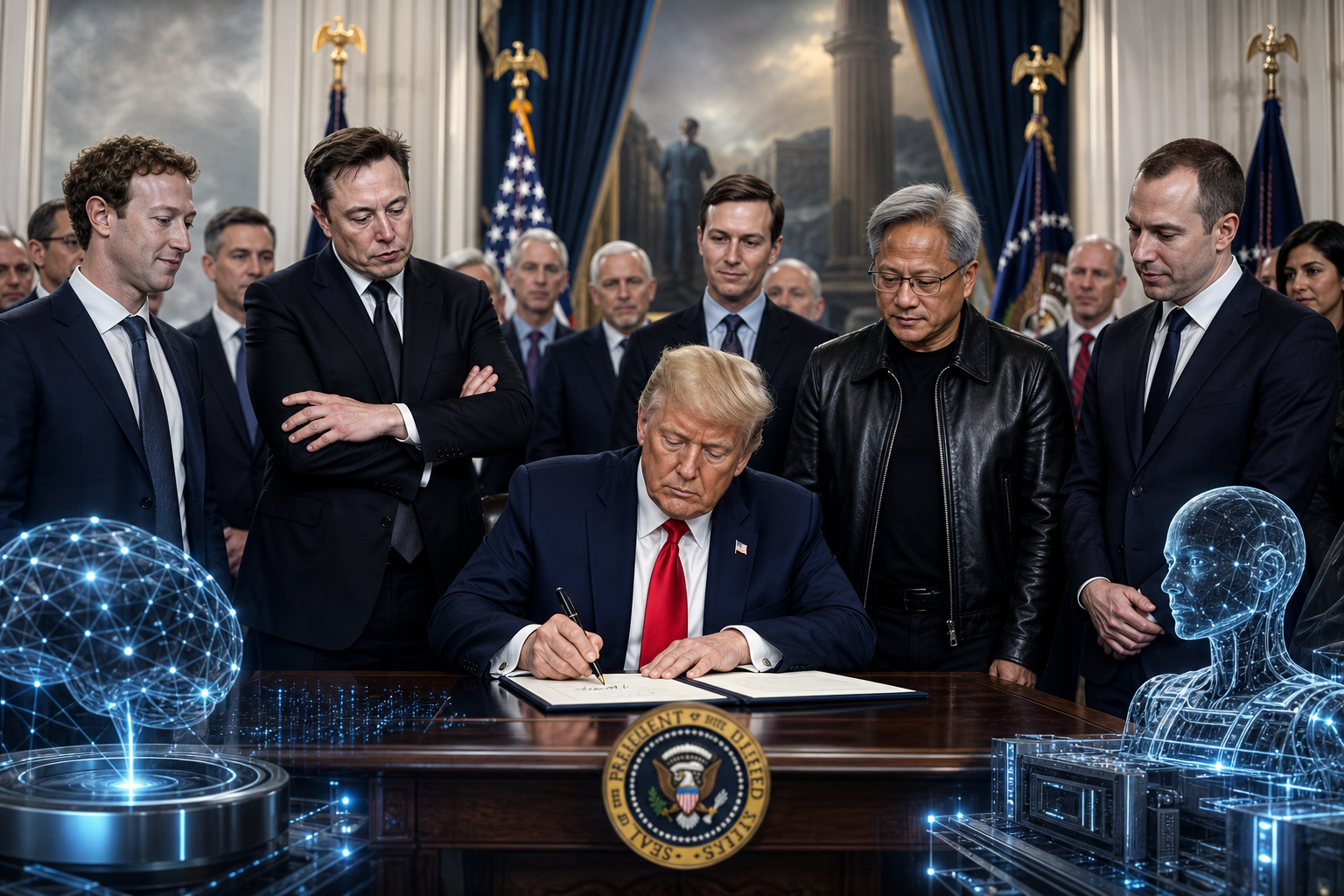
A code of conduct on artificial intelligence was signed at the White House by Donald Trump and tech leaders. It is based on voluntary commitments, includes external audits, and an independent council, but does not come with defined sanctions or legal value, according to Politico.
Limited Legal Scope and Recurring Criticism
The code of conduct signed at the White House is described as only morally binding and without legal value, according to Politico. The consequences of violating this code are not specified. Critics argue that such a framework, without binding legislation, remains ineffective, and remind that similar voluntary commitments have been attempted before. Furthermore, Donald Trump has used an executive order to officially rename artificial intelligence as "Super Intelligence."
Announced Third-Party Audits and Independent Council
The code stipulates that independent third-party auditors will verify that AI models function as intended. A separate independent council is to oversee internal security checks aimed at preventing AI models from hacking systems. Donald Trump has also proposed the creation of a ten-member oversight committee, while repeatedly stating that he does not wish to slow down the growth of AI.
Prominent Signatories and a Security Context
The White House hosted tech sector officials for the signing of the code, including Mark Zuckerberg (Meta), Greg Brockman (OpenAI), Jensen Huang (Nvidia), and Elon Musk. Mark Zuckerberg presented this code as a first step, clarifying that it is not a definitive solution. This initiative comes amid rising concerns about uncontrolled AI agents breaching government sites or conducting cyberattacks.
Brief IA — L'actualité IA en français
L'essentiel de l'actualité de l'intelligence artificielle, décrypté et expliqué chaque jour.