AI: Designing the Interface for Long and Complex Searches
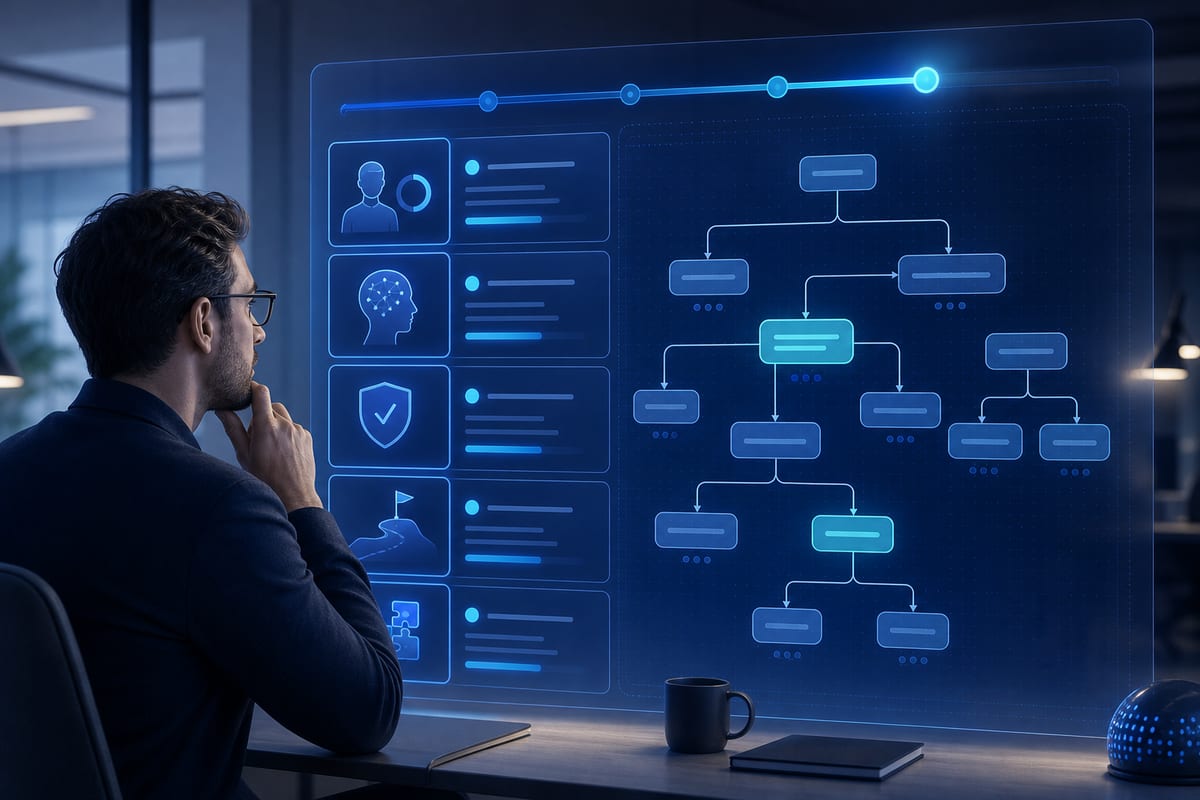
When AI works on multifaceted topics and response generation takes minutes, a poorly framed brief can be costly. The priority is to align the request before any computation, and then equip the interface to address five recurring questions from users. Examples of approaches are associated with Google, Perplexity, and Microsoft.
Before computation, align the request to avoid unnecessary reports
For complex tasks, the crucial design point occurs before the AI begins its work: precisely clarifying what needs to be searched for or produced. When generation takes minutes, a misunderstood start leads to prolonged waiting, reading a lengthy report that answers a different question, and then starting over. Conversely, when the response arrives in a few seconds, a quick rephrasing is sufficient, and the error costs little. Therefore, the duration of computation transforms the importance of an explicit initial framing.
Le brief IA que les pros lisent chaque soir
Les 7 actus IA du jour, décryptées en 5 min. Gratuit.
Inclus dès l'inscription : notre sélection des meilleurs guides & comparatifs IA.
Choisissez votre rythme
Gratuit · Pas de spam · Désabonnement en 1 clic
Beyond linear chat, addressing the five key questions
The classic question-and-answer sequence works well for simple queries, but it shows its limits as soon as the aspects of a topic intertwine. Interfaces designed for these cases deviate from linearity and focus on explicitly addressing five user inquiries: knowing if something is happening, understanding the process, evaluating the reliability of the response, identifying the next step, and modifying part of the result if needed. These principles complement practices already prevalent in everyday AI interfaces and are particularly applicable to rich, multifaceted searches. Examples of observation cite Google, Perplexity, and Microsoft.
Brief IA — L'actualité IA en français
L'essentiel de l'actualité de l'intelligence artificielle, décrypté et expliqué chaque jour.