AI: Huge Debts and CapEx, Uncertain Returns for Big Tech
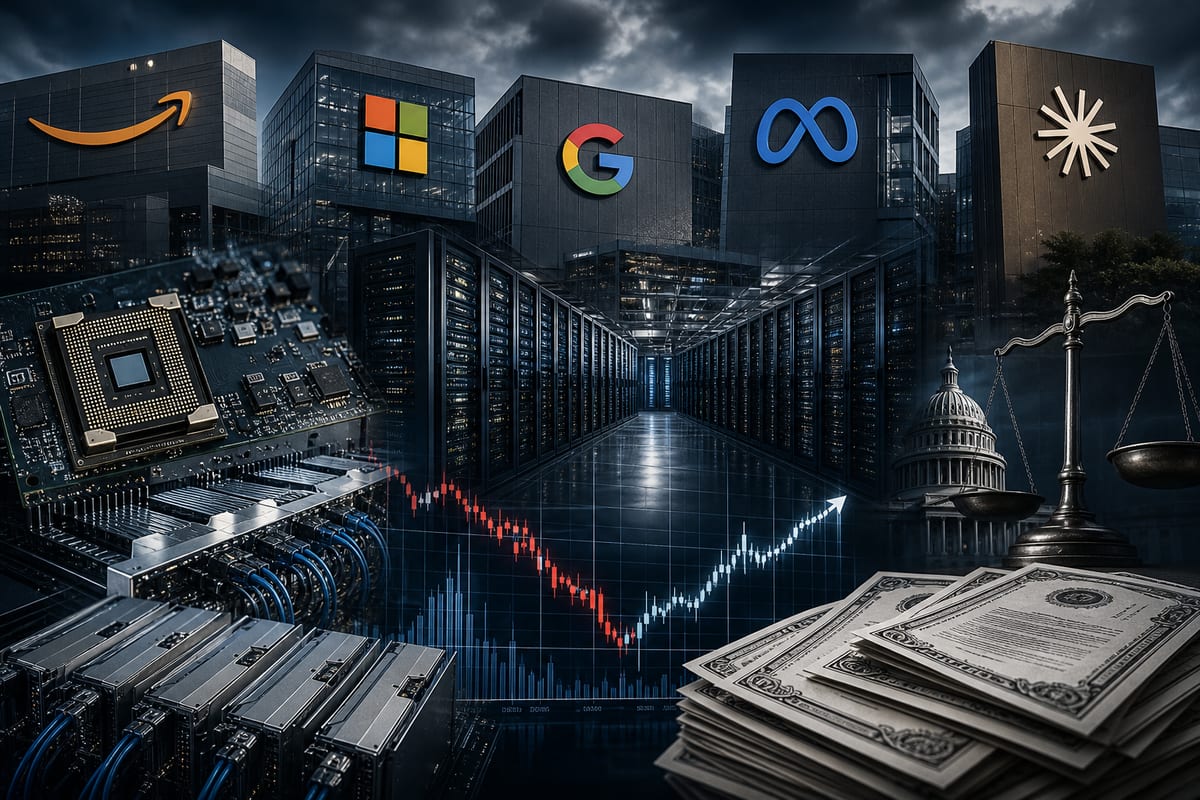
Amazon, Microsoft, Alphabet, and Meta are planning infrastructure expenditures amounting to several hundred billion dollars, with announced increases for the coming years. However, the profitability of AI remains uncertain, and the markets are particularly punishing Google. Microsoft is resorting to debt, Anthropic is investing colossal sums, and the prospect of restrictions on data centers is resurfacing.
Financing Shifts Towards Debt and Unsettled Contracts
Microsoft has launched a bond issuance of $25 billion in 10 tranches, whereas until the previous week, it was the only hyperscaler not to have resorted to debt to finance AI, according to its CFO Amy Hood. For the quarter, Microsoft reported $45.2 billion in capital expenditures, a figure lower than the expected $50 billion due to third-party capacity delays. At Alphabet, hardware sales such as TPUs rely on contracts with financial obligations that only translate into payments upon delivery of the hardware, which does not generate immediate cash flow. Hyperscalers also report being constrained by their capacity. At the time of writing, shares of major tech companies were once again on the rise.
Unprecedented Investment Packages Already Extended
Amazon, Microsoft, Alphabet, and Meta are planning to invest at least $720 billion this year, with the majority of this amount allocated to AI-related infrastructure. Additionally, there are commitments of at least $1 trillion for the coming years. Alphabet expects to spend between $195 billion and $205 billion this year and anticipates a significant increase by 2027, according to its CFO Anat Ashkenazi. Amazon plans to spend significantly more in 2027 than the $220 billion projected for this year, a trajectory that its CEO Andy Jassy presents as a unique opportunity to make Amazon a $1 trillion company. Meta expects to spend between $135 billion and $145 billion this year, without indicating its forecasts for next year, while major financial institutions anticipate an increase in spending.
Rising Revenues but Unclear AI Monetization
Overall revenues are increasing among industry giants: Amazon is reporting its fastest quarterly growth in five years, Meta's advertising revenue is surging, and Google Cloud has more than doubled year-over-year. Despite these results, the profitability of AI remains uncertain. Companies continue to invest in AI without having yet realized notable profits in this sector. After more than three years, Wall Street is beginning to express concerns about the return on investment and the associated timeline.
Le brief IA que les pros lisent chaque soir
Les 7 actus IA du jour, décryptées en 5 min. Gratuit.
Inclus dès l'inscription : notre sélection des meilleurs guides & comparatifs IA.
Choisissez votre rythme
Gratuit · Pas de spam · Désabonnement en 1 clic
Google Faces the Dilemma: Generative AI and Research Fragility
Philipp Schindler, Chief Business Officer of Alphabet, acknowledged that the strong growth of Google Cloud has come at the expense of its core search business. He specified that the increase in AI-mode queries is accompanied by weaker monetization observed at this stage. Search advertising revenues grew by 12% in the third quarter, compared to 17% during the same period last year. Schindler noted that AI advertising experiments have shown promising results, without providing specific examples. Last week, Alphabet's stock dropped 13% in one day, the largest decline in its history, before rebounding afterward.
Anthropic Invests $900 Billion and Establishes Data Centers
Anthropic has updated its S-1 prospectus with third-quarter figures: the company is experiencing a sharp increase in its computing expenses and net losses, with revenues of $17 billion, representing an over 1,000% year-over-year increase, and computing costs reaching $17.5 billion. Anthropic has committed nearly $900 billion in future computing and infrastructure expenses and plans to establish its own data centers. A fraction of these commitments will benefit Google, which supplies Anthropic with TPU chips. During Alphabet's call, analysts questioned management about this TPU activity; when asked about the impact of TPU sales on expenses, CFO Anat Ashkenazi did not provide a clear answer.
Market and Politics: Sales, Rebound, and Moratorium Hypothesis
Last week, tech stocks experienced a significant sell-off linked to the scale of investment plans, before calming down as midterm elections approached and a rebound was observed on Tuesday. The outcome of the election could alter the trajectory if elected officials favoring moratoriums or other restrictions on data centers prevail. Wall Street might bet on a "blue tsunami" to slow down spending, allowing more time to clarify the profitability of AI. However, elections were not mentioned during earnings calls. Major companies continue to pursue record spending and do not plan to slow down themselves, even as the promised returns from AI have yet to materialize.
Brief IA — L'actualité IA en français
L'essentiel de l'actualité de l'intelligence artificielle, décrypté et expliqué chaque jour.