AI: In Washington, 79% of companies are seeking skills
In Washington State, 79% of businesses want their entry-level recruits to have a mid-level or higher proficiency in AI, according to a survey by the Schultz Family Foundation published on Monday. Less than half of the young adults surveyed believe their training is sufficient to reach this level. During a meeting of the Technology Alliance, discussions also focused on access to tools and the contribution of employers to learning.
Learning and Access to AI Tools
Among the young adults surveyed by the Schultz Family Foundation, 36% report that their institution discourages them from using AI, while 34% say they receive support in this learning process. Coleman Bryant, who is pursuing a master's degree in technological innovation at the University of Washington, fears that students may rely on these tools for critical thinking rather than seeking solutions themselves. He advocates for hands-on pedagogy that combines technical knowledge, business, design, and collaborative work.
Access itself is a fundamental challenge in the eyes of Arif Gursel, a serial entrepreneur, founder of the business strategy firm 8genC, and a trainer in coding, AI, and other disciplines. He cites underserved, under-resourced, or marginalized populations in Washington, particularly tribal, indigenous, Black, and Brown communities. He is concerned about a digital divide exacerbated by AI and calls for efforts to reduce it.
77% of Employers Say They Lack Availability
The foundation's survey is based on nearly 3,000 interviews conducted with young adults, employers, and others. More than 80% of the employers surveyed express interest in hosting interns, apprenticeships, or similar programs. However, 77% report lacking the availability within their teams to organize them. It is not possible to determine whether they are changing their own training practices, as this point was not examined.
The AI brief the pros read every evening
The 7 best AI stories, the essentials in 5 min. Free.
Included when you join: our pick of the best AI guides & comparisons.
Choose your rhythm
Free · No spam · Unsubscribe in 1 click
For Arif Gursel, the responsibility for technological adaptation does not rest solely on students, universities, or employees updating their skills. He believes that organizations must be as adaptable as the individuals they employ. His comments also pertain to experienced employees: he calls for companies to promote their learning rather than simply replacing those whose skills no longer meet the tasks.
Gursel Proposes Training with Employers
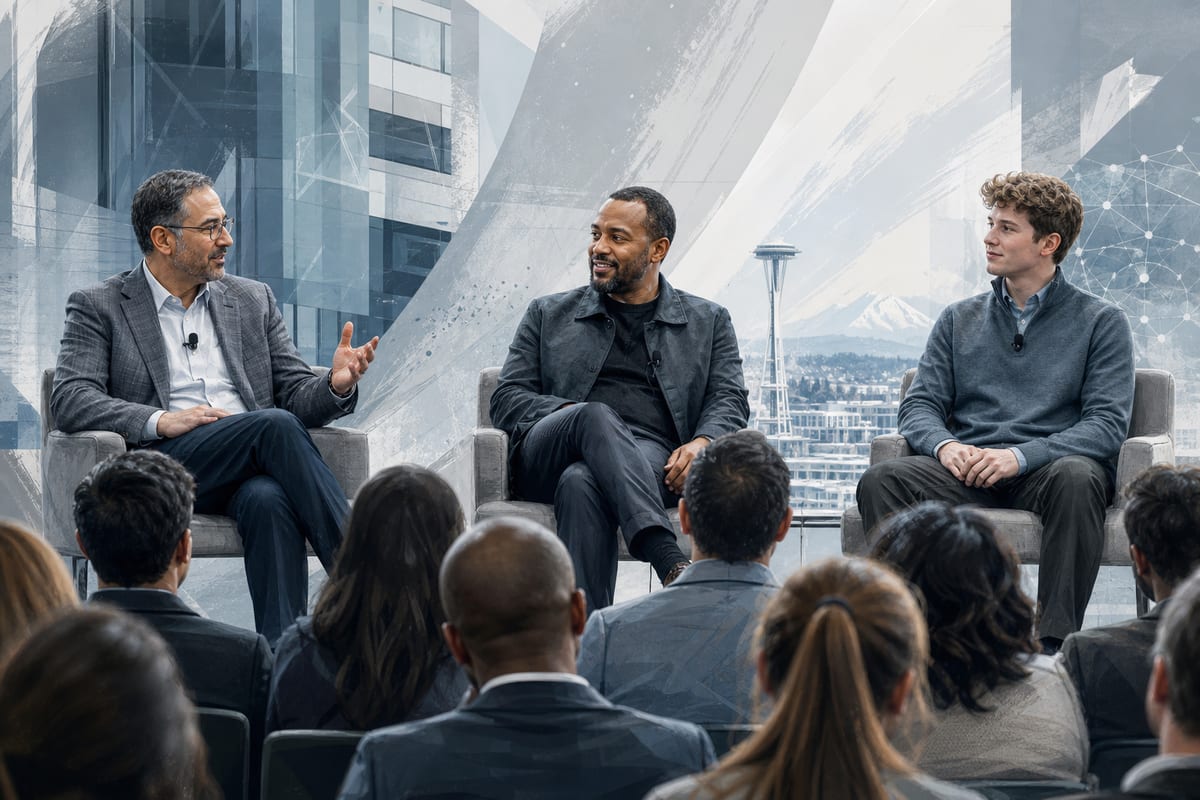
The Technology Alliance meeting, focused on talent in Washington State, included Arif Gursel, Coleman Bryant, and Devin Johnson from Nordstrom in a roundtable discussion. Gursel urged companies to participate in the development of training programs and to align them with existing jobs. He sees AI as an opportunity to rekindle partnerships with community colleges and nonprofit organizations, rather than leaving educational teams to guess recruitment needs on their own.
He draws on an experience with Microsoft, where he spent over a decade early in his career. Together with a recruitment manager from the company, he developed a coding training program. According to Gursel, this manager committed to offering two job openings to graduates.
Ingrid Stegemoeller from the Washington Roundtable’s Partnership for Learning advocates for similar cooperation. She believes that by facilitating the transmission of specific business needs to schools, higher education institutions, and training organizations, their participation could lead to courses and on-the-job learning that prepare young people for the relevant jobs.
Brief AI — AI news in French
The essentials of artificial intelligence news, decoded and explained every day.