AI: PCB Lead Times Up to 30 Months, Chain Shortages
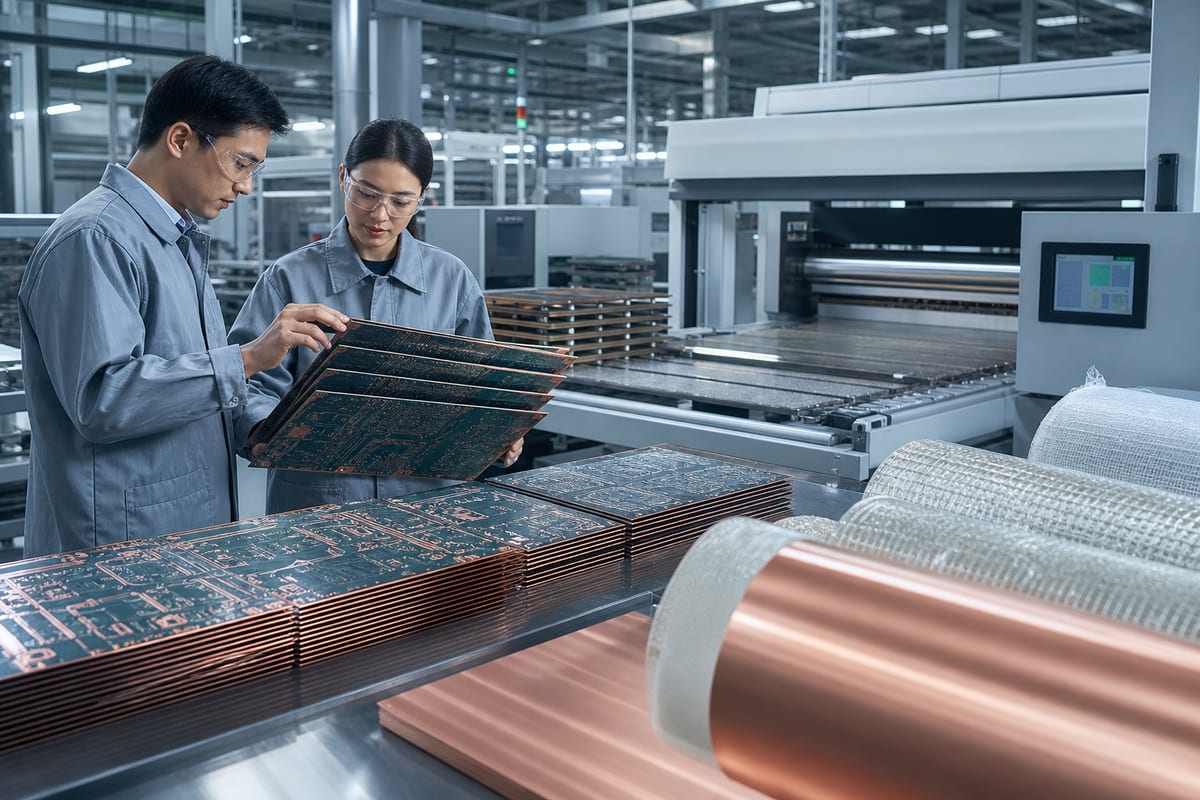
The manufacturing of printed circuit boards is being caught up by the appetite of AI data centers. With order books extending to 2030, equipment deliveries taking 30 months, and materials under pressure, the numbers are piling up. PC sales are declining, but allocations favor servers: large contracts cushion the blow, while smaller brands risk footing the bill as early as 2027.
Price Increases Announced Starting in 2026, Small Brands Exposed in 2027
Price hikes of 15 to 20% are expected from major suppliers starting in the second half of 2026. Large OEMs with long-term contracts should better absorb these pressures thanks to already negotiated and signed supply commitments. In contrast, smaller motherboard and graphics card brands, lacking this leverage, are most likely to see retail prices rise, specifications decline, or both by 2027. This redistribution comes as the PC market contracted in the third quarter, with a global decline of 20.1% to 62.7 million units, and drops of 30.9% for HP and 25% for Dell. Part of the decline can be attributed to the depletion of stocks built up before price increases, but an executive from an American manufacturer indicates that, despite expected further declines in shipments next year, PCB supply remains problematic.
Materials and Equipment: Sustainable and Concentrated Bottlenecks
Unimicron's president, S.C. Chien, states that some key equipment requires up to 30 months of lead time, with over 80% of machines facing longer waits and more than one-fifth experiencing delays that have more than doubled. He also warns that low CTE glass fabric, CCL, and ABF could be about 20% below demand by 2027. Upstream, the concentration is extreme: Nittobo controls about 90% of T-glass for advanced substrates, and its expansion will take years to materialize. On the product side, AI server boards stack three to five times more layers than conventional boards and use low-loss laminates and special glass fabrics, increasing material consumption and manufacturing time.
Le brief IA que les pros lisent chaque soir
Les 7 actus IA du jour, décryptées en 5 min. Gratuit.
Inclus dès l'inscription : notre sélection des meilleurs guides & comparatifs IA.
Choisissez votre rythme
Gratuit · Pas de spam · Désabonnement en 1 clic
Lead Times: Peaks at 30 Months, Orders Until 2030
The figure of 30 months comes from an anonymous supplier for certain orders and does not represent an industry average. Other signals converge: another manufacturer indicates that an order placed today would not arrive before the end of 2028, while an order placed at the end of October for late 2028 implies about two years of waiting, when 30 months would project to April 2029. For standard FR-4 raw material, ILFA has observed lead times increasing from a few days to about four weeks by March 2026. A Broadcom executive reported a shift of six weeks to six months for PCBs in April. Further upstream, a major laminate supplier holds orders until 2030, despite a plan to triple capacity by 2028. It is noted that an order book does not constitute a delivery schedule, and some suppliers are taking advantage of scarcity narratives, a claim already made by Jason Chen of Acer regarding memory and advanced shortages for 2030.
Capacity Reallocation: AI Servers Take Priority
PCB manufacturers have informed customers that they are halting standard boards to prioritize higher-margin work related to AI servers. Hyperscalers are entering the supply chain directly, with Amazon taking a stake of approximately NT$1.59 billion, or $48.2 million, in Taiwanese Gold Circuit Electronics in September. In this context, Canon claims that AI-related PCB shortages have doubled its medical sales forecasts to around ¥90 billion. For 2027, players like HP and Dell are struggling to secure PCBs, while demand from AI data center builders is focused on more products and higher-end versions, accepted at higher prices.
Memory Under Pressure, Prices and Impact on PCs Still Not Fully Measured
The ecosystem is already strained by high-end memory, whose global supply has been depleted, and for which Samsung anticipates a shortage that could last until 2028. From the end-user perspective, a board represents a small part of the material cost of a laptop, and no PC manufacturer has yet quantified the impact of PCB tensions on retail prices. Memory remains the primary cost driver.
Brief IA — L'actualité IA en français
L'essentiel de l'actualité de l'intelligence artificielle, décrypté et expliqué chaque jour.