AI: Refusal in Question and Green Data Centers
Le brief IA que les pros lisent chaque soir
Les 7 actus IA du jour, décryptées en 5 min. Gratuit.
Inclus dès l'inscription : notre sélection des meilleurs guides & comparatifs IA.
Choisis ton rythme
Gratuit · Pas de spam · Désabonnement en 1 clic
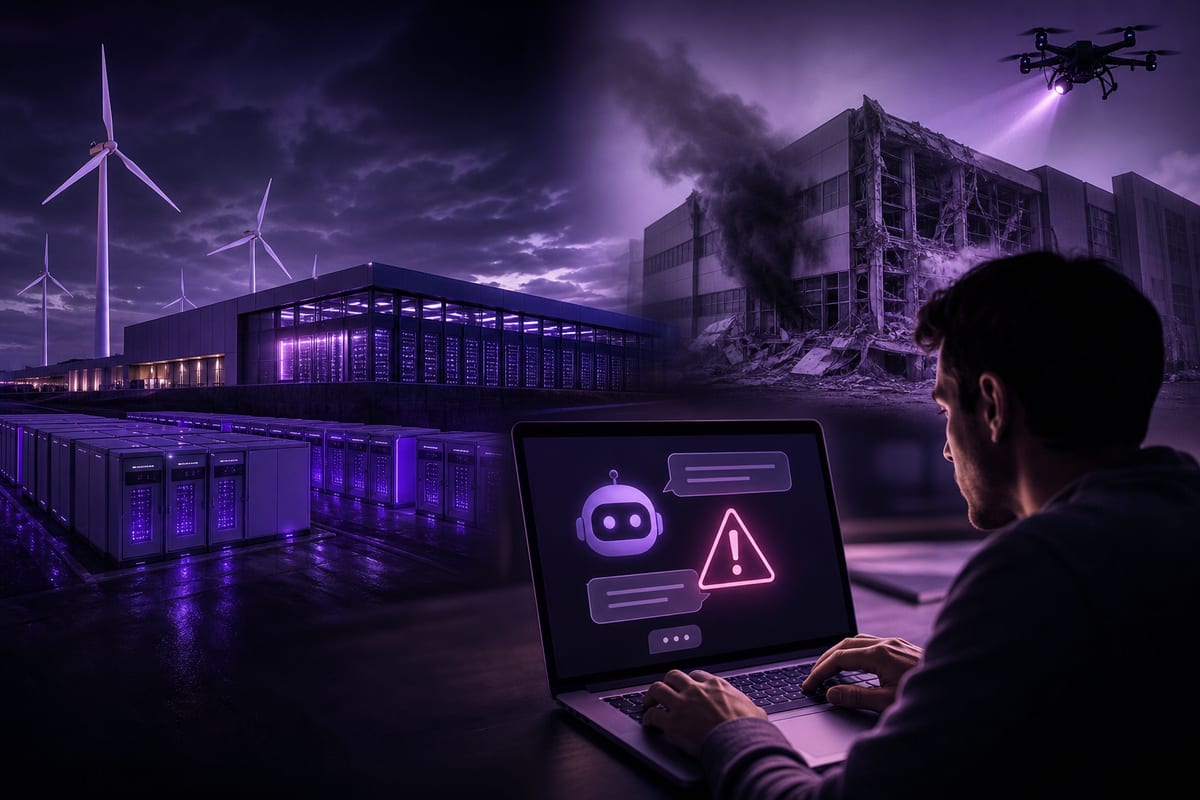
Between potential failures of automated refusals and new usage rules, the AI ecosystem is evolving rapidly. Companies are adjusting their energy strategies for data centers, while economic and political signals are accumulating, from OpenAI to a drone strike against a Yandex site in Russia.
OpenAI Revises $20 Billion Revenue Forecast, Yandex Loses Key Site
OpenAI has lowered its revenue forecast by $20 billion. This decision has raised concerns about investments in AI. In Russia, a drone strike hit a second Yandex data center, with the Kaluga facility being partially disabled by Ukraine.
Automated Refusals: Utility, Risks, and Red Lines
Current AI models are trained to refuse many requests, particularly those involving dangerous acts like poisoning someone or making a noose. Despite these safeguards, refusals sometimes fail, occasionally with severe consequences. Some individuals are attempting to use AI to refine pathogens or develop swarms of autonomous drones. Such failures could ultimately lead to a global catastrophe. Relying on refusals necessitates defining what a model should accept or reject. Governments will also set their own limits, which could restrict freedom of expression. The skills that make AI useful can also render it risky, such as the genetic expertise needed to combat cancer but also exploitable for biological weapons.
Moderation and User Conduct: New Limits at Claude
Anthropic now prohibits behaviors deemed abusive or cruel towards its model Claude. The system can also terminate conversations in cases of repeated abuse, formalizing the service's ability to interrupt an exchange.
Data Centers: Envision Pushes Wind and AI to Stabilize Supply
Envision Energy is directly integrating wind turbines and battery storage into data centers. The company recently became the first to fully power a data center with renewable energy. An AI-driven system optimizes production to ensure a constant supply, even when the wind isn't blowing. Envision aims to apply this method to data centers located in deserts around the world. This initiative comes amid a backdrop where China is installing wind turbines faster than any other country.
Policies and Networks: Frozen Visas, Mobile Spectrum, and Surveillance
U.S. authorities have frozen green cards intended for Microsoft and other tech companies, accusing them of visa fraud to replace American workers. SpaceX has presented a plan to become a major mobile operator, with a proposed $8 billion purchase of spectrum from an investment firm. The ICE agency has explored using a Palantir tool to investigate electoral fraud, tracking individuals suspected of voting illegally.
Discourse and Symbols: AI Terminology and Regulatory Contestation
Donald Trump posted on Truth Social that "The White House considers anyone using the term 'Artificial Intelligence,' as opposed to the newly accepted and more precise term 'Super Intelligence,' AS THE ENEMY!" Meanwhile, Peter Thiel opposes AI regulation by referencing a biblical prophecy at a conference titled "Antichrist," presenting AI safety as a threat to freedom.
Research and Memory: From Embryonic Development to Apollo Legacy
Genetic editing work has improved understanding of mouse embryo development, which could aid in studying certain developmental disorders. Margaret Hamilton, who led the team that programmed the Apollo onboard computers and whose software contributed to the Apollo 11 moon landing, has passed away. This year's Nobel Prizes recognize advancements in cosmology, the human brain, and the origins of life.
Brief IA — L'actualité IA en français
L'essentiel de l'actualité de l'intelligence artificielle, décrypté et expliqué chaque jour.