AI Research: Google Held Responsible for Its Responses in Germany
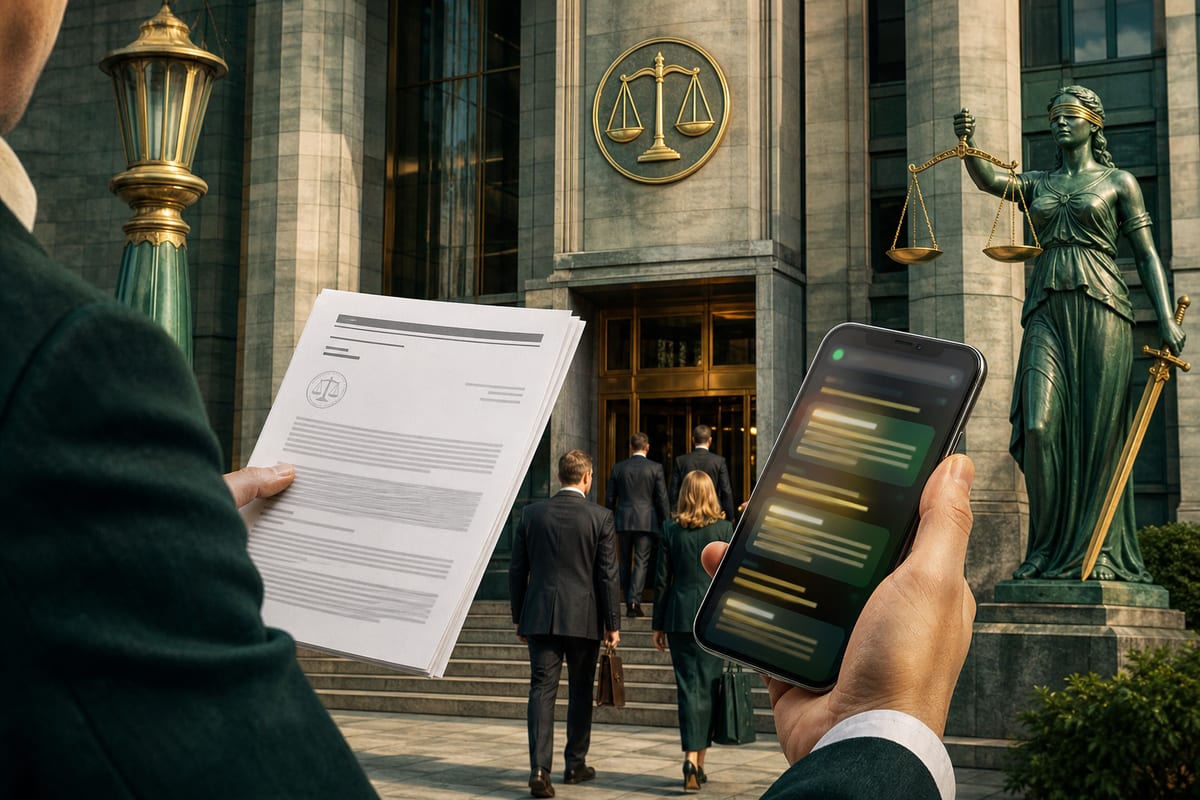
After Munich, the Aix-la-Chapelle court prohibits Google from disseminating false claims generated by its AI about a doctor. Two jurisdictions now consider these responses as statements from the company, while the Munich case concluded with a settlement, without a higher court ruling. The stakes go beyond defamation and could impact the very economy of AI research.
An Economic Risk Mentioned Up to Case-by-Case Compensation
Considering AI-generated responses as content owned by Google opens the door to consequences that go beyond mere error correction. If this interpretation is confirmed, the business model of AI research in Germany could be called into question and influence other countries. The distinction between search references and original content could allow publishers whose texts are used to assert claims. In the event that a higher court rules that these responses constitute original content, creators could demand compensation for each generated response. Such a scenario would disrupt the economy of AI research. Furthermore, the legal risk remains difficult to assess for a feature that continuously produces new texts.
Procedural Incentives Highlighted Around Settlements
The combination of editorial responsibility and reliance on financial settlements is seen as creating a perverse incentive. Law firms and concerned individuals could multiply targeted requests until they obtain erroneous and potentially defamatory statements, then seek an injunction and negotiate a settlement. These systems are deemed easy to manipulate. Google would have the capacity to handle these cases individually over time, with a binding precedent only appearing if a case is pursued to its conclusion. The company's motivation would go beyond merely managing isolated false claims.
Editorial Responsibility: From Munich to Aix-la-Chapelle
At the end of May, the Munich I Regional Court ruled Google directly responsible for the content of its AI-generated search summaries after the AI falsely associated two Munich publishers with fraud schemes. The judges characterized these previews not as mere results but as statements attributable to the company. This reasoning was echoed by a second court: AI responses are treated as content owned by Google. On September 24, 2026, the Aix-la-Chapelle Regional Court prohibited the dissemination of certain false statements, explicitly referencing Munich. The order can be contested and is not final. In Aix-la-Chapelle, it is noted that Google provides AI-generated search and is responsible for it; the decision cites Munich regarding the independent, new, and substantial nature of statements derived from a combination of third-party sources.
Le brief IA que les pros lisent chaque soir
Les 7 actus IA du jour, décryptées en 5 min. Gratuit.
Inclus dès l'inscription : notre sélection des meilleurs guides & comparatifs IA.
Choisissez votre rythme
Gratuit · Pas de spam · Désabonnement en 1 clic
The Doctor's Case and Google's Reaction
The doctor in question, head of department and professor of neuroradiology from 2010 until the end of June 2026, discovered on August 28, alerted by a colleague, that the AI Mode explained his departure by an alleged sexual assault against his secretary. By refining the queries with "suspension," "dismissal," and "legal proceedings," the tool produced detailed narratives and an invented legal sequence. None of these claims actually targeted him. The AI attributed facts concerning another former professor to this doctor, which the court confirmed based on its own records. Such misattributions have already been documented. At the end of August, the doctor emailed a request for the removal of the content. By mid-September, Google indicated it would not act. A formal notice sent the same day went unanswered, although it was received, and the erroneous texts remained online according to the court.
Ordered Measures and Verification Obligations
The Aix-la-Chapelle court prohibited the dissemination of three text variants, ruling urgently and without a prior hearing of Google due to a serious risk to the doctor's professional reputation. In case of violation of the order, the company faces fines of up to 250,000 euros per infringement. The judges indicated that Google could verify such claims by cross-referencing the AI output with the source sites used. They added that if the AI had been confronted with the doctor's objections, the system could have identified the errors itself.
A Failed Appeal and an Unconsolidated Precedent
After announcing an appeal against the Munich decision on the responsibility for AI summaries, Google ultimately reached a settlement, ending the proceedings without a higher court ruling. The reasons for this agreement and the existence of any potential payment remain unknown, and neither Google nor the concerned publisher wished to comment. The Munich court refused to extend the scope of its ruling beyond the case at hand. Despite the absence of a consolidated precedent, other jurisdictions are applying similar reasoning, with potential consequences for Google extending beyond mere cases of false allegations.
Brief IA — L'actualité IA en français
L'essentiel de l'actualité de l'intelligence artificielle, décrypté et expliqué chaque jour.