AI Series The Arc: 83 Minutes for $38,000 in Credits
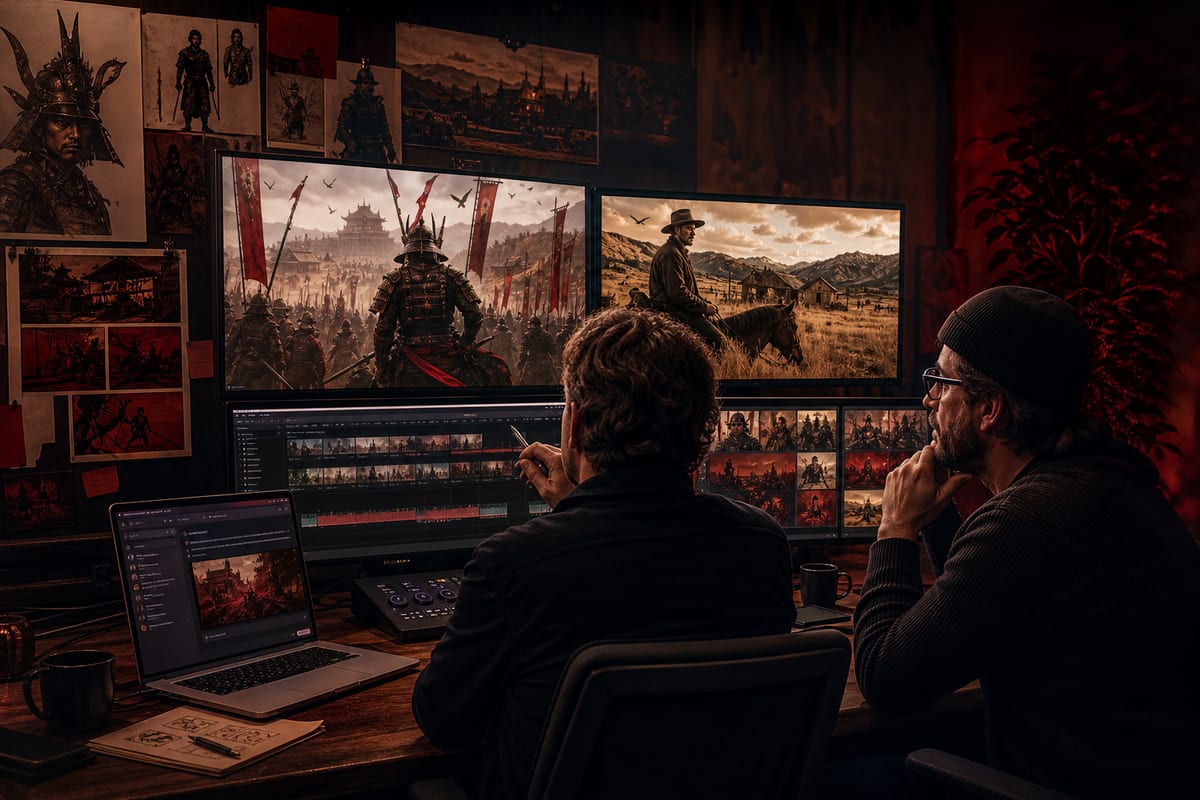
A science fiction series of 83 minutes, designed without traditional filming, claims $38,000 in AI credits and an intensive workflow combining Seedance, Kling, and Claude. Its team details costs, generation cadence, and creative trade-offs, as Hollywood wavers between union caution and declared uses by Netflix.
Hollywood Questions as The Arc Screens in Private Theaters
The use of AI in the film industry continues to spark debates in Hollywood, where some believe it poses a threat to jobs. Last year, the SAG-AFTRA union condemned Tilly Norwood, a character created by artificial intelligence and presented as an actor, warning of potential consequences for actors' earnings and the recognition of human craftsmanship. Meanwhile, Ted Sarandos, co-CEO of Netflix, stated in July that AI had been used at some point in the production process for nearly 300 works on the platform. The Arc has already been screened in person in London and Los Angeles, and its team says they are working to reach a wider audience. Darin Stewart expresses the desire to reach a stage where viewers appreciate the work without dwelling on how it was produced.
The Team Behind The Arc Claims to Have Used $38,000 in AI Credits for Five Episodes
The creators of The Arc claim to have utilized approximately $38,000 in AI credits, provided through Artlist, for a series totaling about 83 minutes across five episodes. The reported average expenses amount to around $7,600 per episode, with durations ranging from 10 to 22 minutes depending on the case. A single shot could require 8 to 10 generations, with the team first working in low resolution before increasing the quality once the desired rendering was achieved. The scenes, notably set in 1600s Japan and 1800s Montana, were primarily generated using Seedance and Kling, with Seedance being the preferred tool according to the team.
A Writing and Design Chain Centered on Claude, ShotDeck, and Figma
For each episode, the team recorded a verbal presentation of about 10 minutes covering actions, specific dialogues, and camera movements. This content served as a prompt for Claude from Anthropic, which delivered a usable script within minutes, later edited by the filmmakers. ShotDeck and Figma were used to create character sheets and mood boards, while images were generated with tools like Google’s Nano Banana Pro and GPT Image 2. Stewart believes the method proved to be quite close to traditional production and highlights a level of detail comparable to on-set work. A dining room set with bright white floors, inspired by the film 2001: A Space Odyssey (1968), illustrates this care, with the team even specifying a stone statue and paintings, with Claude also acting as a research assistant. Without resorting to physical actors, sets, props, or costumes, the final edit of the first episode was delivered three and a half weeks after approval, in a context where human ideation defined the plot, characters, and settings.
Le brief IA que les pros lisent chaque soir
Les 7 actus IA du jour, décryptées en 5 min. Gratuit.
Inclus dès l'inscription : notre sélection des meilleurs guides & comparatifs IA.
Choisis ton rythme
Gratuit · Pas de spam · Désabonnement en 1 clic
What AI Changes According to the Team: Period Settings, Improvisations, and Budget
Darin Stewart indicates that he did not have the resources necessary to shoot a battle scene in Japan and emphasizes that artificial intelligence allowed him to set the action in 17th-century Japan or 19th-century Montana without the usual financial limitations. Simone Ferretti believes that AI could enable creators without budgets or contacts to bring more stories to the screen and encourages experimentation: The Arc was able to incorporate the unexpected death of a character without having to organize new remote shoots. Stewart adds that with a larger budget, more positions would have been filled, while specifying that each team member was paid their full daily rate as on a traditional set. He expresses regret over the camaraderie of filming while finding the experience stimulating in light of what technology makes possible. The filmmakers finally assert that AI relieved them of typical budget constraints while covering periods and locations that are generally expensive.
Where to Watch The Arc and Who is Behind It
The Arc is available for free on the Artlist website, the platform that approved the series. The film is directed by Darin Stewart and produced by Simone Ferretti, the executive producer. The story takes place in a near-future America, where a former soldier imprisoned must navigate dangerous historical simulations in order to buy a treatment to save his dying son. The production was carried out by a small team, using AI credits provided by Artlist, which offers several image and video generation tools on a single platform.
Brief IA — L'actualité IA en français
L'essentiel de l'actualité de l'intelligence artificielle, décrypté et expliqué chaque jour.