AI Supply Chains: Massive Flaws and Required Oversight
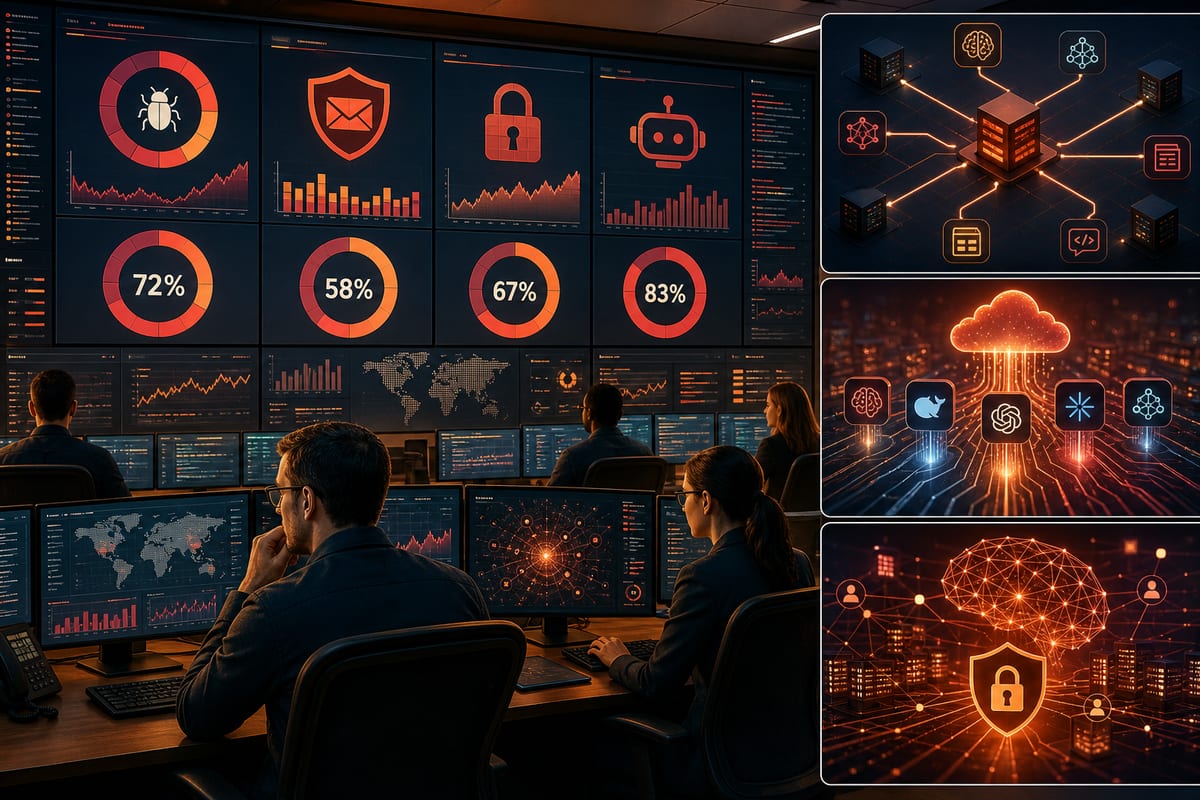
Nearly one-third of evaluated AI suppliers are considered highly exposed to ransomware, and technical integrations multiply attack surfaces. As three-quarters of AI solutions are purchased, supply chain security becomes an exercise in continuous monitoring and prioritizing patches.
High Risk Indicators Among AI Suppliers
According to Black Kite's susceptibility index, 29.7% of assessed companies are highly susceptible to ransomware. One-third, or 34.2%, have at least one critical vulnerability. Email controls are frequently deficient: 61.7% have DMARC issues and 37.3% have weaknesses in DKIM. Concerning network activity, alarming signals are also emerging, with 44.3% of organizations showing unusual activity and 41.8% exhibiting botnet-related activity. On the technical connector side, 48.8% of the 1,732 security results related to the Model Context Protocol are classified as High or Critical, including code and command injection vulnerabilities.
AI Integrations: Every Addition Can Widen the Attack Surface
As soon as an AI or automation component is integrated into an operational platform, its security issues impact the user. Each additional integration, including through software components or open-source tools, can increase the attack surface. Nearly half of the recorded security results concerning the Model Context Protocol are of High or Critical severity, featuring code and command injection flaws.
Rising Spending and Predominantly Purchased Solutions
Companies are investing billions of dollars in AI. Menlo estimates spending to reach $37 billion by 2025, with about half allocated to applications. In total, 76% of enterprise AI solutions are purchased rather than developed in-house. The main appeal of these tools lies in their ability to integrate with existing environments to handle manual and repetitive tasks.
Le brief IA que les pros lisent chaque soir
Les 7 actus IA du jour, décryptées en 5 min. Gratuit.
Inclus dès l'inscription : notre sélection des meilleurs guides & comparatifs IA.
Choisissez votre rythme
Gratuit · Pas de spam · Désabonnement en 1 clic
What Black Kite's Assessment Covers
Black Kite analyzed 18,160 AI companies of all sizes, from 0 to 10 employees to over 1,000. Involvement in AI was determined based on products, services, and core activities, covering six groups including daily applications, AI development and implementation, specialized sectors, industrial organizations, and data-focused foundations, calculations, and models. A small percentage of companies remained unclassified, and players using AI only incidentally were excluded. The 2026 report highlights shortcomings in basic security practices, such as the lack of patches for critical vulnerabilities, insufficient credential protection, failing user and email authentication, and network security gaps. It reminds that attractive AI applications can carry risks and that many players do not meet fundamental standards.
Governance: Continuous Monitoring and Patch Prioritization
Classic supply chain protection principles apply to AI suppliers: continuous monitoring and recurring assessment are among the best protections. A one-time check is not enough; increasing the frequency of checks and regularly communicating with suppliers about their solutions and dependencies helps identify potential vulnerabilities. Corrective actions should be prioritized, starting with risks associated with ransomware and already exploited flaws. An audit of the integrations and modules of an AI tool, its access rights, the information it can access, and the potential consequences in case of exploitation should be conducted to assess the risk/benefit ratio and decide on its retention. If the tool is retained, its permissions and access scope should be limited to the bare minimum necessary.
Brief IA — L'actualité IA en français
L'essentiel de l'actualité de l'intelligence artificielle, décrypté et expliqué chaque jour.