AI: Trump's team expects little from Thursday's summit with Xi
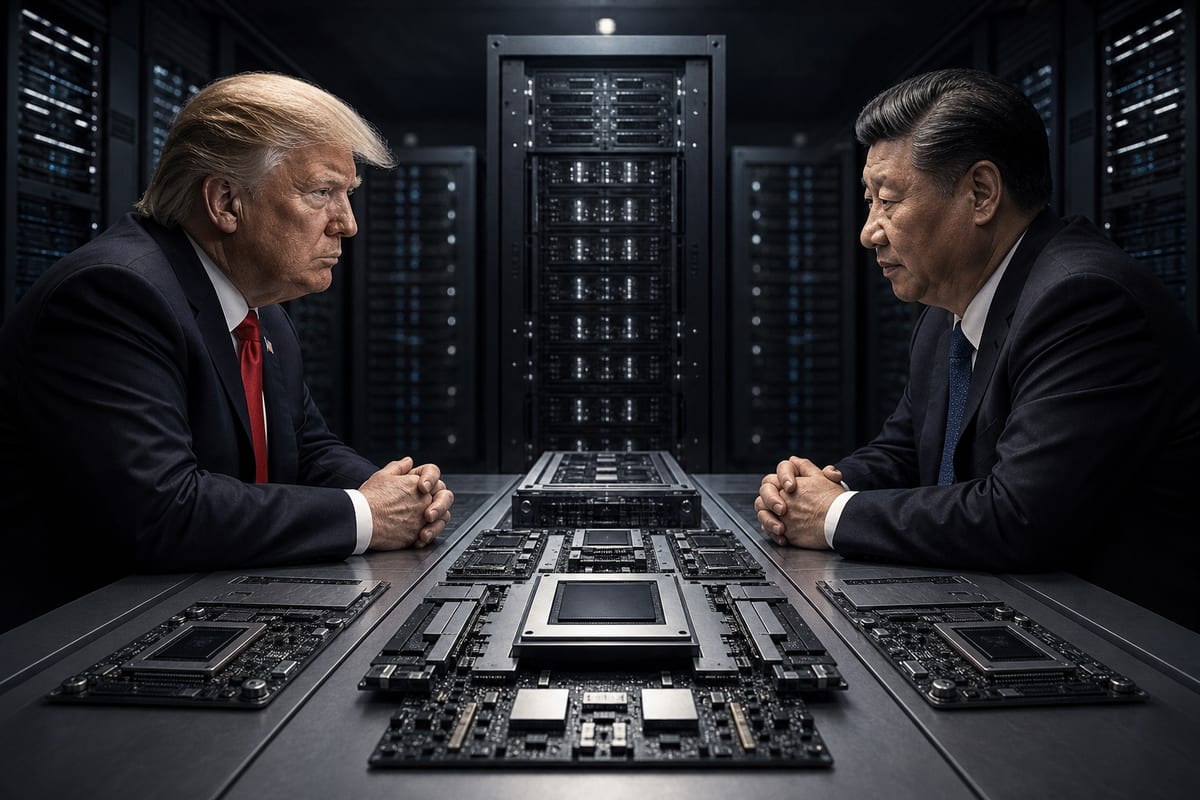
Officials from Donald Trump's administration say they expect little progress on AI security and espionage during his meeting with Xi Jinping, scheduled for Thursday. The proposed emergency channel between Washington and Beijing is still not operational. Additionally, the United States has announced plans to restrict Chinese access to certain American chips hosted abroad.
Perceived Risks Differently
American officials attribute part of the deadlock to differing perceptions of risk. In the United States, Trump administration officials and tech leaders are primarily concerned that models may become autonomous, misaligned, and capable of escaping human control. Chinese officials are largely seen as more worried about the use of advanced open-weight models on their territory by critics and dissidents against the Chinese Communist Party.
According to American officials, Beijing also seems interested in gathering intelligence using advanced models, both domestically and abroad. They believe China is reluctant to disclose the unpredictable behaviors of its models, and the incentives to make incidents public differ between the countries. Cross-suspicions of espionage have also increased distrust in the discussions, they add. Even before the Nvidia case, Beijing viewed Washington as trying to hinder its AI capabilities.
Trump Prepares Chip Restrictions
While seeking friendlier economic relations with Beijing, the Trump administration announced this week its intention to pursue a rule aimed at restricting China's remote access to American AI chips located in data centers abroad. This initiative responds to the alleged involvement of Megaspeed in the Nvidia case and criticisms regarding a company linked to China gaining access to advanced chips. Donald Trump has intervened directly in this matter. The measure could also prevent comparable companies, whose parent company is based in China, from trading with Nvidia.
Le brief IA que les pros lisent chaque soir
Les 7 actus IA du jour, décryptées en 5 min. Gratuit.
Inclus dès l'inscription : notre sélection des meilleurs guides & comparatifs IA.
Choisissez votre rythme
Gratuit · Pas de spam · Désabonnement en 1 clic
The case involves Jensen Huang, former CEO of Nvidia, as well as Alice Huang, an executive at Megaspeed suspected of having ties to Chinese intelligence. Beijing has rejected accusations that its services recruited her, denouncing it as "defamation" and "baseless allegations." For American officials, the implications of this case complicate negotiations on AI development between the two largest economies in the world.
Technical Dialogue Lacks Operational Channel
The Trump administration sought, in September, to establish an incident line on AI connecting U.S. Treasury Secretary Scott Bessent with Chinese Vice Premier He Lifeng. This channel remains conceptual and is not operational. Last week, U.S. Secretary of State Marco Rubio stated that technical exchanges on AI security had begun between the governments since the announcement of this mechanism. He acknowledged that discussions are still ongoing.
American officials have notably considered defining the circumstances under which each country should notify the other. They have also discussed enforcement mechanisms to ensure that alerts do not only flow from Washington to Beijing.
Upon leaving the White House, Donald Trump did not indicate whether he would discuss Chinese interference in AI or the Nvidia case with Xi Jinping. According to officials from his administration, he is seeking to avoid antagonizing Beijing during the summit.
Brief IA — L'actualité IA en français
L'essentiel de l'actualité de l'intelligence artificielle, décrypté et expliqué chaque jour.