Germany: Google and Perplexity AI Under Media Law
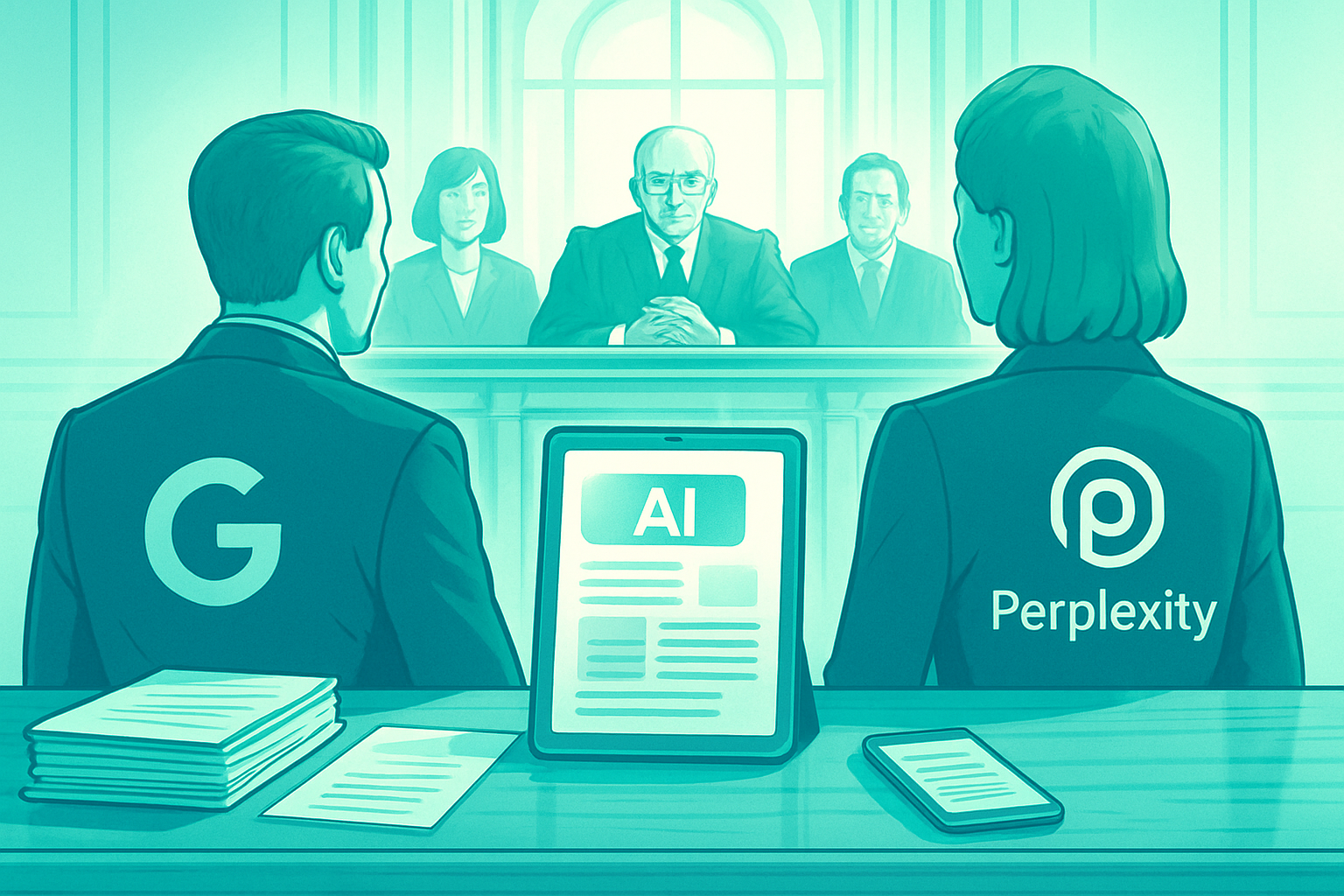
Germany: Google and Perplexity's AI Under Media Law
German media regulators have, for the first time, classified search engines and AI chatbots as content providers, issuing legal decisions against Google and Perplexity.
Regulators argue that the liability exemption provided by the Digital Services Act does not apply to AI-generated content, as it is considered independently created content rather than redistributed materials from third parties.
Google is specifically accused of using its prominent AI summaries to push traditional links—especially those to journalistic sources—into the background.
Decisions by German Regulators
The German Commission for Licensing and Supervision (ZAK) has issued its first decisions against the AI services of Google and Perplexity. This is the first time that German regulators have applied the State Media Treaty to search engines and AI chatbots.
Dr. Thorsten Schmiege, president of the ZAK, stated: "Search engines and AI chatbots are content providers, and we are now consistently applying German media law to them." According to the ZAK, the liability shield provided by the Digital Services Act, which protects platforms distributing third-party content, does not apply to AI-generated responses as they count as the providers' own content.
A Munich court recently reached a similar conclusion, considering AI-generated text as independent content. The court stated that the responses contain "independent, new, and substantial statements" produced by analyzing and combining materials from various third-party sites. Google was held liable for false statements, and the company announced its intention to appeal.
Legal Actions Against Google and Perplexity
Google now faces actions under media law in addition to civil liability. The decisions formally find that the companies violated Article 109 of the State Media Treaty and are immediately enforceable. Google and Perplexity have one month to appeal.
Accusations Against Google
Regulators accuse Google of failing to comply with transparency rules and violating anti-discrimination regulations. Google's AI summaries receive prominent placement above search results, relegating traditional links, including those to journalistic sources, further down. Regulators claim this constitutes prohibited discrimination, as the AI responses are Google's own content, not neutral search results.
Le brief IA que les pros lisent chaque soir
Les 7 actus IA du jour, décryptées en 5 min. Gratuit.
Inclus dès l'inscription : notre sélection des meilleurs guides & comparatifs IA.
Choisis ton rythme
Gratuit · Pas de spam · Désabonnement en 1 clic
However, the visibility of links is likely not the only issue. Studies show that users rarely click on source links once they feel their question has been answered. Moving these links higher is unlikely to change that. Google argues that the studies are biased but has not released data showing otherwise.
Google includes source links in its AI summaries, but very few users click on them.
Case of Perplexity
In the case of Perplexity, regulators have so far only reported the absence of a designated representative in Germany and a lack of transparency disclosures. The same concerns should theoretically apply since the services operate similarly, although Google's reach is much larger.
Rules for AI Chatbots
Regulators also consider AI services as intermediaries. When a chatbot includes third-party content as sources or in lists of links, it influences users' ability to find that content. This meets the criteria of a media intermediary, according to regulators, and triggers transparency rules aimed at protecting media diversity. "Anyone who controls how content is found through the selection and placement of links must make it transparent. Otherwise, diversity among media and publications will disappear," Schmiege stated.
A related legal opinion drafted by Professors Jan Oster and Christoph Busch supports the regulators' position. The addition of AI to search engines changes how people find information. Instead of a list of related results, users receive a single prose answer. This reduces traffic to original sources and jeopardizes journalism funding, the authors argue. They recommend creating a distinct category for AI search engines under the State Media Treaty, with rules to protect media diversity.
Google has prepared for this in several ways, including the rollout of its "Preferred Sources" feature. This is a smokescreen that allows the company to argue in court that users can choose which sources appear. Few users are likely to maintain a personalized source list, even as publishers rush to promote the feature. For Google, this amounts to a free pass to replace original sources in AI responses with providers who cannot or do not want to defend themselves in court.
Brief IA — L'actualité IA en français
L'essentiel de l'actualité de l'intelligence artificielle, décrypté et expliqué chaque jour.