Replit denounces "tokenmaxxing": a dystopian drift of AI
Reconsideration of AI Return on Investment
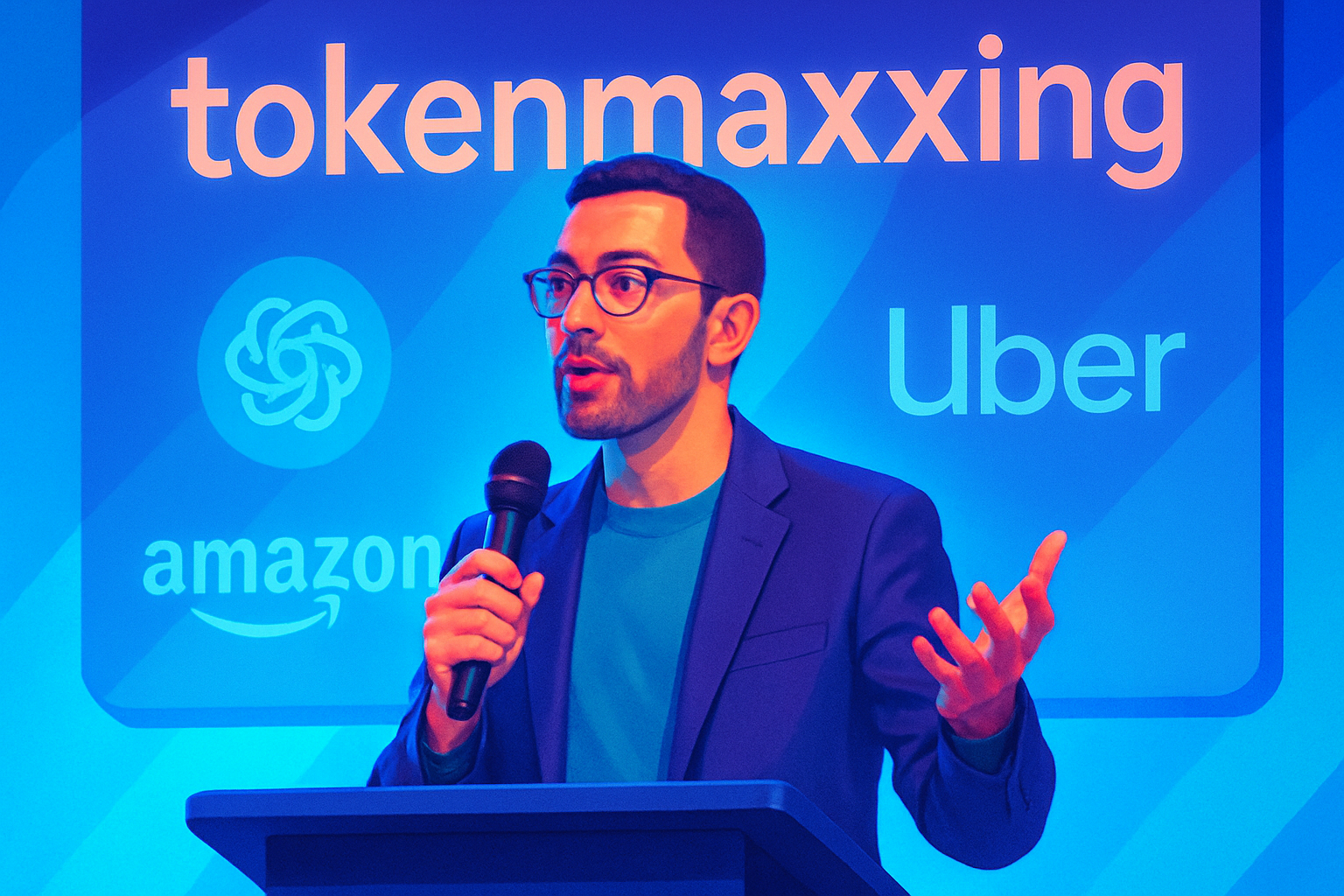
Michele Catasta, the head of AI at Replit, recently voiced strong criticisms of the concept of "tokenmaxxing" at the Web Summit in Rio. He described this practice as irresponsible and emphasized that it serves as a poor measure of employee performance. According to Catasta, the idea of ranking employees based on their consumption of AI tokens is not only inappropriate but also "very dystopian." This trend, which has gained popularity in certain tech companies, is increasingly being questioned.
Tech giants like Amazon and Uber have begun to reevaluate the return on investment of their AI spending. Catasta explained that in some companies, internal dashboards have been created to allow employees to compete against each other, trying to prove that they consume more tokens than their colleagues. This internal competition, he argues, does not reflect the true added value of employees.
The Backlash Against "Tokenmaxxing"
Catasta's comments come at a time when many leaders are starting to doubt the relevance of maximizing AI usage as a performance indicator. Last month, Amazon announced that it had decided to eliminate its internal ranking based on AI usage. A company spokesperson clarified that this system was never intended to encourage the use of AI simply for the sake of using it.
Le brief IA que les pros lisent chaque soir
Les 7 actus IA du jour, décryptées en 5 min. Gratuit.
Inclus dès l'inscription : notre sélection des meilleurs guides & comparatifs IA.
Choisissez votre rythme
Gratuit · Pas de spam · Désabonnement en 1 clic
Almost simultaneously, Andrew Macdonald, Chief Operating Officer at Uber, expressed concerns about the lack of productivity gains proportional to the rising costs associated with AI. Charles Holive, who leads AI at BNP Paribas CIB, also dismissed "tokenmaxxing," labeling it a "vanity metric." He pointed out that token consumption does not reflect the actual impact of employees within the company.
Catasta insisted that the use of tokens is not proportional to the impact these employees have on the business. He expressed satisfaction with what he perceives as a recent "shift in narrative" regarding "tokenmaxxing." However, he warned that this practice could encourage wasteful behavior.
Energy and Behavioral Consequences
Catasta compared excessive AI usage to a situation where one would leave the lights on at home without caring about the electricity bill. He highlighted that excessive AI usage has a significant impact, particularly in terms of energy consumption. This could reduce companies' ability to develop other AI use cases, as resources are limited.
In conclusion, Catasta warned against the detrimental effects of "tokenmaxxing" on innovation and energy efficiency. He called for a more responsible and measured use of AI that takes into account the real impact on the business and the environment.
Brief IA — L'actualité IA en français
L'essentiel de l'actualité de l'intelligence artificielle, décrypté et expliqué chaque jour.