Amazon and AI: The Quest for Efficiency per Dollar Spent
A Paradigm Shift in the AI Industry
In recent years, the artificial intelligence industry has focused on a central question: what is the smartest model? This quest for pure performance has long dominated the sector. However, a new priority is emerging, centered on economic efficiency: how much useful intelligence can be obtained for each dollar invested?
As many models now reach a sufficient level of performance for various business tasks, companies are beginning to shift away from the search for the absolute top-performing model. They are increasingly interested in the cost of reliably completing a task using AI.
The Example of Amazon and Alexa
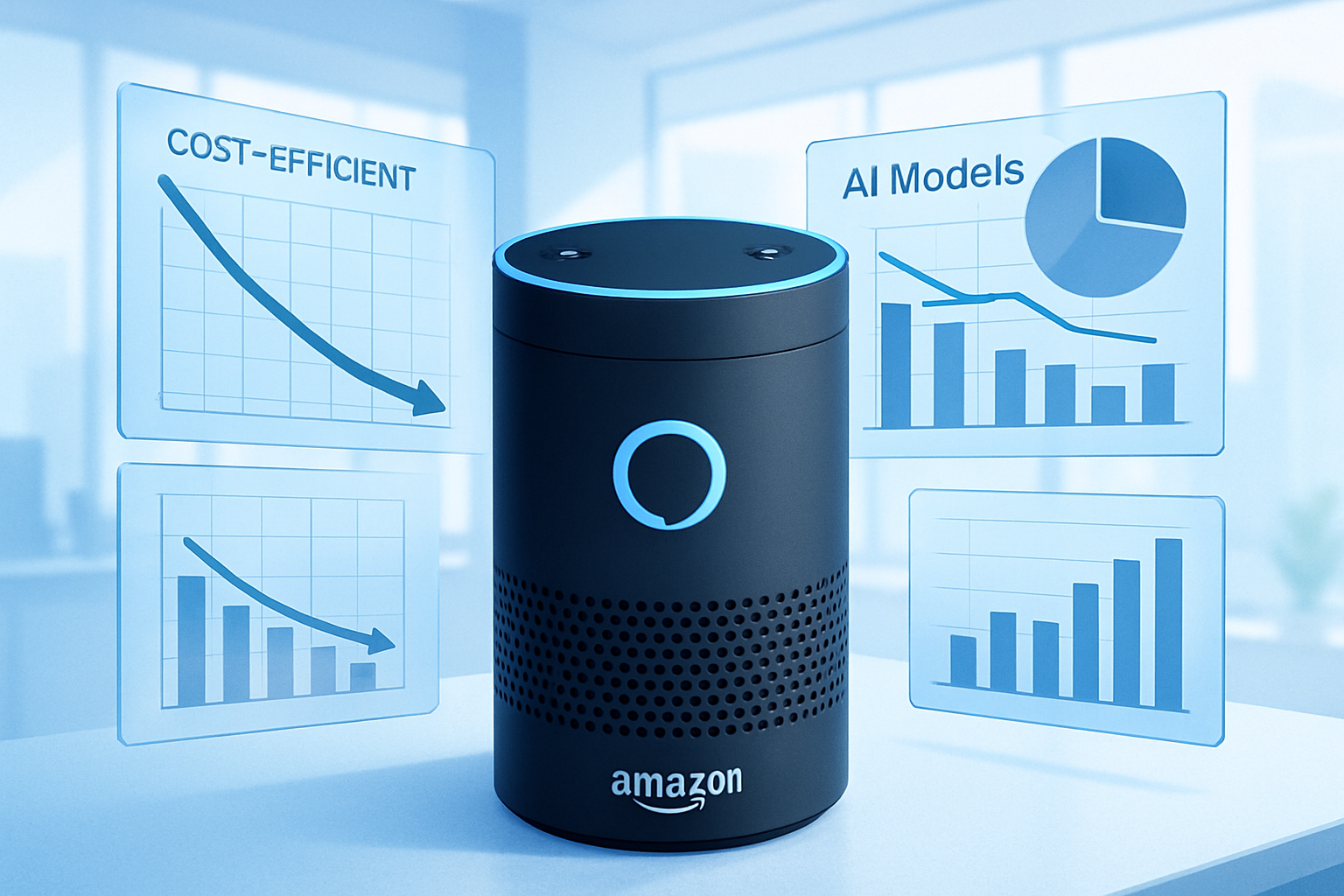
An illustrative example of this trend is provided by Amazon, which has undertaken to reorganize its voice assistant, Alexa. According to a recent article by Eugene Kim, internal documents reveal that Amazon is increasingly redirecting requests to its own, less powerful but also less expensive AI models. This helps avoid costly calls to the more powerful models from Anthropic. The goal is not for Alexa to always use the smartest model, but rather to resort to expensive intelligence only when necessary.
Kylan Gibbs, CEO of Inworld, a company specializing in voice AI development, confirms this trend. According to him, we are reaching a stage where many models are good enough, and the main issue becomes efficiency. Inworld has thus established dedicated research teams focused on cost reduction and model acceleration, in addition to their intellectual development.
Le brief IA que les pros lisent chaque soir
Les 7 actus IA du jour, décryptées en 5 min. Gratuit.
Inclus dès l'inscription : notre sélection des meilleurs guides & comparatifs IA.
Choisissez votre rythme
Gratuit · Pas de spam · Désabonnement en 1 clic
Criteria for Evaluating the Efficiency of AI Models
The question of which AI model is the best in terms of intelligence-to-dollar ratio is complex. Peter Gostev, head of AI capabilities at Arena AI, proposes four criteria to evaluate this efficiency:
- Quality: How often does the model reliably accomplish the tasks assigned to it?
- Cost: What is the cost associated with processing a request and producing a response? Some providers charge more for specific tasks.
- Reusability: The ability to reuse already processed information can significantly reduce costs.
- Required Effort: A model that is inexpensive per token may end up being more costly if it requires many additional steps or repeated attempts to complete a task.
Peter Gostev remains cautious about establishing a clear ranking of AI models based on these criteria, partly because this trend is still recent. However, it is becoming increasingly evident that while the smartest models continue to make headlines, those that offer the best utility-to-price ratio are poised to dominate the market.
Brief IA — L'actualité IA en français
L'essentiel de l'actualité de l'intelligence artificielle, décrypté et expliqué chaque jour.