Amazon: Felton Leads $220 Billion for AI
John Felton, Chief Financial Officer of Amazon Web Services (AWS), is steering Amazon's $220 billion investment in AI as investors question its profitability. He aims to accelerate capacity building while reducing costs.
Financial Commitments and Equipment on Hold
Amazon reported $159.6 billion in long-term commitments related to the acquisition of goods and equipment that have not yet been accounted for on its balance sheet. Nearly $64 billion is due by 2027. The portion related to AWS or AI is not specified.
A former AWS executive reported that about two years ago, the company allocated approximately $100 million to expedite a data center project, advancing it by six to nine months. Felton asked teams to justify this additional expenditure; AWS accepted it because the early availability of capacity was deemed a priority.
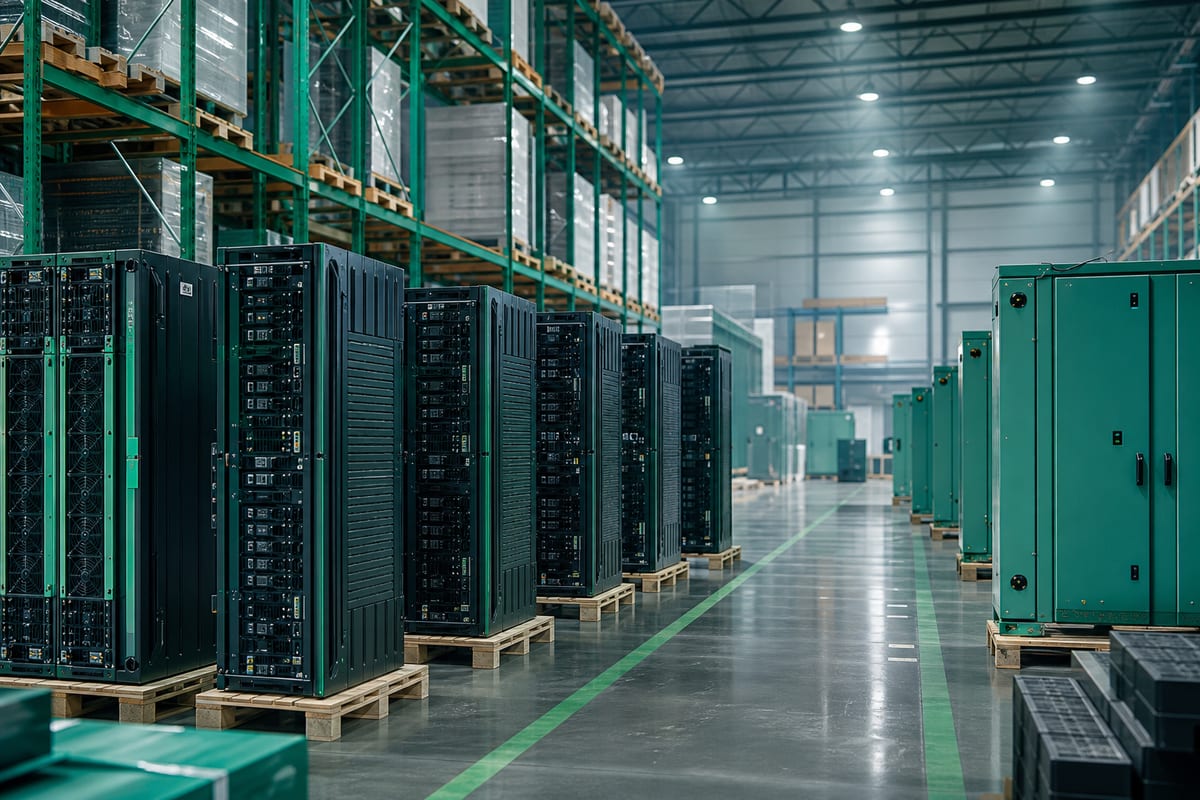
Nvidia equipment worth billions of dollars has begun arriving at AWS, even as some data centers lacked the necessary power supply. Racks are being stored in interim facilities. An AWS spokesperson stated that this preparation of servers before installation is standard practice.
AWS Relies on Customer Contracts
Spending on chips, energy, and data centers precedes the understanding of customers' final needs. Felton believes that AI is evolving faster than previous technologies and remains in an early stage. According to him, customer commitments and demand exceeding the capacity AWS can install justify the investment.
To assess needs, the CFO prioritizes commercial commitments. In the third quarter, the cloud contract portfolio reached $578 billion and showed triple-digit growth. AWS's revenue growth has accelerated for six consecutive quarters, recently rising by 39% to $46 billion.
Felton does not limit the expected return to AI services. He believes that companies already entrusting their data and applications to AWS are likely to run their AI processing there as well. He anticipates additional needs for storage and computing across the entire business.
Felton Delays Purchases That Can Wait
During a staff meeting in September, Felton challenged a planning approach he found too cumbersome and organized in overly sequential steps. He requested adjustments to be more real-time and an evaluation of costs corresponding to higher or lower demand. He believes that a single forecast cannot be accurate: multiple scenarios must be prepared and then revised.
This method separates long-lead resources from deferrable purchases. Felton explains that AWS commits early to land, permits, and energy, which require years to secure. For the rest, waiting provides additional information and maintains possible choices; he asserts that in the absence of demand, AWS does not place orders.
Le brief IA que les pros lisent chaque soir
Les 7 actus IA du jour, décryptées en 5 min. Gratuit.
Inclus dès l'inscription : notre sélection des meilleurs guides & comparatifs IA.
Choisissez votre rythme
Gratuit · Pas de spam · Désabonnement en 1 clic
Prasad Kalyanaraman, head of AWS infrastructure, presented several data center designs and server configurations under development in September. According to him, this diversity suits Felton because it avoids committing expenses three years in advance based on uncertain forecasts. The approach aims to have multiple ways to add capacity rather than deciding everything long in advance.
Felton believes that AI necessitates speed, while acknowledging that some decisions require more time.
AWS Reviews Its Suppliers and Construction
Felton seeks to contain the costs of data centers and server sets despite increasing capacity. In September, he asked teams whether AWS was the cheapest supplier and how such a comparison could be established. For electrical distribution cabinets, the review of offers included, in addition to prices, the capabilities of factories and suppliers' exposure to tariffs.
AWS has notably explored a potential agreement with manufacturer Jabil. Internal evaluation attributes a potential annual cost reduction of $300 million to it. Regarding construction, the Houdini project shifts some operations to factories through modules; Titus adapts facilities for denser AI equipment and aims for lower energy and cooling expenses.
Felton Translates His Warehouse Experience
Before joining AWS in 2024, Felton spent about two decades developing Amazon's commercial operations and delivery network. He joined the ranks of the company's top executives in 2020. He recounts that he accepted the financial position offered about two and a half years ago without hesitation: AWS was playing an increasingly significant role in Amazon, and he wanted to support an evolution in AI that he believed could transform the company.
The COVID-19 pandemic had given him experience in difficult scaling. Amazon had urgently expanded its distribution centers, transportation means, and workforce to meet the surge in e-commerce, only to find itself overcapacity in warehousing when growth slowed. In a 2022 email, Felton requested a rebalancing of safety, quality, speed, and costs; he anticipated that cost challenges would persist until growth absorbed available capacity.
A former executive who worked with him noted that, in the face of the pandemic, tariffs, and supply chain disruptions, Felton asked teams to demonstrate how their plans would withstand a contraction in demand or other changes. He is described as cautious and demanding regarding data. Other former executives mention a composed personality, with a sense of humor, attentive to the concrete conditions for the success of an investment as much as to its numbers, in a direction under significant pressure.
Felton then participated in the regionalization of deliveries in the United States, with stocks and distribution operations closer to customers. In 2024, as he transitioned to AWS, Doug Herrington, head of Amazon's retail division, credited him and his team with gains in speed and cost reductions. Felton says he learned from this period the necessity of building from observable demand.
Brief IA — L'actualité IA en français
L'essentiel de l'actualité de l'intelligence artificielle, décrypté et expliqué chaque jour.