Amazon: An AI Scientist to Co-Chair RecSys 2026
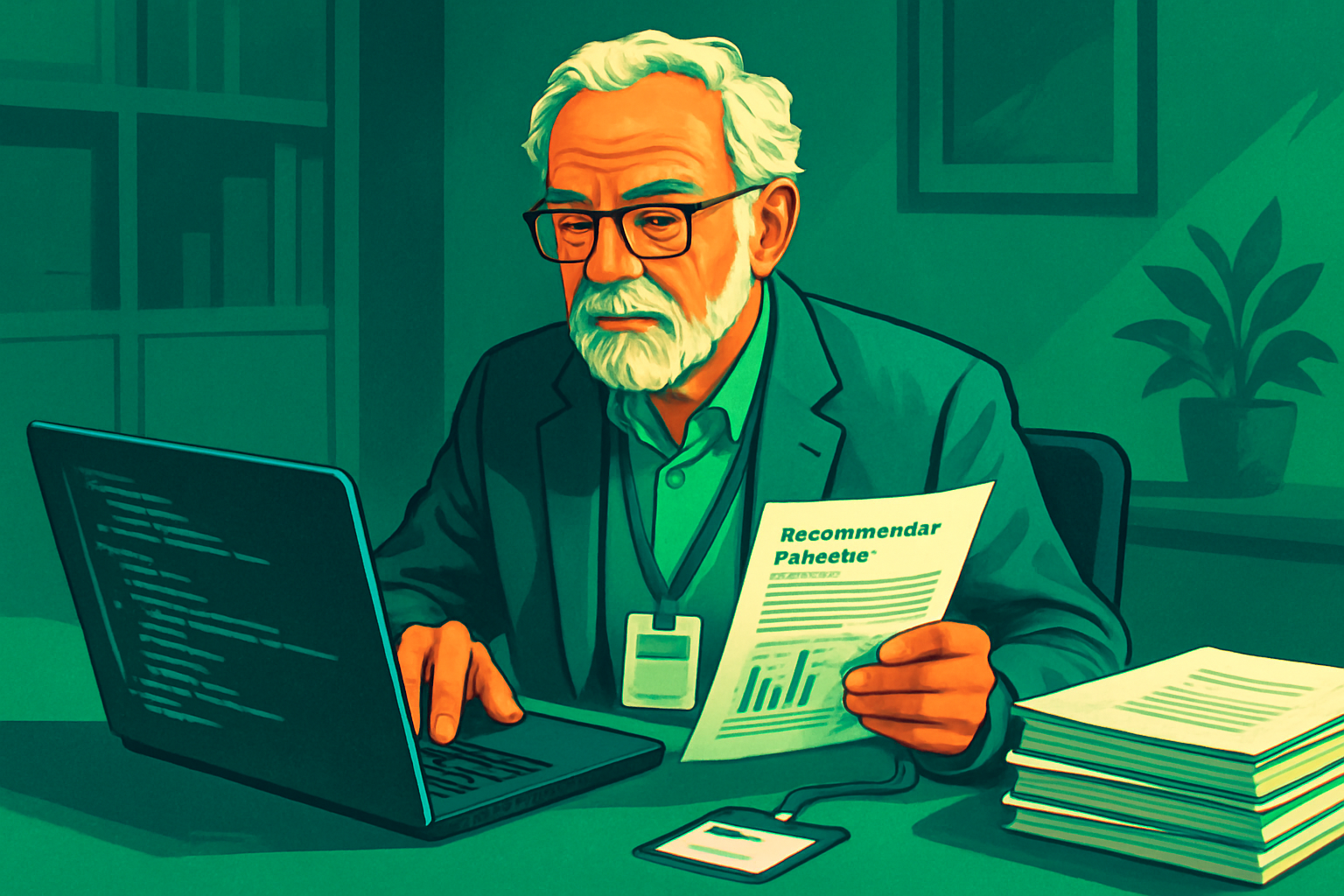
Abhinav Bohra, a senior applied scientist at Amazon specializing in recommendation systems, regrets having delayed his public presence outside of his employer. Since 2021, he has been publishing, reviewing work, and speaking at conferences within a framework he defined to avoid any information leaks. This visibility has earned him the position of Challenge Co-Chair for ACM RecSys 2026 and participation in a mentorship program through Johns Hopkins. He also describes a "learning tax" that eats into his evenings and weekends.
Nomination to RecSys 2026 and Mentorship Validated Through a Public Profile
In recent years, making his work visible has had concrete effects for Abhinav Bohra. He was appointed Challenge Co-Chair for ACM RecSys 2026, an international conference dedicated to recommendation systems. He took the initiative to contact the organizers, present his background, research, and evaluation experience, and express his interest in the organizing committee. After reviewing his profile and a call, the nomination was confirmed. He believes that this outreach made him eligible, but that his prior work made the opportunity possible. Concurrently, he joined a mentorship program through Johns Hopkins, where he advises startups on AI and technical strategy.
Personal Rules for Speaking Without Disclosing Proprietary Information
Initially reluctant, Abhinav Bohra considered everything related to his work as "radioactive," especially since publishing company elements requires documentation and review procedures he did not want to initiate. He then established a clear rule: concepts and research work are not proprietary, even if the data is; a topic already addressed in the literature can thus be discussed, unlike what is solely present in internal code. He never shares non-public data, internal metrics, client information, code, roadmaps, or unannounced products, and prefers to abstain when in doubt. For general issues, such as training a model with a very limited number of annotated data, he has found it possible to have in-depth technical discussions without disclosing sensitive information.
Publications, Reviews, and LinkedIn as Leverage for Visibility
In 2021, he began to share more of his learnings and published his first paper about a year later. These publications allowed him to review the work of other researchers and build relationships within the ecosystem. He subsequently received invitations to speak, attributing part of these opportunities to his articles and reviewing activity. LinkedIn has become one of his channels, where he shares his research, technical ideas, and speaking engagements, aiming to build a professional identity that does not depend on a single employer, without seeking to become an influencer.
Le brief IA que les pros lisent chaque soir
Les 7 actus IA du jour, décryptées en 5 min. Gratuit.
Inclus dès l'inscription : notre sélection des meilleurs guides & comparatifs IA.
Choisissez votre rythme
Gratuit · Pas de spam · Désabonnement en 1 clic
Effects on His Work at Amazon and Learning Costs Outside Working Hours
For Abhinav Bohra, external visibility is not just a line on a CV. He believes that opening up to the outside world earlier would have accelerated his internal progress, as writing for readers without context or speaking at conferences quickly reveals weaknesses, evaluations that are all the more useful coming from actors who owe him nothing. Over time, this external work has made him more confident internally and quicker to propose ideas without fully locking them in. However, he describes learning in AI as an unofficial "second job": outside of his daily routine, he dedicates evenings and weekends to research on retrieval and recommendation and to submitting papers. He enjoys these efforts, while acknowledging the impact on work-life balance, justifying these commitments by the rapid evolution of the field. According to him, AI opens doors but comes with a "learning tax," as skill updating effectively becomes part of the job, even outside of working hours.
Background, Regrets, and Advice to Avoid "Starting from Scratch"
As a senior applied scientist at Amazon, specializing in recommendation systems that guide products presented to buyers, Abhinav Bohra joined the company in 2019 and was promoted in 2024. He describes an initial phase focused internally, where he saw peers publishing on problems he was solving without intervening publicly. He discovered that internal reputation does not transfer, regrets the delay in opening up, and believes he would have gained a few years had he done so earlier. He recommends having a public profile, useful in case of professional uncertainties, layoffs, or a tight job market, to avoid the impression of starting from scratch when all past work is proprietary and non-communicable. His advice is to cultivate a readable external profile without disclosing protected information or violating any NDAs, through independent research, conferences, work evaluation, and involvement in domain organizations. He emphasizes that the speaking engagements that have helped him come with a "learning tax" taken from his personal time.
Brief IA — L'actualité IA en français
L'essentiel de l'actualité de l'intelligence artificielle, décrypté et expliqué chaque jour.