American AI Worries Chinese Military Researchers
Chinese military researchers fear that advancements in AI in the United States make their nuclear missiles easier to detect and destroy. Their concerns also revolve around the speed of American decision-making, while Beijing develops its own military applications of this technology.
Human Control Without Diplomatic Oversight
In 2024, Xi Jinping and Joe Biden, now the former American president, agreed to reserve the decision to use nuclear weapons for humans. This commitment has not been followed by any official exchanges on the subject. The meeting between Xi Jinping, Donald Trump, and Vladimir Putin last week at the Shenzhen summit did not address the nuclear applications of AI.
Philip Reiner, director of the Institute for Security and Technology in California, distinguishes the final decision from the information that precedes it. According to him, no one delegates the choice of a launch to AI, but all the elements that inform the decision will now be influenced by it. In the realm of lethal autonomous weapons, Pope Leo called for their prohibition last month, ahead of discussions in Geneva.
Beijing Seeks to Protect Its Retaliatory Capability
For China, deterrence implies the ability to respond after suffering an initial nuclear attack. However, Chinese researchers warn that American forces could, thanks to AI, detect, track, and strike Chinese missiles more quickly. According to Gerald C. Brown, a specialist in Chinese nuclear strategy and former State Department analyst, Beijing believes that AI makes the survival of its missiles much more difficult. Sun Chenghao from the Tsinghua University Center for International Security and Strategy notes that these risks also raise significant concerns in Beijing.
Le brief IA que les pros lisent chaque soir
Les 7 actus IA du jour, décryptées en 5 min. Gratuit.
Inclus dès l'inscription : notre sélection des meilleurs guides & comparatifs IA.
Choisissez votre rythme
Gratuit · Pas de spam · Désabonnement en 1 clic
The Federation of American Scientists estimates the number of Chinese nuclear warheads to be around 620. This arsenal is expected to reach approximately 1,000 warheads by 2030. The American and Russian arsenals each have about 1,800 deployed warheads.
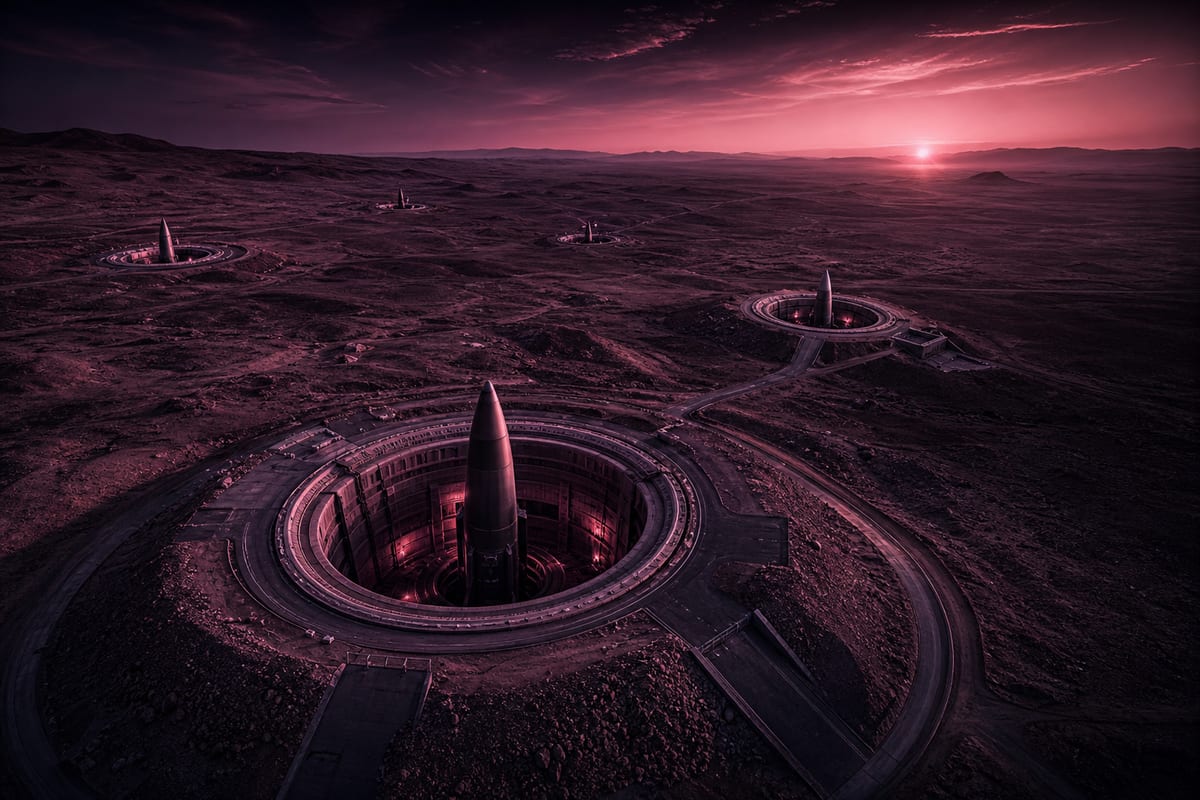
To protect its forces, Beijing has dispersed them. China also conducted a long-range missile test from a submarine in July. Approximately 320 launch silos have been constructed in the northern deserts of the country.
Chinese Military Researchers Also Explore Their Own Uses
China is also working on military applications of AI: Xi Jinping gathered senior officials on this topic in July. The Rocket Force, which commands the majority of China's nuclear missiles, is studying its use to assist hypersonic weapons and ballistic missiles in circumventing defenses.
The issue of components also comes into play. Jacob Stokes from the Center for a New American Security believes that American superiority in advanced chips fuels Chinese fears. Last week, an American commission stated that the Chinese military is seeking to acquire the most advanced chips from Nvidia.
In Beijing, two researchers from the Academy of Military Sciences examined the role of AI in American nuclear decisions: they estimate that a process that traditionally takes 15 to 30 minutes could be reduced to 90 seconds or even less. However, some researchers from the People's Liberation Army urge caution against moving too quickly. This year, a study from two military institutes warned that the amplification of erroneous data by AI could pose significant risks to command and control.
Brief IA — L'actualité IA en français
L'essentiel de l'actualité de l'intelligence artificielle, décrypté et expliqué chaque jour.