Amulya Vishwanath Launches Techable VC and Advocates for Physical AI
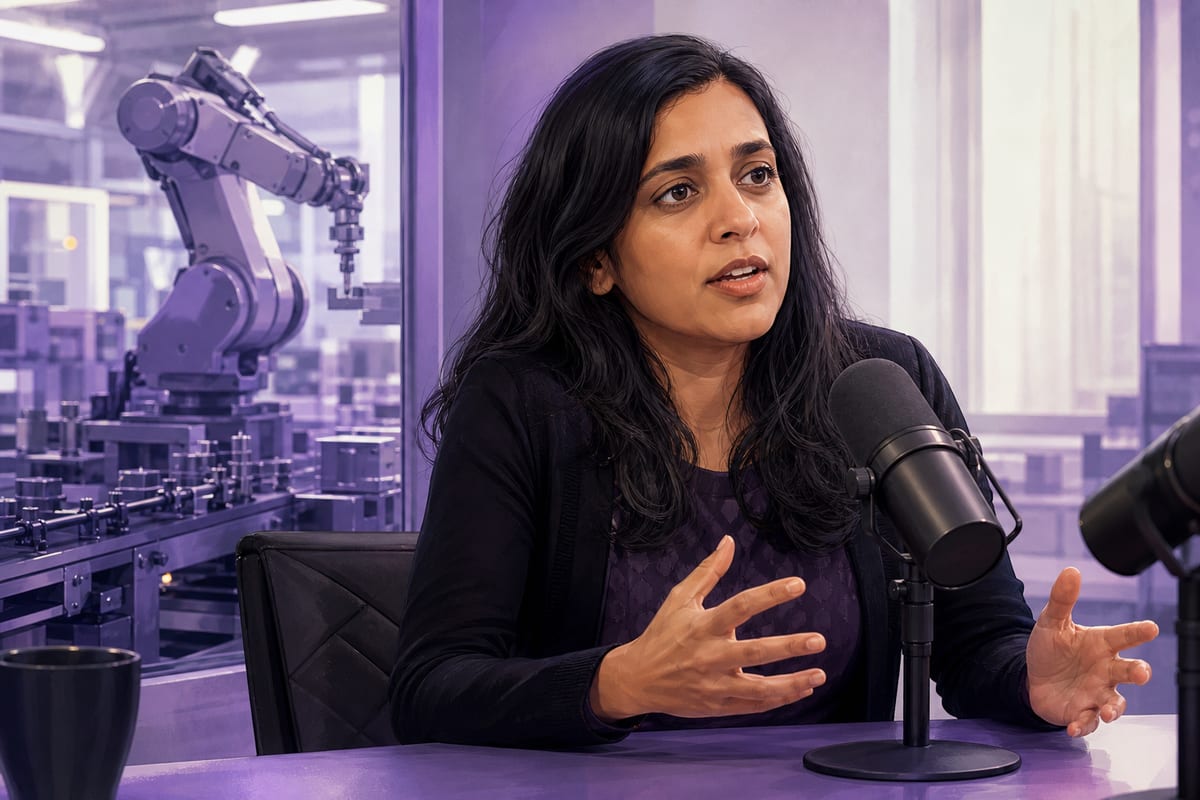
Amulya Vishwanath, former robotics lead at NVIDIA, is making her first investments through Techable VC in physical AI. She describes an application landscape that ranges from factories to molecules, and challenges the notion of an immediate shift in robotics driven by a single foundation model.
Concrete Problems and a Claimed Role as a "Bulwark"
Amulya Vishwanath highlights immediate needs, citing family-owned factories struggling to recruit and the burnout experienced by surgeons. She wants founders to view their investor as a bulwark. She explains that she relies on the network built during her years at NVIDIA to conduct due diligence and facilitate business introductions. She also mentions what she sees as distinct advantages for the United States and China, and believes humanoids should serve purposes beyond dancing.
Defining Physical AI and Framing Initial Investment Bets
For Amulya Vishwanath, physical AI is not limited to robots; it also encompasses a molecule, a material, a drug, or a production line machine. The announced investment scope includes robotics, materials science, and life sciences. She is making her first investments as the founder and managing partner of Techable VC. She presents herself as one of the first executives to leave NVIDIA to launch an early-stage fund dedicated to physical AI, after seven years leading product marketing for NVIDIA's robotics platforms. These topics were discussed in a conversation with Dominic-Madori Davis, where she also uses the term "conscious automation."
Le brief IA que les pros lisent chaque soir
Les 7 actus IA du jour, décryptées en 5 min. Gratuit.
Inclus dès l'inscription : notre sélection des meilleurs guides & comparatifs IA.
Choisissez votre rythme
Gratuit · Pas de spam · Désabonnement en 1 clic
No Immediate "ChatGPT Moment" for Robotics, According to Her
Amulya Vishwanath believes that robotics is in a "Lego era," characterized by the fact that fundamental elements such as actuators, robotic hands, software, and safety standards still need to be assembled. Her perspective contradicts the claim that an imminent "ChatGPT moment" for robotics is on the horizon, even though ChatGPT was launched in late 2022. Earlier this year, Pim de Witte, CEO of General Intuition, argued that a single general foundation model would render much specialized work obsolete and mark this turning point.
Brief IA — L'actualité IA en français
L'essentiel de l'actualité de l'intelligence artificielle, décrypté et expliqué chaque jour.