Anthropic announces a discovery of Claude, a temperate expert
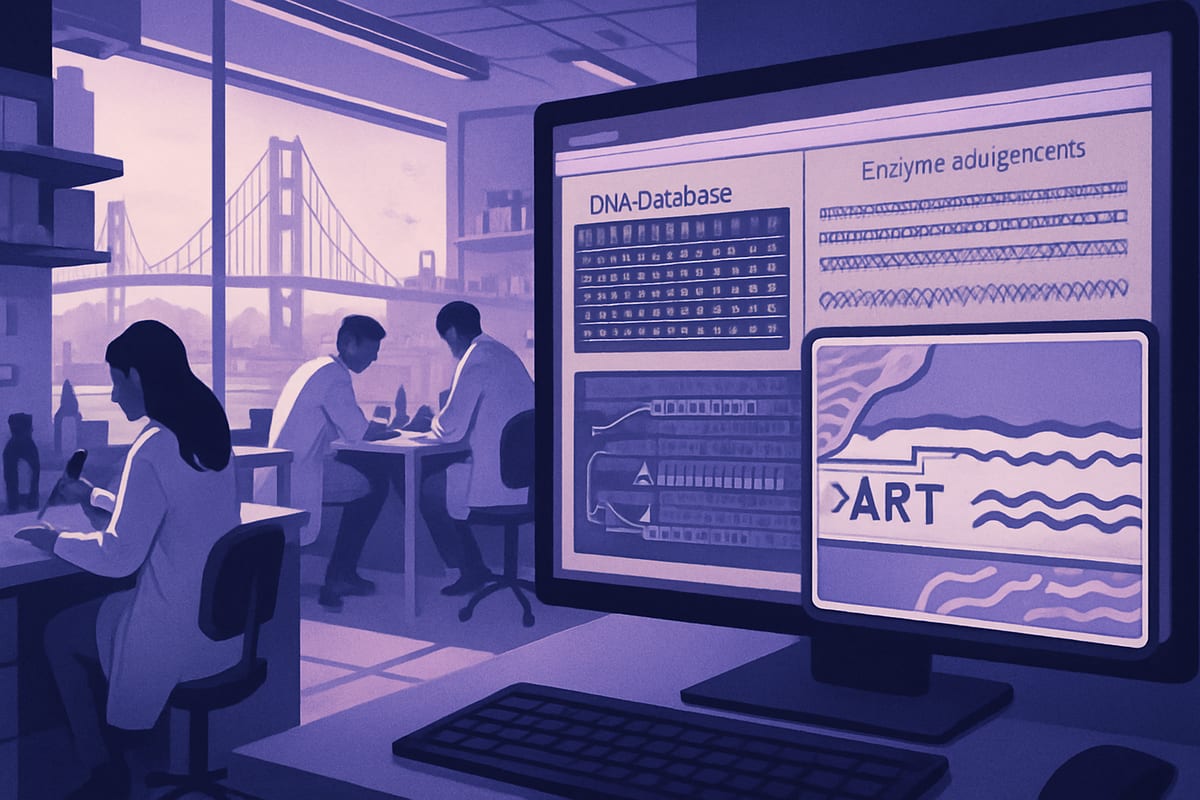
Anthropic attributes to its model Claude the identification of a previously unknown enzymatic system, similar to CRISPR, following an automated exploration of DNA databases. Researcher Lucas Harrington critiques the current approach in genomics and highlights the lack of functional proof.
A CRISPR Researcher Challenges the Novelty and Scope
Lucas Harrington was not particularly impressed by Anthropic's announcement. On X, he clarified that the technique used has been known for several decades and that equivalent systems were identified as early as 2008. According to him, the main challenge lies in determining the true function of a system, which Anthropic has not proven. He believes that presenting still preliminary results as a major advancement adds no value. Harrington completed his thesis under the supervision of Jennifer Doudna, co-discoverer of CRISPR-Cas9 and co-founder of Mammoth Biosciences alongside her. Mammoth uses genomic exploration to search for CRISPR systems.
Le brief IA que les pros lisent chaque soir
Les 7 actus IA du jour, décryptées en 5 min. Gratuit.
Inclus dès l'inscription : notre sélection des meilleurs guides & comparatifs IA.
Choisissez votre rythme
Gratuit · Pas de spam · Désabonnement en 1 clic
What Anthropic Attributes to Claude and What Remains Unknown
Anthropic claims that its model Claude has identified in DNA databases an enzymatic system previously unknown, conducting most of the analysis autonomously. The researchers defined the research question and conducted laboratory experiments. The discovered system shows similarities to the CRISPR genetic editing tool. Anthropic specifies that the function of this system remains unknown.
Exploration Process, Scope, and Context of the Announcement
According to Anthropic, nearly 950 artificial intelligence agents were deployed over 21 hours to analyze more than 200,000 reverse transcriptases, enzymes responsible for converting RNA into DNA. Near an atypical enzyme, they identified repeated DNA sequences. This system has been named ART and is primarily found in bacteriophages, viruses that infect bacteria. Anthropic presents this discovery as one of the first results from its biology lab located in the Bay Area, inaugurated in the spring of 2026.
Brief IA — L'actualité IA en français
L'essentiel de l'actualité de l'intelligence artificielle, décrypté et expliqué chaque jour.