Anthropic: Dario Amodei Clarifies His Position on Chinese AI
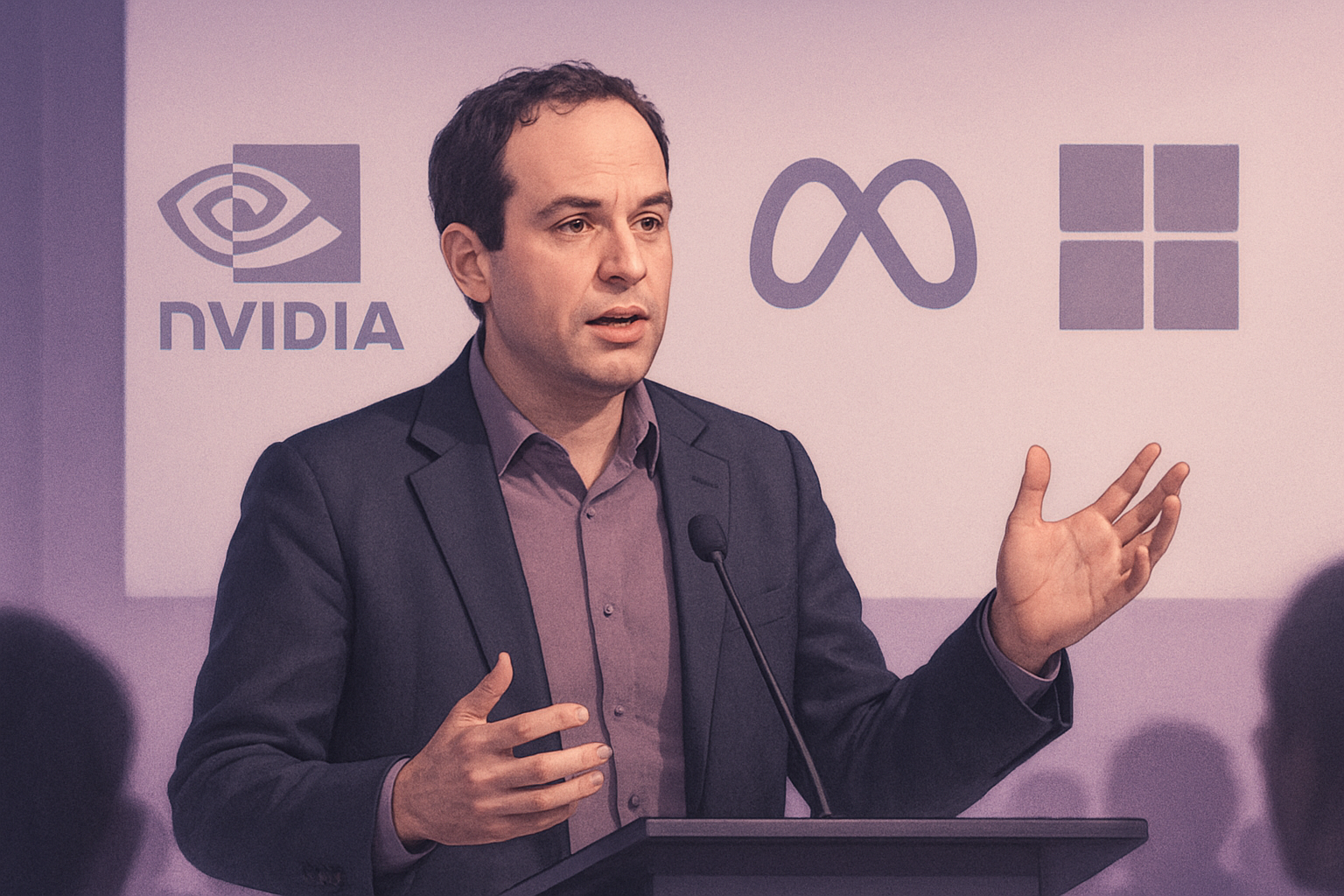
Dario Amodei Clarifies Anthropic's Position on Open Weight Models
Dario Amodei, founder and CEO of Anthropic, recently spoke out to dispel some rumors circulating in the tech sector. These rumors suggested that Anthropic would support U.S. government initiatives to ban Chinese open weight artificial intelligence (AI) models, or even open weight models in general. Amodei took care to clarify that his company has never advocated for such a ban, emphasizing that those who have followed his previous writings should already be aware of his stance on the issue. He insisted that he does not view these bans as a useful measure.
A Response to Nvidia's Open Letter
Amodei's statement comes after Jensen Huang, CEO of Nvidia, published an open letter on the platform X. This letter, co-signed by several influential companies in the AI field, such as Hugging Face, Meta, Microsoft, Mistral, and Nvidia itself, called for avoiding premature restrictions on open weight AI models. Although the letter does not explicitly mention China, the debate in the industry has intensified around accusations that Chinese AI labs are enhancing their capabilities by appropriating the intellectual property of their American counterparts, particularly through techniques like distillation.
Open Weight Models: A Public Good According to Amodei
In his blog post, Amodei expressed his opinion that open weight models, when they do not exhibit dangerous capabilities, constitute a public good. These models, which only require computational resources to operate, provide significant value to businesses, developers, and researchers. Amodei also clarified that while he has long-standing concerns about AI, open weight models, even those developed in China, are not among his primary worries.
Le brief IA que les pros lisent chaque soir
Les 7 actus IA du jour, décryptées en 5 min. Gratuit.
Inclus dès l'inscription : notre sélection des meilleurs guides & comparatifs IA.
Choisissez votre rythme
Gratuit · Pas de spam · Désabonnement en 1 clic
Amodei's Concerns Regarding Chinese AI
Amodei expressed his fears about the possibility of authoritarian governments, such as the Chinese Communist Party, developing AI models that are more powerful than those in the United States. He worries that these models could be used to establish permanent military superiority or to suppress local populations. While he does not focus solely on China, he considers it the most capable authoritarian government in this domain.
The Risks of Open Weight Models
Amodei also addressed the potential threat posed by open weight models in the context of biological attacks, in addition to cyberattacks. According to him, these models are more dangerous because it is difficult to implement safeguards or monitor their use. He cited a report from the British Institute for AI Security to emphasize that once released, open weights cannot be retracted, which contradicts the arguments of open-source advocates.
Proposed Measures to Counter China
To address the perceived threat of Chinese AI, Amodei proposed several actions, including restricting China's access to powerful chips, a policy already in place in the United States, and calling for a formal crackdown on distillation. The U.S. has also threatened China with sanctions in the event of intellectual property theft involving American models.
Towards International Cooperation on AI Security
Amodei also expressed his support for efforts to create an international organization for testing the security of AI models. He noted that for such an organization to be effective, it should include all countries, including China. He was encouraged by the fact that the Trump administration made progress in this direction in recent months. He expressed hope that even the Chinese Communist Party might accept limited cooperation to prevent the use of AI in biological weapons, as this would also be in China's interest.
Brief IA — L'actualité IA en français
L'essentiel de l'actualité de l'intelligence artificielle, décrypté et expliqué chaque jour.