Anthropic and Cuban: AI Still Doesn't Replace Humans
AI and the World of Work According to Peter McCrory
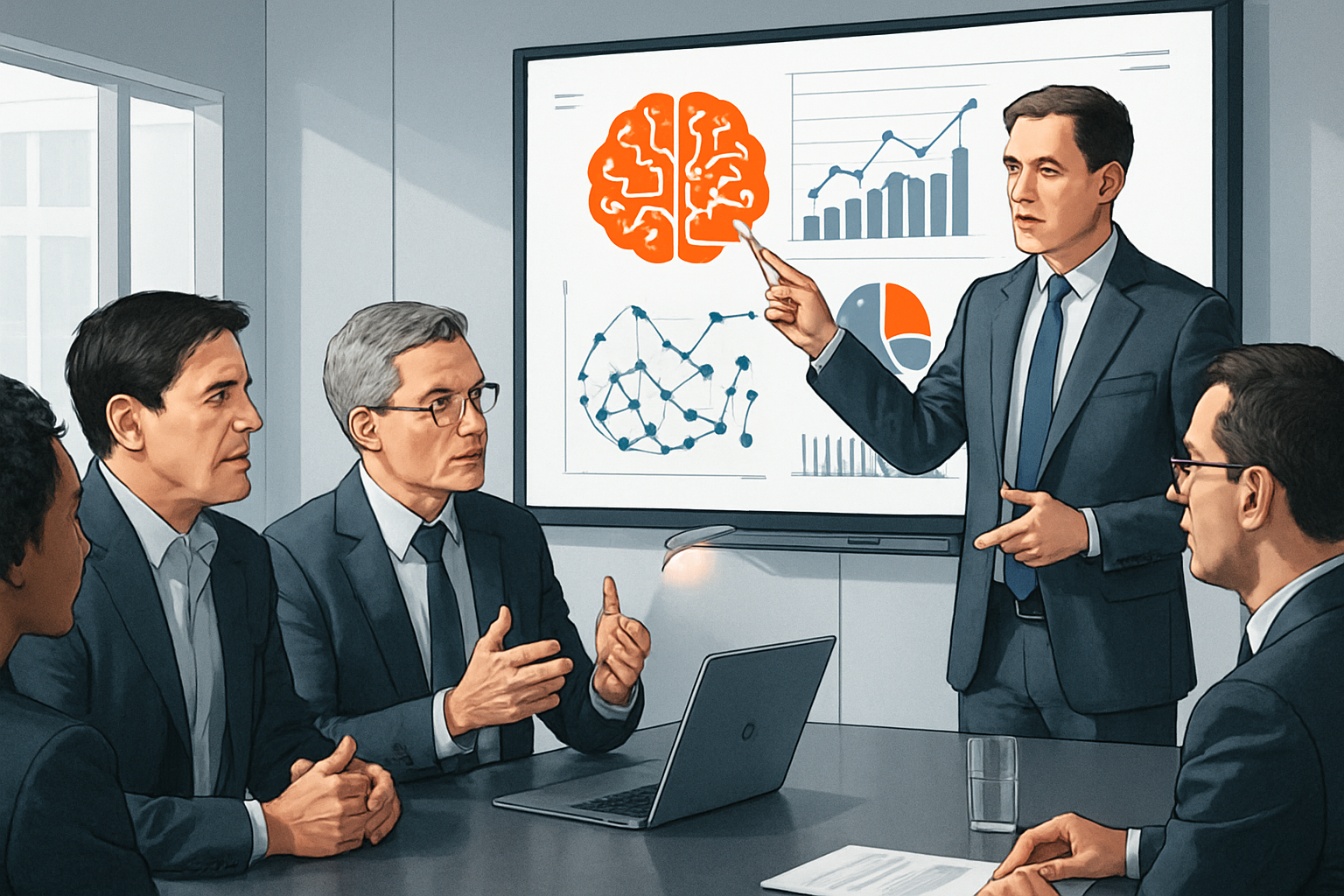
Peter McCrory, Chief Economist at Anthropic, recently shared his thoughts on the impact of artificial intelligence on the job market. According to him, AI is not yet replacing workers but rather functions as a collaborative tool with humans. McCrory explains that current AI models are designed to be used by skilled individuals, allowing them to enhance their performance and increase their productivity.
In an essay published on X, McCrory emphasized that, so far, the introduction of AI has not led to a notable increase in unemployment, even among the professions most likely to be automated. He specified that AI appears to be "biased towards skills and augmenting work," meaning that experienced users can leverage it more effectively to accomplish their tasks.
However, McCrory acknowledges that AI still has limitations. He mentions that certain tasks, which the Claude model cannot handle, require interpersonal coordination, in-person interactions, or physical engagement with the world—areas that remain the exclusive domain of humans for now. He warns that while AI is improving, it should not cause a significant rise in unemployment in the coming year. McCrory also noted that human expertise may lose its importance as AI models advance.
Mark Cuban's Observations on the Limits of AI
Mark Cuban, the famous entrepreneur and former "Shark Tank" investor, responded to McCrory's remarks by highlighting two areas where AI still lags behind humans. In a post on X, Cuban pointed out that AI models do not understand the consequences of their actions, unlike humans who are aware of what could lead them to be fired.
Le brief IA que les pros lisent chaque soir
Les 7 actus IA du jour, décryptées en 5 min. Gratuit.
Inclus dès l'inscription : notre sélection des meilleurs guides & comparatifs IA.
Choisissez votre rythme
Gratuit · Pas de spam · Désabonnement en 1 clic
Cuban also mentioned that AI suffers from information latency, while humans have the ability to immediately comprehend what they observe. According to him, these two skills are essential for any business decision, and AI will not master them anytime soon, if ever. He emphasized the importance of the human ability to "read the room," a priceless skill in the business world.
Despite these limitations, Cuban sees enormous potential in combining AI with human judgment in real-time. He believes this synergy could provide significant returns on investment and serve as a major competitive advantage. He urged managers to maximize this combination to propel their businesses forward.
The Future of AI According to Cuban
Mark Cuban, who sold his internet radio startup to Yahoo for nearly $6 billion during the dot-com bubble, recently expressed his concerns about the current race to build AI infrastructure. He fears that an increase in energy efficiency could lead to overcapacity, with unused data centers potentially being converted into pickleball courts.
Despite these concerns, Cuban insists on the importance for businesses to adopt AI. He stated at a university event last February that companies that do not master AI risk going out of business. According to him, there will only be two types of companies in the future: those that excel in using AI and those that will be sidelined by the former.
Brief IA — L'actualité IA en français
L'essentiel de l'actualité de l'intelligence artificielle, décrypté et expliqué chaque jour.