Anthropic and the EU: A Technological Challenge to Label AI Content
Le brief IA que les pros lisent chaque soir
Les 7 actus IA du jour, décryptées en 5 min. Gratuit.
Inclus dès l'inscription : notre sélection des meilleurs guides & comparatifs IA.
Choisis ton rythme
Gratuit · Pas de spam · Désabonnement en 1 clic
Anthropic and the Challenge of AI Watermarks for Europe
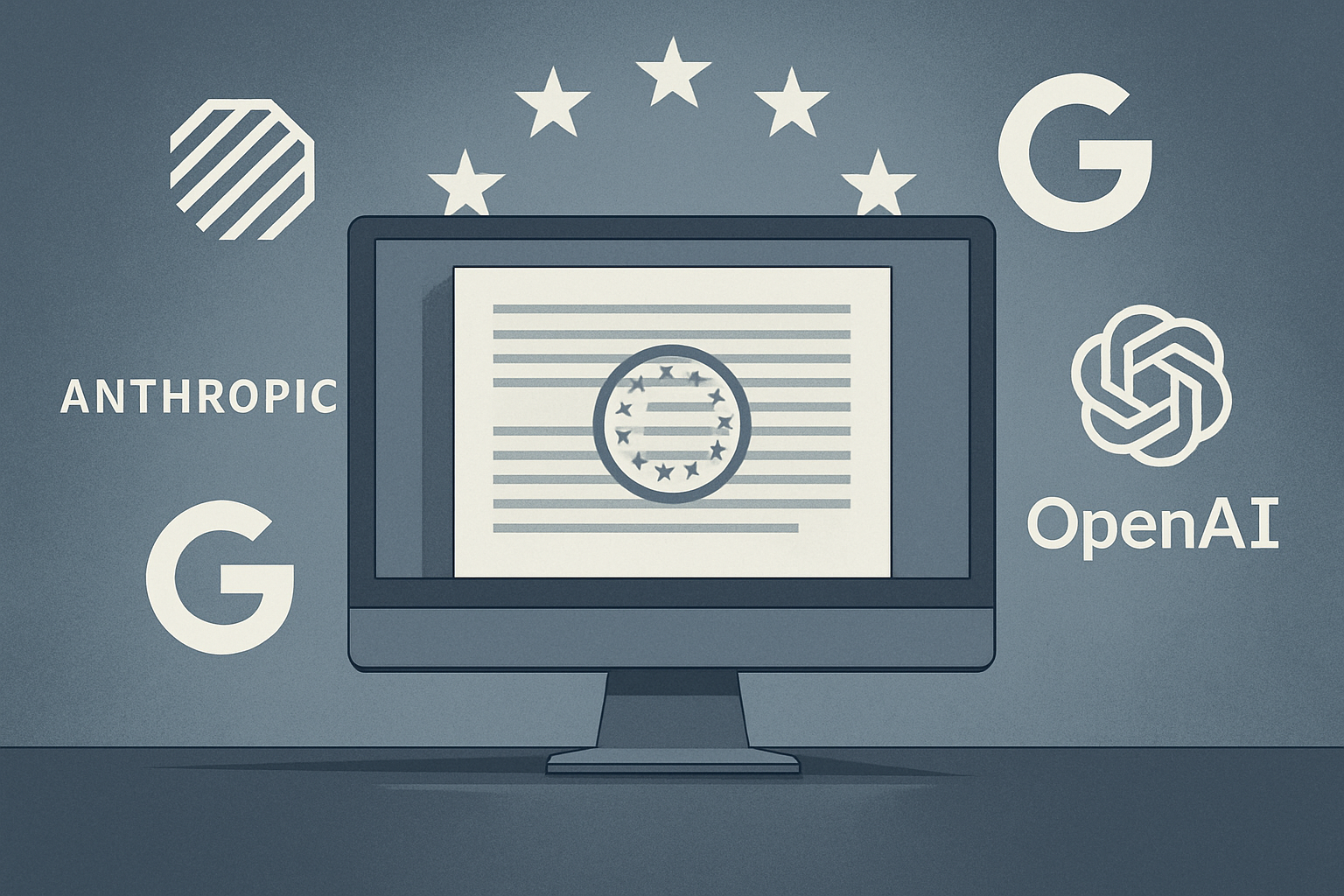
In an effort to comply with the requirements of the European Union, Anthropic is committed to integrating invisible watermarks into the content generated by its artificial intelligence. This initiative aims to make the texts and files produced by its models identifiable by machines, in accordance with the European AI regulation that came into effect on August 2. While the company does not guarantee the permanence of these markings, the goal is to meet the expectations of Brussels.
Since the implementation of this regulation, around 190 organizations, including giants like Google, Mistral, Meta, and OpenAI, have adhered to the associated code of good practices. Anthropic, the parent company of the Claude model, recently published a document detailing how it plans to mark its content invisibly. This effort comes at a time when the transparency of AI-generated content is becoming crucial.
A Watermarking Technology Inspired by Banknotes
The watermark concept used by Anthropic is similar to the security threads embedded in banknotes. Although these markings are invisible to the naked eye, they can be detected using appropriate tools. When a Claude model generates text, an imperceptible statistical pattern is embedded in the words, without any visible logo or mention being added.
Anthropic assures that this process does not alter the meaning or quality of the generated responses. The watermark is designed to be resistant to copy-pasting and certain minor modifications. This marking will be applied at all levels of the model, including in applications, APIs, Claude Code, and with partners such as AWS, Google Cloud, and Microsoft Foundry. Notably, the watermark will apply wherever Claude is offered, not just on European soil, illustrating the global impact of European regulations.
For generated files, particularly images in .png, .jpg, or .svg formats, a different approach is adopted. These files will receive digitally signed provenance metadata, compliant with the open standard C2PA, already used by brands like Leica, Sony, Nikon, and Google Pixel. The implementation timeline strictly follows European guidelines, with immediate deployment for new models and a transition period until December 2 for existing models. Additionally, open detection tools for third parties are promised in forthcoming documentation, in accordance with the code's requirements. Article 50 provides for fines of up to 15 million euros or 3% of global revenue for non-compliance.
Varied Approaches Among Tech Giants
In the realm of watermarking AI-generated content, each company adopts its own strategy. Google, for instance, has been using its SynthID technology since 2024 to watermark content from its Gemini model, having already stamped 100 billion images and videos. OpenAI, after exploring text watermarking, ultimately chose to adopt Google's watermarking technology for its images.
Anthropic, on the other hand, opts for a distinct approach by developing its own text watermark integrated directly into the Claude model. This decision contrasts with those of its competitors who have either outsourced the solution or decided not to implement it.
The Challenges of Watermark Reliability
The reliability of this watermarking process remains to be proven, as Anthropic notes in its documentation. A marked content does not necessarily mean it was generated by Claude, as even a text proofread or translated by the AI can be stamped. Moreover, the absence of a mark does not guarantee the authenticity of content, as significant modifications or a simple screenshot can erase the signal.
Researchers have already demonstrated that image watermarks can be removed, and there is no indication that texts will be more resilient. Despite these uncertainties, for educators, recruiters, or editorial teams, having an official detector is preferable to current tools, which are often unreliable.
For Anthropic, demonstrating compliance with regulations is a way to bolster its credibility, especially after recent changes to its privacy policy. Users will soon be able to verify suspicious texts with Claude's detector, while keeping in mind that the company itself does not guarantee the absolute reliability of this marking.
Brief IA — L'actualité IA en français
L'essentiel de l'actualité de l'intelligence artificielle, décrypté et expliqué chaque jour.