Anthropic Sets Auto Mode as Default for Claude Code Starting August
Le brief IA que les pros lisent chaque soir
Les 7 actus IA du jour, décryptées en 5 min. Gratuit.
Inclus dès l'inscription : notre sélection des meilleurs guides & comparatifs IA.
Choisis ton rythme
Gratuit · Pas de spam · Désabonnement en 1 clic
Anthropic Sets Auto Mode as Default for Claude Code Starting August
Anthropic will soon activate the Auto mode as the default for Claude Code. Only Enterprise customers will still need to opt for this mode. This change means that the AI will manage a larger portion of the development process autonomously.
The Auto mode allows the AI coding tool to operate without waiting for manual approval at each step. A classifier checks whether an action is dangerous or irreversible and only requests confirmation in those cases.
Starting August 14, Claude Code will be delivered with Auto mode enabled by default for the Pro, Max, and Team plans, as announced by Anthropic in a blog post. In tests with 1,053 paying testers and internal simulations, Auto mode demonstrated performance that was at least as safe as manual approvals, and often better. Teams using Auto mode also generated about 25% more pull requests, meaning they accomplished more work.
In a controlled study with 1,053 paying testers, human reviewers detected only 13.6% of dangerous commands, while Auto mode identified 89%.
Anthropic also claims that Auto mode adds a layer of protection against prompt injection attacks, where injected code attempts to divert the agent from the user's instructions. An independent audit by Trajectory Labs tested 72 attack scenarios ten times each. None of the 720 attempts succeeded against the current models of Claude, namely Fable 5, Opus 5, and Sonnet 5, in Auto mode. In contrast, with OpenAI's GPT-5.6 Sol using the Codex Auto-Review mode, 5.83% of attacks were successful.
Internally, Auto mode prevented Claude from uploading confidential data to a public page. During a lengthy session, it also interrupted about 2,000 processes that would have disrupted ongoing GPU training work, according to the company.
Anthropic does not charge for the tokens consumed by the classifier itself. However, making Auto mode the default setting is likely still a good deal for the company. When Claude works longer and accomplishes more tasks, the total token usage increases, as do revenues, even if this was not Anthropic's primary motivation for the change.
Developers Shift from Coding to AI Oversight
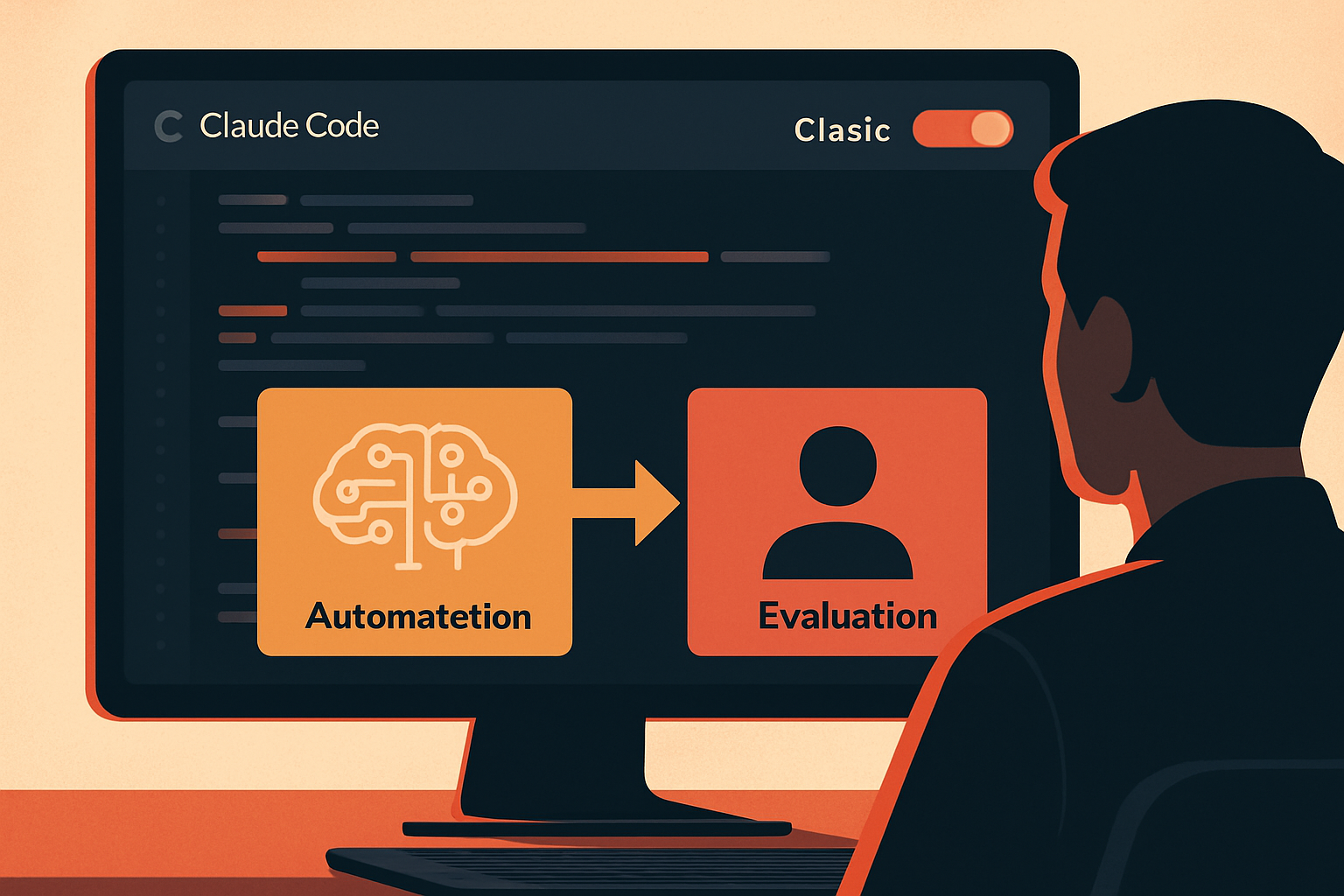
Claude Code is currently the most significantly used AI coding tool, and making Auto mode the default shifts the developer's role from active programming to reviewing AI-generated results. Anthropic itself calls for caution.
The classifier reduces risks but does not eliminate them. "For critical changes in production infrastructure, we still recommend reviewing Claude's actions yourself," the company writes.
This advice creates a paradox. The less developers intervene, the more important their oversight becomes. However, it becomes more challenging to build a deep understanding of projects that have been largely executed by Auto mode with minimal human involvement. Additionally, cybersecurity evolves more rapidly and becomes more complex than what a human can reasonably keep up with.
Brief IA — L'actualité IA en français
L'essentiel de l'actualité de l'intelligence artificielle, décrypté et expliqué chaque jour.