Anthropic Isolated Amid Wave of Support for Open Source AI
Anthropic Faces Pressure from the Tech Industry
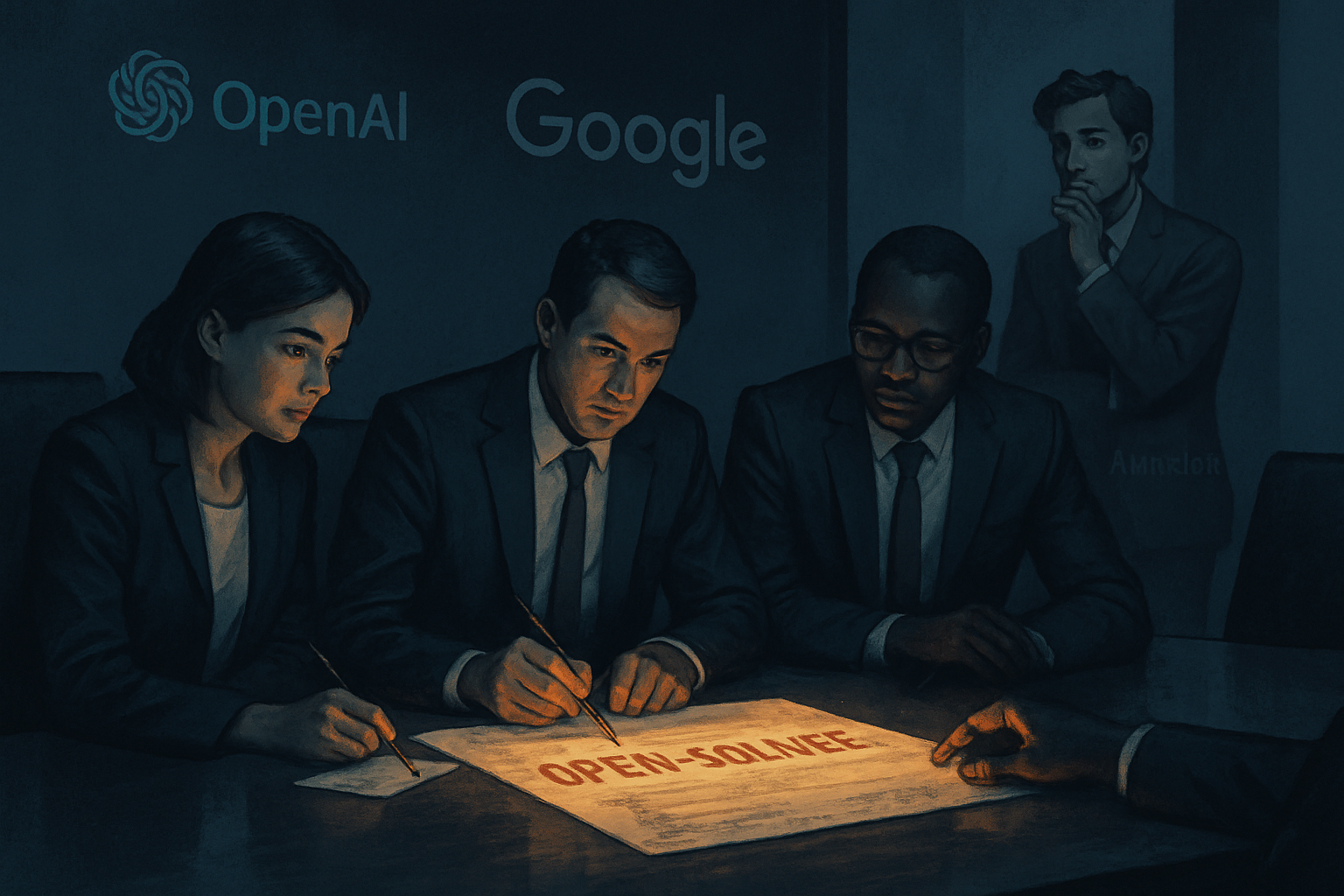
Anthropic finds itself in a delicate position, being the only major artificial intelligence lab that has not taken a stance in favor of open models. While OpenAI, Google, Microsoft, and SpaceX have signed a letter titled "Open Weights and American AI Leadership" addressed to the U.S. government to support open-weight AI, Anthropic remains silent, drawing criticism within Silicon Valley.
The tech industry is rallying around open-weight AI models, but Anthropic stands out for its silence. This open letter, which advocates for the defense of open models as Washington considers restrictions on certain Chinese models, has been signed by more than two dozen companies, including Nvidia, Meta, and Microsoft. Over the weekend, other AI heavyweights, such as OpenAI, Google, and SpaceX, also added their signatures. "Open weights" means that developers can download, modify, and deploy AI models on their own infrastructure.
On Monday, Anthropic remained the only major AI lab that had not supported this initiative, which has led to sharp criticism, particularly for its refusal to sign the letter in favor of open models.
Industry Reactions
David Sacks, a venture capitalist and former AI lead under the Trump administration, expressed his dissatisfaction with Anthropic's lack of support. He stated that the entire tech industry, except for Anthropic, has spoken out in favor of open source, emphasizing the need for the rest of the industry to closely monitor Anthropic's actions.
Peter Steinberger, an employee at OpenAI and founder of the agentic platform OpenClaw, also voiced his support for the letter, expressing pride that OpenAI signed it while noting Anthropic's silence.
Le brief IA que les pros lisent chaque soir
Les 7 actus IA du jour, décryptées en 5 min. Gratuit.
Inclus dès l'inscription : notre sélection des meilleurs guides & comparatifs IA.
Choisissez votre rythme
Gratuit · Pas de spam · Désabonnement en 1 clic
Bill Gurley, a general partner at Benchmark, criticized Anthropic for not signing the letter, suggesting that the company is trying to protect its position in the AI race. According to him, this attitude reveals an economic strategy aimed at avoiding the competition posed by open source. His comment was in response to an Anthropic employee on X.
Kai-Fu Lee, a former executive at Google and Microsoft and founder of the Chinese startup 01.AI, highlighted the importance of noting who did not sign the letter, specifically mentioning Anthropic.
Anthropic's Position
Anthropic did not immediately respond to requests for comment. However, its CEO, Dario Amodei, has previously expressed reservations about releasing AI model weights, stating that it could lead to a loss of control. Anthropic favors controlled access to its powerful models, as evidenced by the earlier launch this year of Project Glasswing, which offers early access to verified companies to address security vulnerabilities.
China and the Open Models Debate
The debate over open models has intensified with the launch of the Kimi K3 by the Chinese lab Moonshot. This open-weight model competes with the performance of the best closed American models on certain benchmarks.
Last week, a senior White House official accused Moonshot of using Anthropic's Fable AI model to train K3, a practice known as distillation. Treasury Secretary Scott Bessent suggested that the U.S. government could sanction Chinese open-source AI models involved in such practices.
China generally takes a more open approach to AI compared to the United States. The argument for open-weight models has been bolstered by Hugging Face, which used a model from Z.ai in China to defend against a hack by an OpenAI AI agent, highlighting the restrictions of closed models.
On Monday, Nvidia announced the launch of the Open Secure AI Alliance, an initiative supporting open AI models in cybersecurity, with backing from Microsoft, SpaceX, and other tech companies.
Brief IA — L'actualité IA en français
L'essentiel de l'actualité de l'intelligence artificielle, décrypté et expliqué chaque jour.