Anthropic Labs: 20 People, 20-30% Success Rate, Rapid Cycles
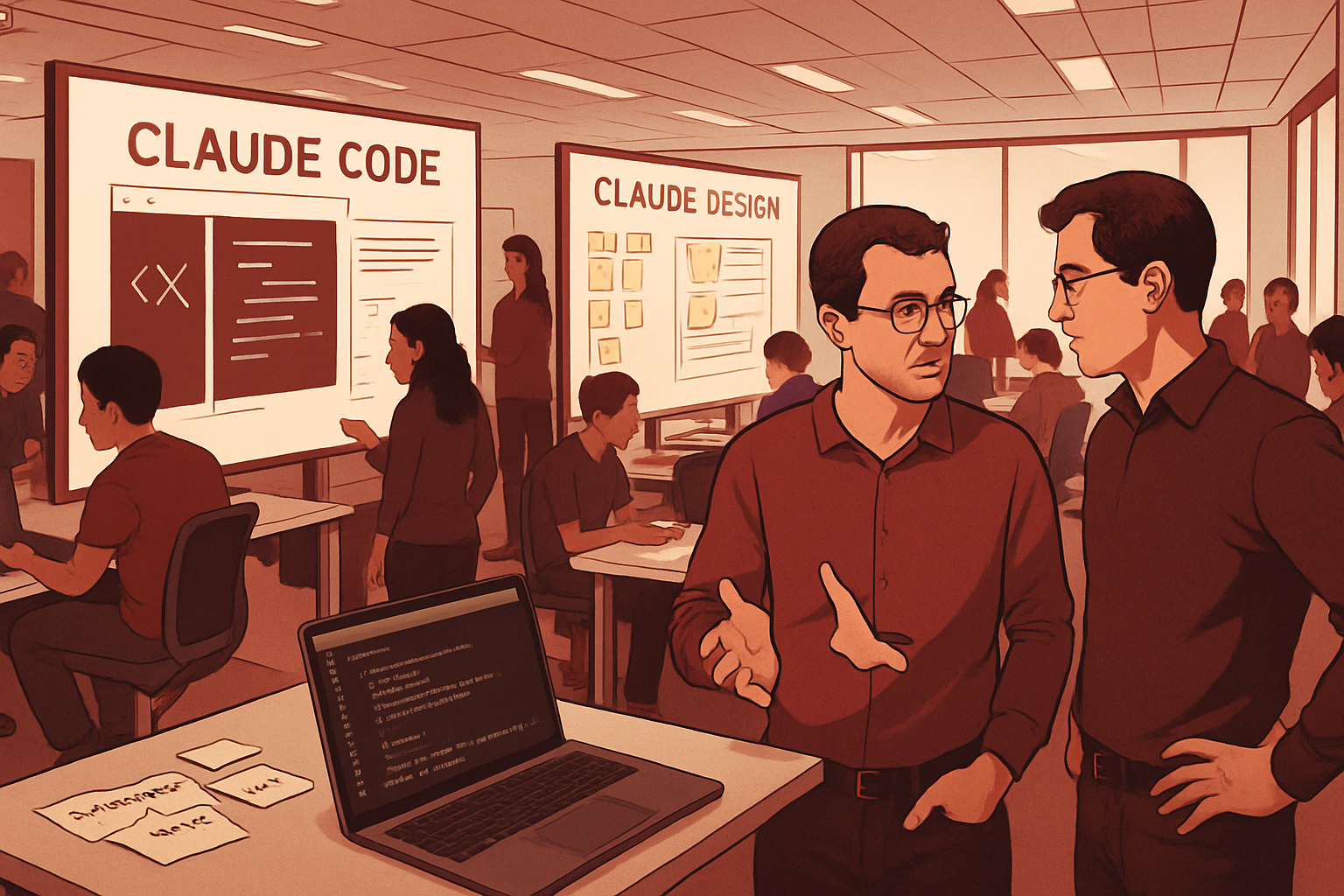
As Anthropic approaches its IPO, its Labs are operating at full capacity. This small team, which claims a low success rate but notable outputs, has given rise to Claude Code and Claude Design. Its "persevere or pivot" model is shaking up the organization, while an analyst anticipates trade-offs against software already used by companies.
After the IPO, balancing client software and managing internal rotation
Mike Gualtieri, an AI analyst at Forrester, believes that Anthropic will need to balance the addition of tools that compete with software already employed by its professional clients. Claude Design positions itself against offerings from players like Adobe and Figma. According to Gualtieri, the publisher will likely add features that make its platform more attractive than others, an exercise he describes as "a little dance." Internally, Ben Mann indicates that Labs projects typically "graduate" when they exceed four people, leading to a constant turnover within the team, with members moving to other teams and new talent coming in. The evolution of product development once the company is public remains uncertain.
A product funnel with bi-weekly reviews and few survivors
The Labs progress in cycles, with a "persevere or pivot" review occurring approximately every two weeks. Weak ideas are discarded or merged, and teams move on, while promising projects "graduate" to join dedicated teams. Ben Mann mentions a success rate of around 20% to 30% and describes the Labs as a true incubator where most bets fail. The team benefits from rapid access to signals for model improvement, which accelerates tool building. Some avenues lead to other prototypes or products, such as the Chrome extension for Claude.
Le brief IA que les pros lisent chaque soir
Les 7 actus IA du jour, décryptées en 5 min. Gratuit.
Inclus dès l'inscription : notre sélection des meilleurs guides & comparatifs IA.
Choisissez votre rythme
Gratuit · Pas de spam · Désabonnement en 1 clic
Claude Code, from internal prototype to public preview and popularity
Claude Code leverages Anthropic's AI models to write, edit, and execute code. Ben Mann entrusted the first iteration to newcomer Boris Cherny, whose prototype quickly gained popularity internally. The tool was released in preview in February 2025, before becoming extremely popular following model releases the following year. Boris Cherny now leads it. Before the development at the end of 2024, the team had heard researchers report signs of strength in agentic coding. Cherny initially suggested a simple code analysis tool; Ben Mann deemed this idea insufficiently ambitious.
Expanding the AI "action space," from Amharic to images
Ben Mann positions Claude Code within a broader initiative aimed at increasing the AI "action space," meaning the variety of tasks that models can accomplish. The Labs have encouraged other groups to refine audio models to improve understanding of Amharic. The launch of Claude Design, for its part, has sparked research interest aimed at improving the quality of visual outputs.
Small size, historical influences, and a culture of rapid pivoting
Composed of about 20 people and founded in 2024 by co-founder Ben Mann, the Labs remain deliberately small. The team brings together experienced profiles, including Mike Krieger, co-founder of Instagram. Mann claims inspiration from Bell Labs and has previously led a similar effort within Area 120 at Google in 2018. The trajectory of projects that "graduate" also echoes the history of initiatives like Google Brain, which emerged from X, Google's project factory. On a daily basis, the culture of the Labs is based on rapid prototyping and frequent pivots.
Product governance and preparing for the IPO
As Anthropic prepares for its IPO, Ben Mann emphasizes a governance focused on product delivery, after having, according to him, convinced the company to no longer rely solely on philanthropic funding. The Labs developers have direct access to what works in research at Anthropic, an asset that has been crucial for Claude Code. The team has also given rise to the Model Context Protocol, which connects AI agents to data sources, and to Claude Design launched this year. The Labs are also responsible for Claude Code.
Brief IA — L'actualité IA en français
L'essentiel de l'actualité de l'intelligence artificielle, décrypté et expliqué chaque jour.