Anthropic Launches MHS, a Unified Interface for Laboratory Devices
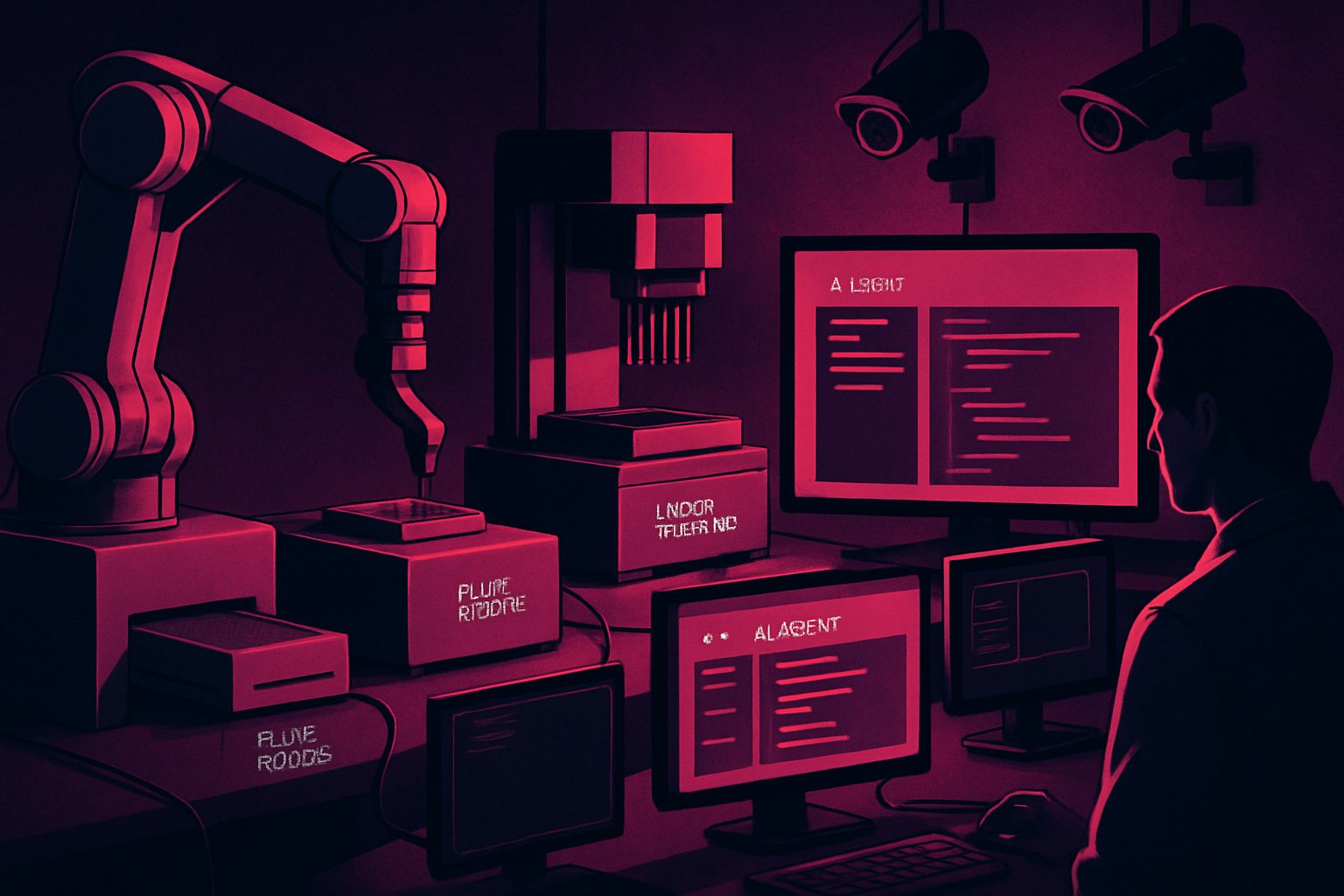
Anthropic unveils a specification aimed at connecting AI agents to physical equipment via standardized drivers. Initial trials report accelerated integrations and executable scripts without a language model, while confirming the need for human supervision. The standard is currently in research preview, an open-source version is planned, and several manufacturers are already testing the solution.
Mandatory Supervision and Security Under Development
Anthropic emphasizes that the spatial and physical reasoning limitations of its agent require expert supervision. During trials conducted at Genentech, researchers had to guide Claude to distinguish physical failures from simple software bugs. During the research preview phase, the company plans to add additional security assessments with its partners and is working on a physical security roadmap to mitigate abuse risks. The project examples presented come from Anthropic and have not undergone independent verification.
What MHS Standardizes: Drivers, Discovery, and Scripts Without LLM
The Material Standard Model (MHS) aims to provide AI agents with a unified interface to control equipment such as microscopes or robotic arms. This specification extends Anthropic's Model Context Protocol (MCP), already used on the software side, by applying it to physical hardware. Each device receives an MHS driver that standardizes basic functions, makes the device discoverable in a common format, and can include physical constraints such as weight or safety limits. Users can enrich the device description in natural language, which is then converted into a reference file for the agent, allowing it to operate an unknown device through a single interface. A driver must be written for each piece of hardware, but it can be reused for other configurations. According to Anthropic, this standard is model-agnostic and applies to any equipment with a programmable interface. Agents are capable of managing multiple devices simultaneously and recording sequences of operations as traditional scripts, which can be executed without resorting to a language model.
Le brief IA que les pros lisent chaque soir
Les 7 actus IA du jour, décryptées en 5 min. Gratuit.
Inclus dès l'inscription : notre sélection des meilleurs guides & comparatifs IA.
Choisis ton rythme
Gratuit · Pas de spam · Désabonnement en 1 clic
Reported Results in Biotechnology, Academic Robotics, and Quantum
At Genentech, Claude coordinated between a liquid handler, a robotic arm, and a plate reader to automate a protein test, automatically adjusting pipetting parameters for autonomous optimization. However, errors occurred due to bubble formation in a viscous solution, and restarting the procedure in the same container with different settings exacerbated the issue until human intervention clarified the physical origin of the phenomenon. At Carnegie Mellon University, a set of instruments and cameras spread across three computers with incompatible interfaces was connected via drivers and an orchestration layer in about eight hours, whereas a vendor would have required several weeks, according to the team. The agent also adjusted an experiment by lowering the maximum concentration after an initial curve deemed insufficient, achieving better results in the second trial. At QuEra, hundreds of automated executions enabled the development of a program that returned a laser to a stable state after disturbances, with 695 successes out of 700 in a blind test, resulting in a success rate of 99.3%, and the script operated entirely autonomously without a language model.
Availability, Announced Gains, and Testing Ecosystem
Anthropic indicates that the MHS reduces the integration time for laboratory equipment, which previously took several weeks or months, to just a few hours or minutes. The specification was developed in partnership with the HHMI Janelia Research Campus and is initially being rolled out in a research preview to selected laboratories and manufacturers; an open-source version is announced for a later date. Several companies are already offering support or experimenting with the specification, including AWS, Doosan Robotics, QIAGEN, Tecan, Universal Robots, Hugging Face, and Raspberry Pi. Reported trials indicate autonomous workflow optimizations and script generation that do not require a language model, in a context where the diversity of APIs, formats, and software typically makes integrations complex and lengthy.
Brief IA — L'actualité IA en français
L'essentiel de l'actualité de l'intelligence artificielle, décrypté et expliqué chaque jour.