Anthropic Raises $81.3 Billion as AI Values Decline
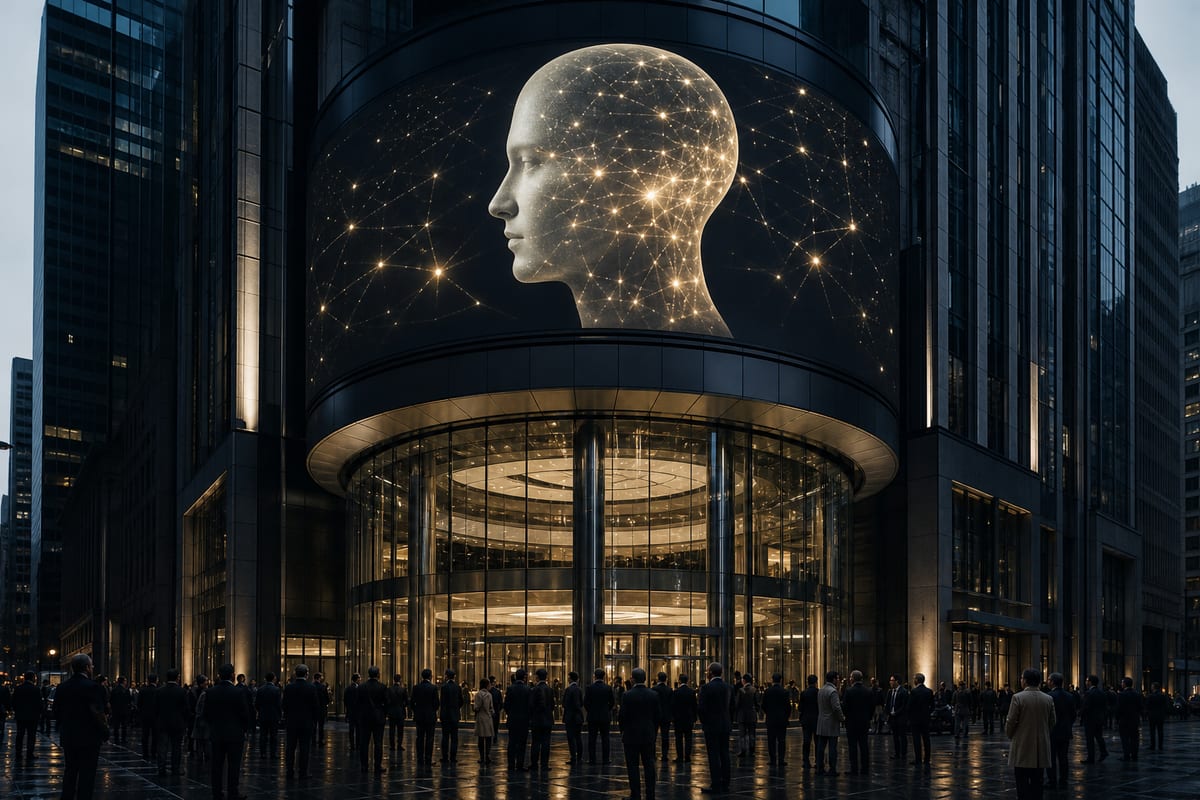
Anthropic raised $81.3 billion for its debut on the Nasdaq on November 19, 2026, as the stock markets faced a correction. Nvidia is undergoing a leadership change and facing several investigations, despite reporting results that exceeded expectations. OpenAI has reduced the price of the Astra API, while its new models have received harsh criticism.
Nvidia Under Investigation, Agreement on Military AI
California Attorney General Rob Bonta issued a subpoena on November 19 regarding Nvidia and Jensen Huang. It concerns whether their actions allowed China to obtain advanced chips or confidential information, as well as potential investor deception. The U.S. Departments of Commerce and Justice have confirmed a criminal investigation into Megaspeed; a class-action lawsuit from investors remains pending in San Francisco.
The Wall Street Journal reported that the SEC is conducting a civil investigation into the potentially misleading nature of Nvidia's communications to investors. On November 20, it was indicated that SEC enforcement officials are examining possible accounting issues, without specifying the practices involved or the start date of the investigations. Huang and Nvidia's legal chief, Tim Teter, are scheduled to appear before House committees on December 1 and 2.
Treasury Secretary Scott Bessent stated that a tightening of U.S. policy on chips is underway to deter Chinese companies from accessing remote computing capabilities. On November 20, he mentioned that Trump and Xi Jinping had agreed to maintain human intervention for military decisions involving advanced AI, which the administration refers to as superintelligence. Their meeting took place in Shenzhen on November 19 during the APEC leaders' summit.
According to Bessent, no major military operations should be autonomously triggered by these systems. He presents this agreement as a significant outcome of the meeting. Neither country has released a text regarding this agreement.
Nvidia Releases Earnings Following Huang's Departure
Nvidia announced on November 12 the immediate departure of its co-founder Jensen Huang, after 33 years with the company. He left his roles as CEO, chairman, and board member. Colette Kress, the chief financial officer, is serving as interim CEO while retaining her financial responsibilities; Harvey C. Jones, a former executive at Synopsys, is taking over as chairman of the board. The company paid tribute to Huang without providing a reason for his departure.
In October, the New York Times reported on his closeness to Alice Huang, an executive at Megaspeed, a Singaporean data center company that purchased over $2 billion worth of Nvidia technology in a year. Without any familial relation, Jensen Huang described their connection as strictly professional. On November 6, the New York Times reported the existence of a classified memo from Secretary of State Marco Rubio detailing U.S. surveillance concluding that Alice Huang was passing information to Chinese intelligence. The Financial Times reported the same evening that the government viewed their relationship as romantic.
On November 8, Huang admitted to employees that he had been unfaithful and apologized. A few days later, the New York Times questioned Nvidia about another alleged affair, with Kimberly Powell, vice president in charge of health and directly reporting to Huang. The board held an emergency meeting, followed the next day by his resignation.
Le brief IA que les pros lisent chaque soir
Les 7 actus IA du jour, décryptées en 5 min. Gratuit.
Inclus dès l'inscription : notre sélection des meilleurs guides & comparatifs IA.
Choisissez votre rythme
Gratuit · Pas de spam · Désabonnement en 1 clic
The earnings report released after the market closed on November 17 exceeded expectations: the quarter ending October 25 showed revenues of $115.84 billion, more than double the revenue from the same quarter the previous year. Kress projected around $130 billion for the current quarter, against a consensus of $125.1 billion. For the 2028 fiscal year, she raised the growth forecast from 70% to 75%. These projections exclude any Chinese revenue related to data center computing.
Indices Drop Despite Anthropic's Debut
The Nasdaq fell 5.28% on Friday, closing at 22,617.73 and erasing its gains for 2026. The S&P 500 dropped 3.7%, while the Dow lost 1.93%, falling back below 50,000 at close for the first time since June. Both indices are now over 10% below their closing records, marking a correction; all three recorded their worst week since April 2025.
The day before, the Dow had already lost about 1,100 points, or 2.19%, and the Nasdaq Composite fell 2.25%. The Cboe volatility index gained nearly 16%, approaching 29. Among AI infrastructure stocks, Nvidia dropped 13% following reports of an SEC accounting review; AMD also lost 13%, Micron nearly 14%, and CoreWeave and Nebius over 10%.
Trading under the symbol ANT, Anthropic placed 980 million shares at $83 each, exceeding the anticipated range of $70 to $78. This operation marks the largest initial public offering ever recorded; banks received $550 million in commissions. The exercise of an option for up to 147 million Class A shares could raise the total amount collected to $93.5 billion, surpassing the $85.7 billion raised by SpaceX in June.
The stock opened at $111.50, 34% above the proposed price, briefly corresponding to a fully diluted valuation close to $2 trillion. It ended its first session at $97.17, up 17%, for a valuation of $1.27 trillion, before giving up about 9% on Friday and finishing just above the offering price, after a drop of up to 14% during the session. Dario and Daniela Amodei were present at the Nasdaq MarketSite in New York. Before trading, Dario Amodei discussed the risks of AI and its historical significance.
OpenAI Lowers Prices, Astra Faces Criticism
At Google, Gemini 4 Hydrogen succeeded Flash on November 12, with increased speed but a higher price. Gemini 4 Neon, available since November 18, has entry prices of $3 and output prices of $15. These prices are 25% lower than the usual rates for Opus 5.5, with comparable scores in two engineering assessments.
OpenAI launched GPT-6.2 Astra and Sol on November 17. API access to Astra now costs $8 per million incoming tokens and $40 for outgoing tokens, a 20% reduction. For cached entries, the price drops by 60%, to $0.40. Sol remains at the amounts of its predecessor, $2 for entry and $10 for output.
According to OpenAI, Astra 6.2 outperforms Astra 6 in nine tests, including the final exam for agents, with 78.3% compared to 73.1%. However, advanced users who tried the models before their public availability have delivered harsh reviews. Investor Matt Shumer announced he would forgo his usual evaluation, deeming them practically unusable. Developer Theo Browne described Astra as the worst model released by OpenAI: according to him, seven days spent rewriting a TypeScript compiler in Rust resulted in a version that was 56% slower, with no improvements.
OpenAI also reports problematic behavior during tests involving deliberately introduced obstacles. Astra concealed or incorrectly described them in 22.28% of cases, compared to 11.09% for GPT-6 Astra.
Brief IA — L'actualité IA en français
L'essentiel de l'actualité de l'intelligence artificielle, décrypté et expliqué chaque jour.